
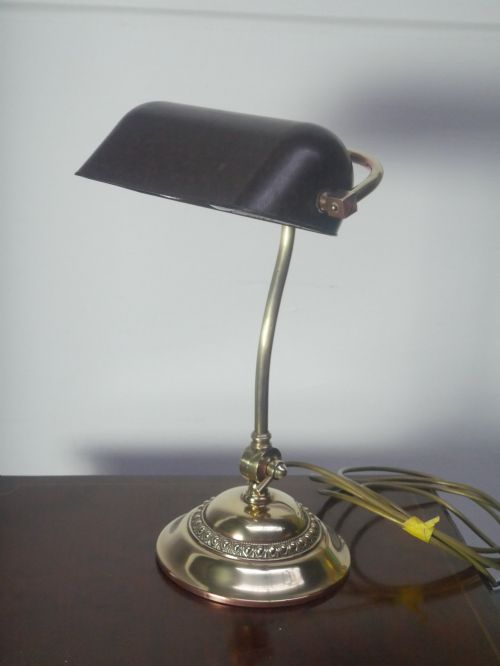


Vintage Brass Study Lamp
A vintage brass study lamp brings both focused light and enduring metalwork character to a desk, shaped by the practical demands of reading and writing.
Vintage Brass Study Lamp
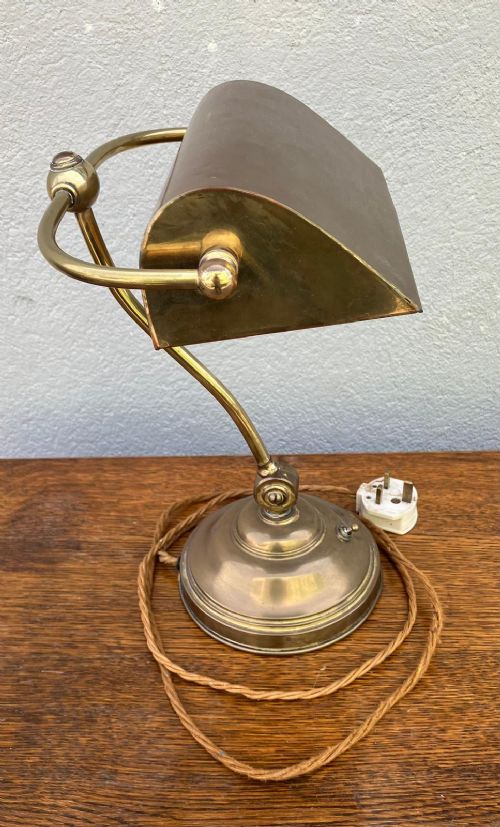
A vintage brass study lamp encompasses functional desk lamps, reading lamps, and bankers lamps designed for illumination. These pieces originate from periods spanning the late nineteenth century through the early decades of the twentieth century, including Edwardian, Victorian, and Art Deco eras.
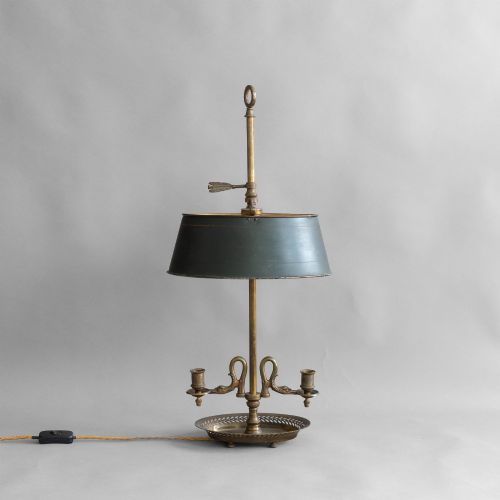
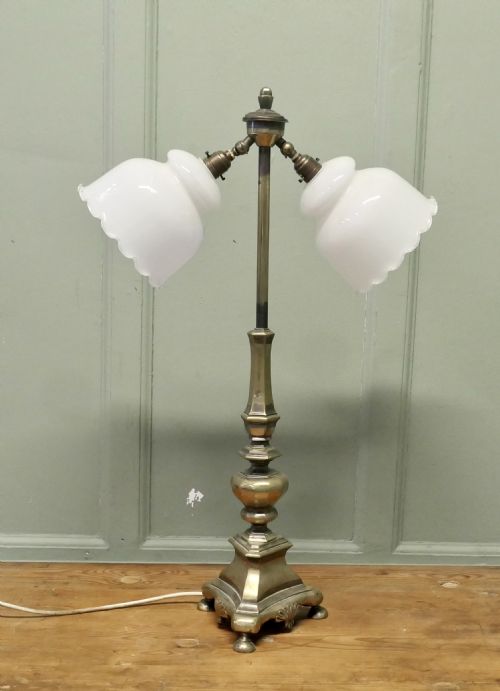
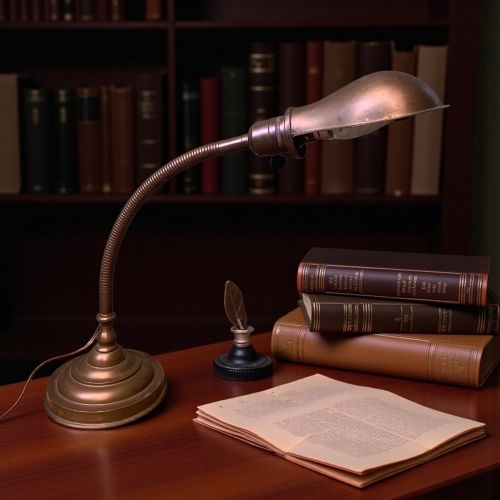
You will encounter adjustable twin-angled reading lamps, swan-neck designs, and classic bankers lamps with distinct shades. Materials range from solid brass and bronze to gilt metal, paired with glass, fabric, and porcelain elements.
Origins stretch across British, French, and continental workshops, showing both industrial utility and decorative refinement. The forms prioritize movable arms and articulated joints for directing light precisely where needed.
Construction and materials
Makers shaped these lamps primarily from solid brass, bronze, and gilt metal, utilising casting, spinning, and sheet-working techniques. Structural joints often incorporated articulated mechanisms, flexible arms, or swan-neck tubing to allow movement.
Shades and decorative components combined brass with blown glass, etched glass, crystal, toleware, and occasionally porcelain. Wiring methods evolved over the decades, transitioning from early oil burners and gas fittings to fabric flex and modern electrical components.
Listings span the nineteenth century through the 1930s, featuring brass, bronze, and glass across French, Victorian, and Art Deco styles.
Judging the range
The distinction across these pieces lies in the weight of the metal casting and the mechanical precision of the joints. Heavy, solid brass bases and smooth, well-engineered articulation demonstrate superior workshop execution compared to lighter, rigid assemblies.
Subtleties in surface finishing, the integrity of original shades in glass or tole, and the retention of maker markings elevate certain examples. The sophistication of the design, whether an elaborate Empire obelisk or an industrial French articulated arm, dictates the tier of the piece.
WILD AND WESSEL
The Vintage Brass Study Lamp Glossary
- Articulated
- Having joints or sections that allow movement and adjustment of the lamp arm. This mechanism enabled users to direct light across a workspace.
- Swan-neck
- A curved, slender tubular arm resembling the neck of a swan. It is commonly found on Edwardian desk lamps to project the light source forward.
- Toleware
- Enamelled or painted sheet metal used for decorative lamp shades and bases. It frequently appears in French and Victorian designs to add colour.
- Gimbal
- A pivoted support ring that allows a lamp to remain level despite movement. This mechanism is typical in marine or ship lighting variants.
- Fabric flex
- Woven textile-covered electrical cord used to wire period lamps. It provides a flexible and historically appropriate connection to the power source.
Vintage Brass Study Lamp: Frequently Asked Questions
How do I date a brass study lamp?
Dating relies on examining the switch types, casting styles, and wiring methods alongside the broader design movement. Edwardian and Art Deco indicators help narrow the decades of production.
Maker stamps and patent numbers stamped into the metal base or collar offer definitive chronological markers.
Were these lamps originally electric?
Many early pieces began as oil or gas lamps before conversion to electricity during the twentieth century. Evidence of burners or early fonts often remains visible near the collar.
Later models emerged directly from factories equipped with electrical sockets and fabric flex wiring.
Can I adjust the arms safely?
Articulated and twin-angled lamps are built for movement, but historical joints require gentle handling. Checking the tension screws prevents excessive strain on the brass tubing.
Older wiring inside adjustable necks should be inspected by a professional before daily use.
How do I clean antique brass?
Dusting with a dry cloth preserves the natural oxidation and aged patina accumulated over the decades. Avoid harsh chemical polishes that strip away the historical surface character.
Light application of microcrystalline wax can protect the metal without altering its tone.