



Vintage Brass Side Chairs
These vintage brass side chairs bring striking metallic warmth and classical elegance to any room.
Vintage Brass Side Chairs
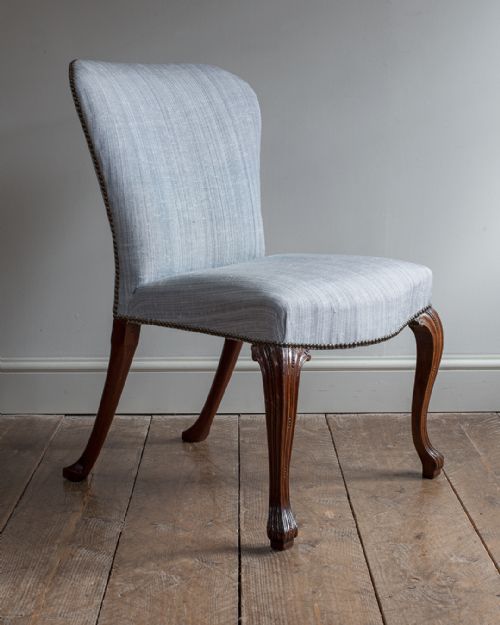
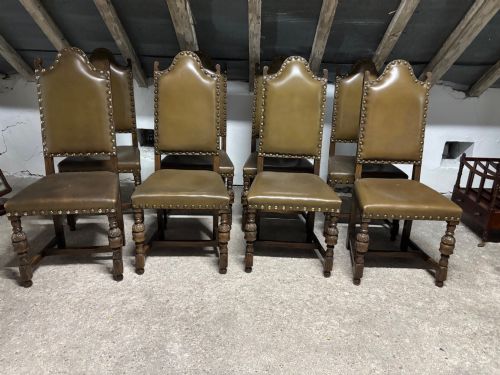
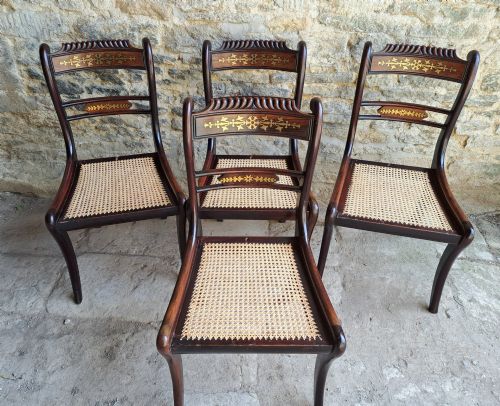
When you search for vintage brass side chairs, you encounter seating featuring brass inlay, solid brass frames, or brass mounts alongside timber structures. The pieces on this page span several eras, from the Georgian and Regency periods through to the Victorian age and the early twentieth century.
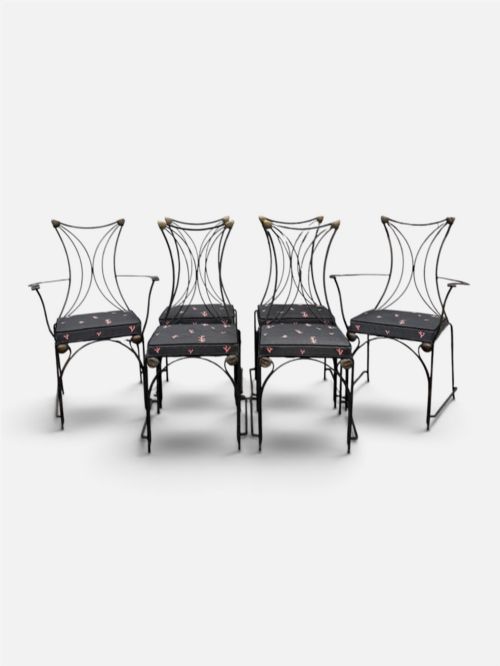
Most examples function as dining chairs or salon seating, often appearing in sets or pairs constructed from woods such as mahogany, rosewood, oak, and walnut. Alongside these wood-and-metal hybrids, you find solid brass or wrought iron and brass combinations originating from French and British workshops.
How they were made
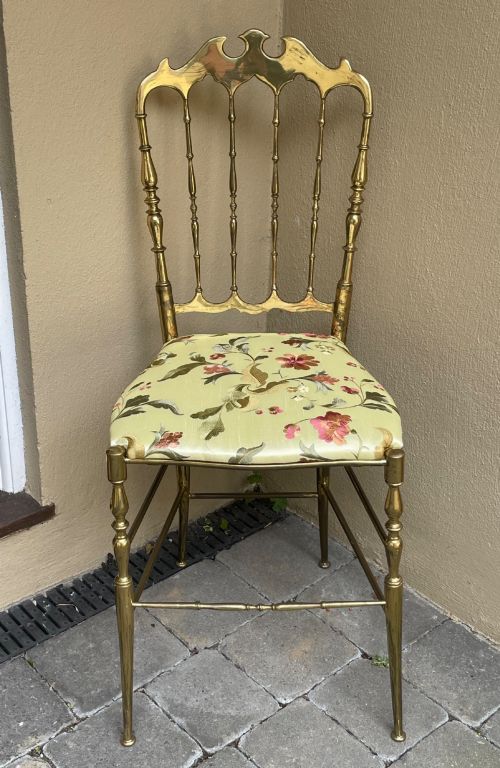
Cabinetmakers built the foundational frames using traditional joinery in timbers like mahogany, oak, and rosewood, frequently incorporating brass inlay into the wood grain. Metalworkers shaped solid brass components or forged iron frameworks to support intricate decorative elements like shell details or ram's head motifs.
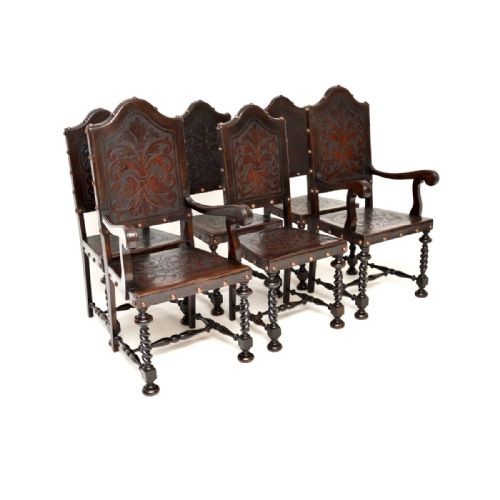
Upholsterers finished the seats using fabrics, leather, cane, or floral textiles, securing the coverings with tacks or decorative embossing on woods such as walnut.
Listings feature brass combined with oak, mahogany, rosewood, and walnut across the Georgian, Regency, and Victorian periods.
What varies in quality
The refinement of the metalwork and the precision of the brass inlay distinguish standard examples from finer ones. Crisp casting on solid brass frames and clean, flush fitting of brass stringing into the timber indicate skilled craftsmanship.
The choice and preservation of primary woods, such as figured mahogany or rosewood, alongside the integrity of original leather or cane upholstery, determine the overall calibre of each piece.
The Vintage Brass Side Chairs Glossary
- Brass inlay
- Metal strips set flush into the wooden surface of a chair for decoration. This technique appears frequently on Regency furniture.
- Bergere
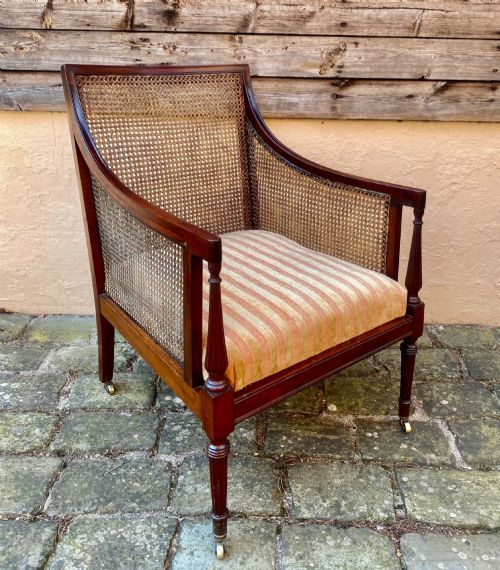
- An enclosed upholstered armchair with wooden framing and cane or upholstered sides. These provide comfortable seating with a classical silhouette.
- Side chair
- A chair without arms, designed originally for dining tables or occasional seating around a room. They offer compact proportions.
- Faux rosewood
- A painted or stained finish applied to a secondary timber to imitate the rich grain of genuine rosewood. Makers utilised this method to achieve a luxurious appearance economically.
- Hall chair
- A stiff-backed wooden seat historically placed in entrance halls, often featuring carved family crests or plain timber panels.
Vintage Brass Side Chairs: Frequently Asked Questions
How do I clean brass inlay?
Use a soft, dry cloth to remove dust from both the timber and the metal components. Avoid harsh chemical cleaners that might discolour the surrounding wood or damage the finish.
Apply a specialist brass polish very sparingly to the metal only, taking care not to let it touch the fabric or wood grain.
Can I mix these chairs?
Pairing different periods or timbers works well if the brass elements share a similar tone or finish. Matching heights and proportions ensures the seating sits comfortably around a table.
Introducing a pair of salon chairs alongside a set of dining chairs creates a balanced, collected interior.
Were these used for dining?
Many examples on this page served as formal dining seating in nineteenth-century homes. Their sturdy timber frames and upright backs suited communal meals.
Lighter salon and bedroom chairs were intended for occasional sitting or dressing areas rather than heavy daily dining.
What woods were commonly used?
Cabinetmakers relied on dense hardwoods like mahogany, rosewood, oak, and walnut to build durable chair frames. These timbers provided a stable base for intricate brass inlay and carving.
Softer woods occasionally received specialist finishes to simulate more expensive timbers.