

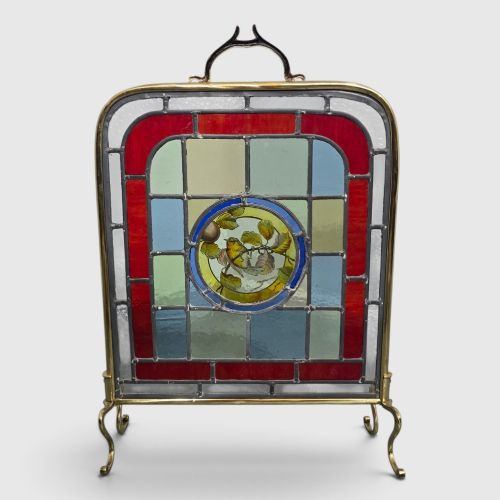


Vintage Brass Screen
A vintage brass screen stands before an idle hearth, bringing polish, reflection, and protection to the room.
Vintage Brass Screen
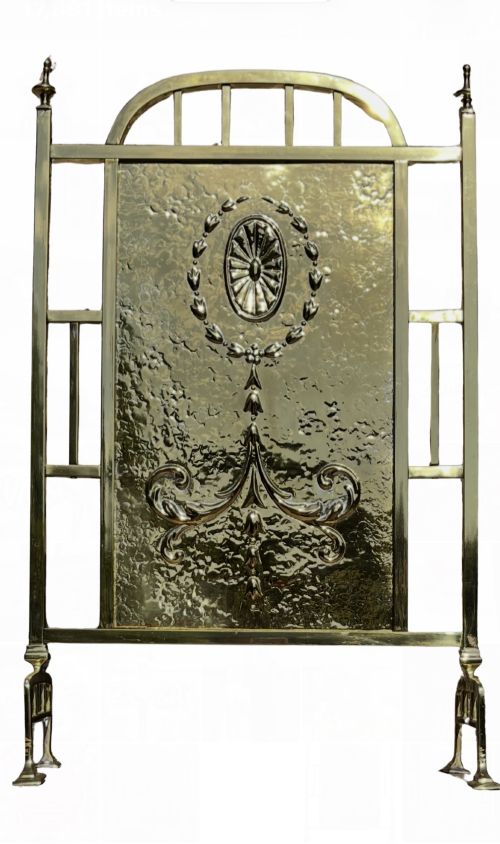
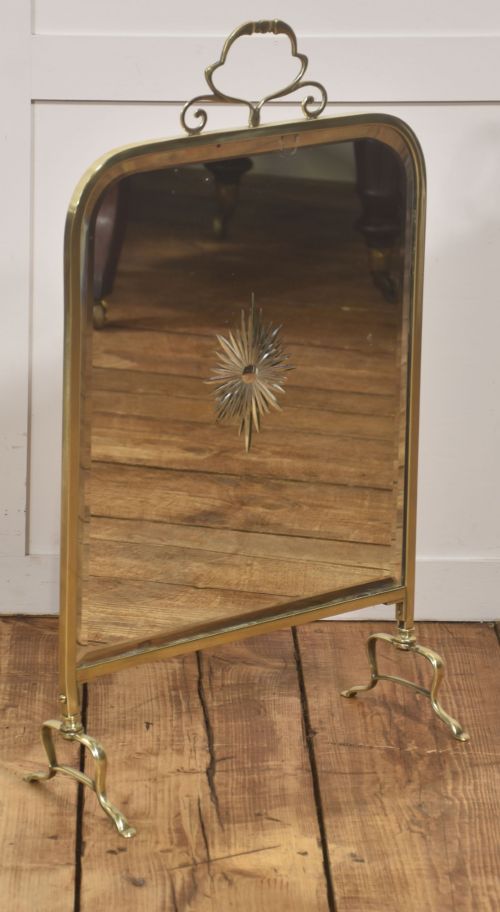
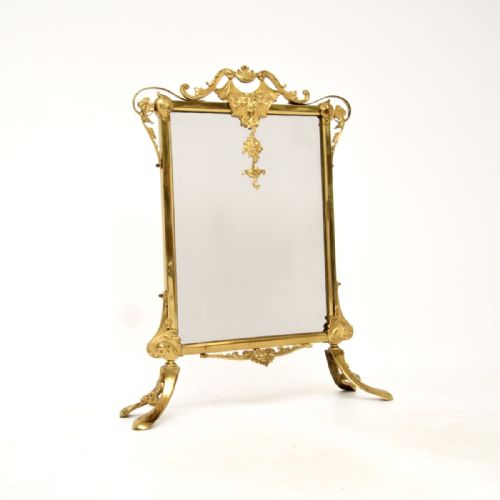
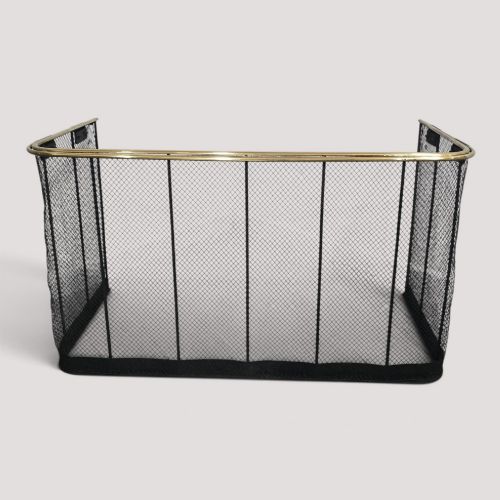
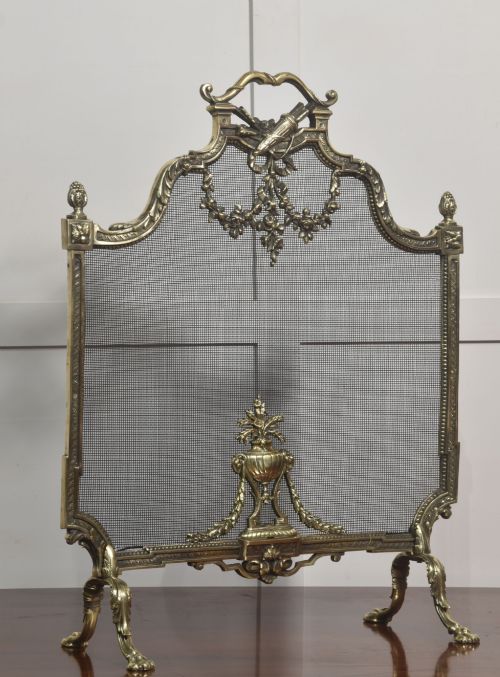
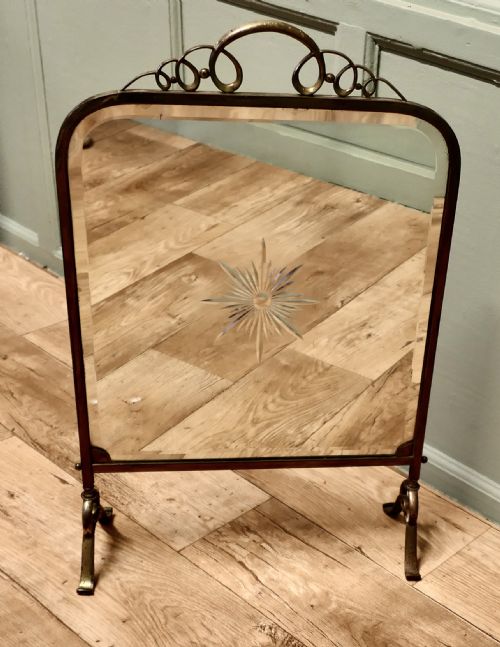
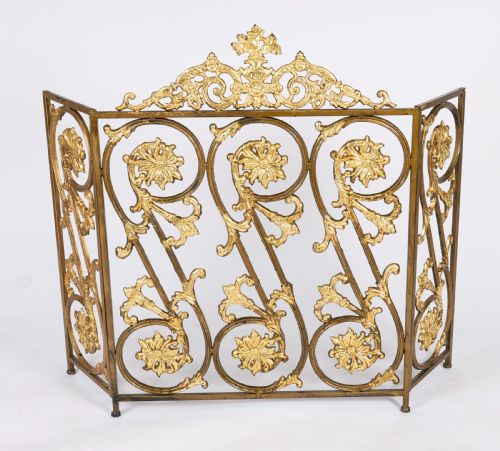
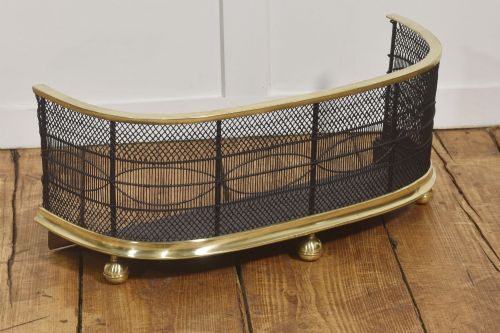
A vintage brass screen serves primarily as a decorative hearth accessory and spark guard, protecting rooms from stray embers while adding metallic warmth to a fireplace. When searching for a vintage brass screen, buyers encounter various forms designed for the domestic interior, ranging from solid frames with glass or mirror inserts to expanding folding designs.
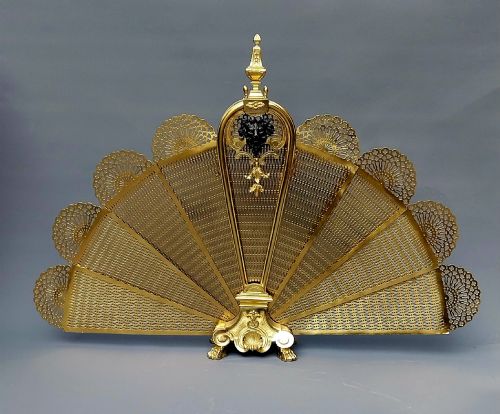
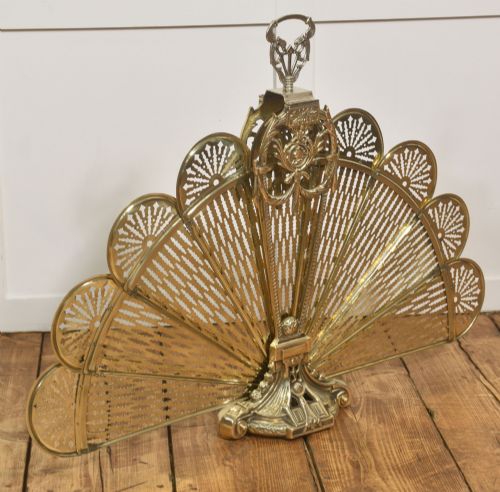
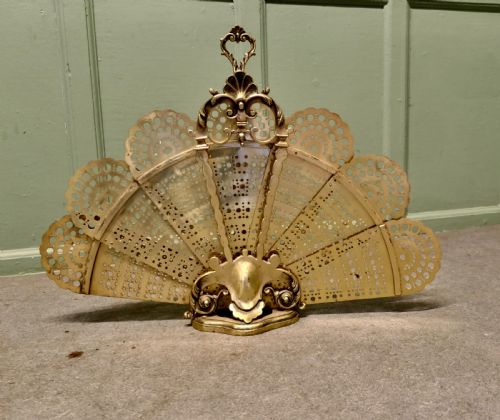
The most common iterations on this page date from the nineteenth century through the early twentieth century, encompassing Victorian and Edwardian examples alongside French revival styles. These pieces often take the form of fire screens, fireguards, or expanding peacock fan screens made to sit flat against the grate or fold neatly away when not in use.
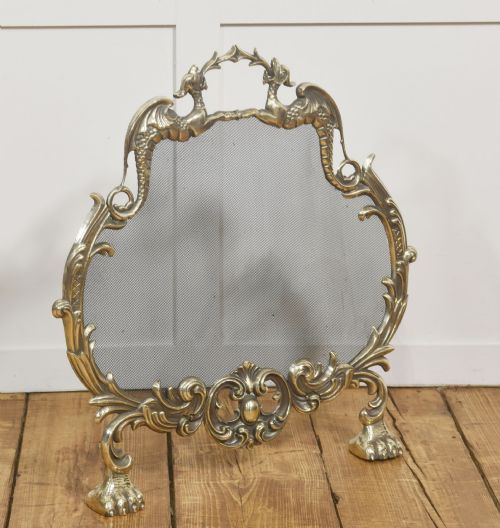
Makers and designers produced these guards in styles spanning French Rococo Revival, Art Nouveau, and Art Deco, utilising metalwork techniques of the period. Alongside standard hearth protection, related forms such as adjustable candle holders and nursery fenders occasionally appear under this heading.
Materials and construction
Makers constructed these screens using a base of cast or sheet brass, frequently augmented by iron frames for structural stability and wire mesh for spark retention. Finer examples utilise gilt bronze or gilt brass surfaces, which provide a brighter, reflective finish that catches the firelight.
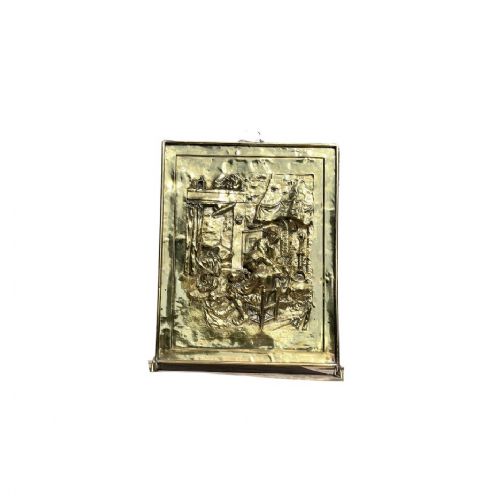
Decorative elements often involve embossed, chased, or pierced sheet brass, depicting floral motifs, musical trophies, or heraldic crests. In addition to solid metal panels, some designs incorporate cut glass, sunburst mirrors, or sliding wirework to combine transparency with physical protection.
Vintage Brass Screen Retail Price Guide 2026
Typical asking prices for vintage brass screen among the pieces listed under this phrase on Sellingantiques today, from the lower quarter to the upper quarter. They describe what is for sale here now, not the wider market.
The inventory includes several distinct forms, ranging from solid French Rococo fireguards to expanding Victorian folding fan screens.
Assessing quality and craftsmanship
Quality in these pieces rests upon the weight and thickness of the brass, the crispness of any chased or embossed detail, and the rigidity of the frame. Heavy cast mounts and deeply hand-chased ornamentation indicate superior production compared to thin, mechanically stamped sheet metal.
The sophistication of the mechanical elements also distinguishes higher grades of work, particularly in folding peacock screens and adjustable frames where the folding mechanism or sliding joints operate smoothly without looseness. Integration of secondary materials, such as bevelled mirror glass or heavy wire mesh securely riveted to the frame, marks the distinction between standard utilitarian guards and decorative pieces intended for formal reception rooms.
Bouhon Frères·AFC·M Pillischer of London
The Vintage Brass Screen Glossary
- Fireguard
- A protective barrier placed in front of an open fireplace to catch sparks and embers. These guards utilise wire mesh or solid metal panels to secure the hearth.
- Gilt Bronze
- Metalwork coated with a layer of gold or a gold-coloured alloy to give a rich, uniform metallic sheen. This finish resists tarnishing and enhances decorative relief work.
- Chased
- Metal ornamented by hammering or punching lines into the surface from the front. This technique creates low-relief patterns and fine pictorial details on brass panels.
- Peacock Fan Screen
- A folding fire screen composed of multiple overlapping metal blades that open like a tail fan. They expand to shield the fireplace opening and fold flat for storage.
- Nursery Fender
- A low protective metal enclosure placed around a hearth to keep children and pets at a safe distance from the fire. They often incorporate a raised top rail.
Vintage Brass Screen: Frequently Asked Questions
How do I choose the right size?
Measure the width and height of your fireplace opening to ensure the screen covers the entire hearth span adequately. A proper fit leaves sufficient clearance on the sides while containing potential sparks.
Consider whether you want a fixed flat screen or an expanding folding model that adjusts to different widths. Folding designs offer flexibility if you use the fireplace frequently and need to move the guard aside.
Are these screens safe to use with active fires?
Most historical screens featuring wire mesh or solid brass construction function effectively as spark guards during active fires. Check that the mesh remains intact and sturdy enough to catch embers safely.
Delicate pieces incorporating mirror glass or fine gilding suit decorative use or extinguished hearths better than roaring coal fires. Assess the material durability before exposing antique metalwork to intense heat.
How do I identify a French Rococo Revival screen?
Look for asymmetrical C-scrolls, shell motifs, and flowing floral cartouches typical of nineteenth-century revivalist metalwork. These pieces often feature cast bronze frames with elaborate pierced ornamentation.
The craftsmanship tends to be heavier and more sculptural than standard domestic guards, reflecting formal interior aesthetics of the period. Makers frequently incorporated naturalistic curves and detailed botanical chasing.