


Vintage Brass Pedestal
These vintage brass pedestal items span functional desk hardware, heavy dining supports and decorative lamp stands found across the nineteenth and twentieth centuries.
Vintage Brass Pedestal
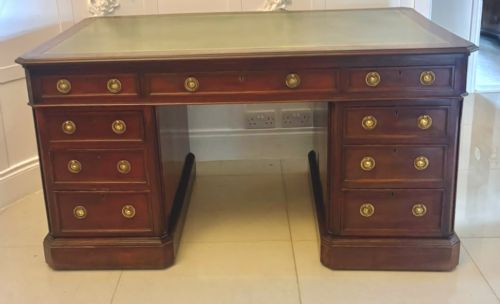
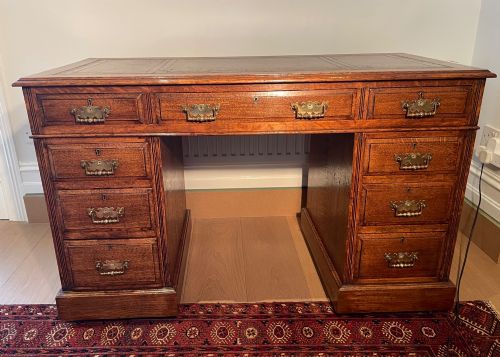
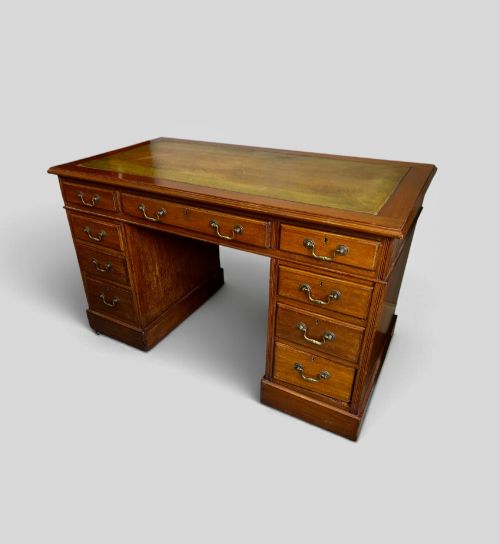
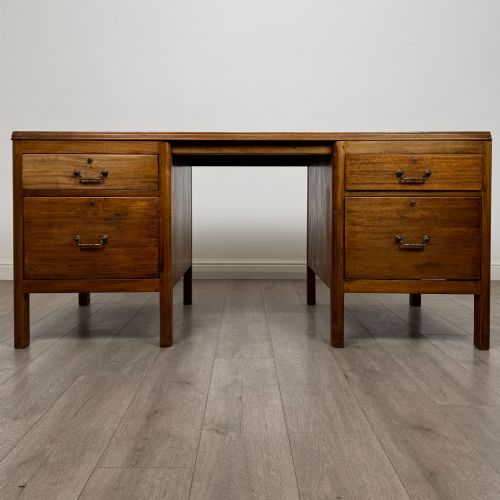
A vintage brass pedestal encompasses functional hardware, table supports and decorative items spanning the nineteenth and twentieth centuries. The listings show a heavy concentration of mahogany and oak pedestal desks fitted with brass details, alongside lamp tables, plant stands and lighting.
The materials paired with these brass elements dictate the domestic context of each piece. Dark hardwoods like mahogany and walnut dominate the large furniture items, while glass and marble appear alongside gilt bronze and brass in smaller decorative tables and stands.
Materials and construction
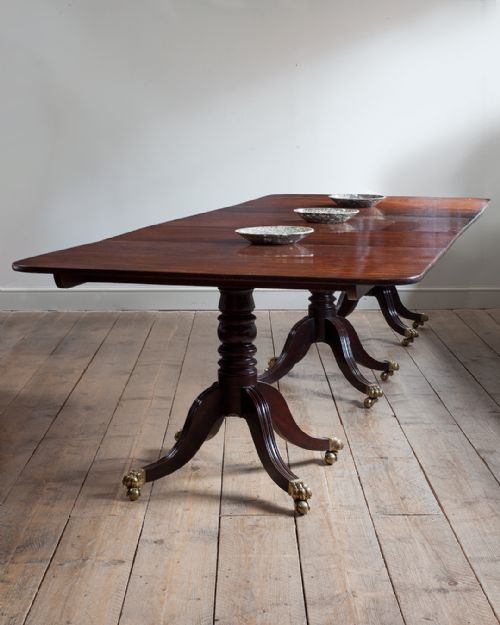
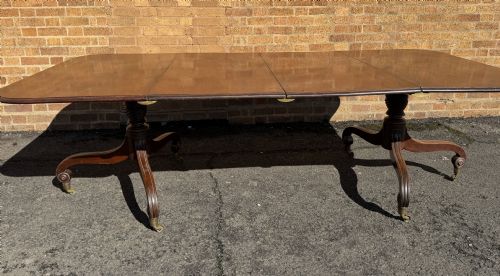
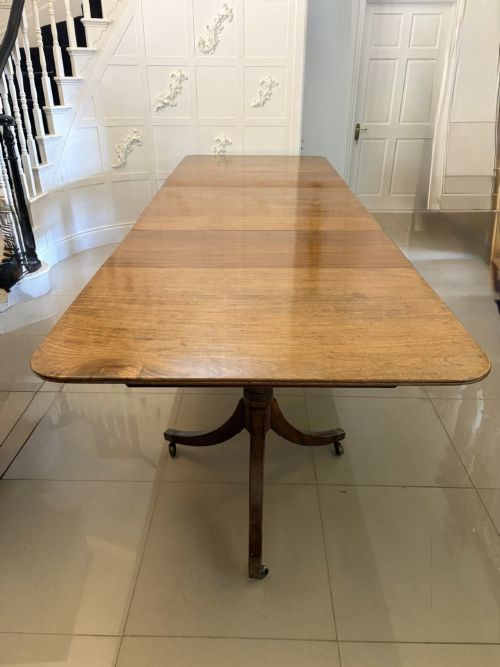
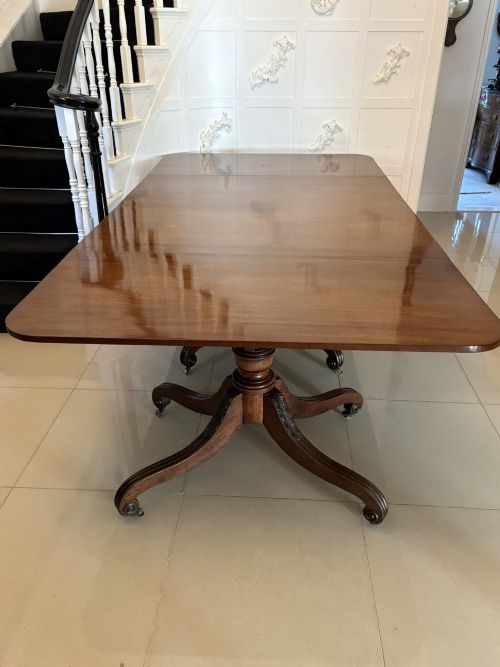
Makers combined solid and veneered timbers such as mahogany, walnut and oak with cast and turned brass components. Structural stability in large desks and dining tables relied on dense hardwoods, whilst brass provided both mechanical support through castors and decorative contrast via mounts and gallery rails.
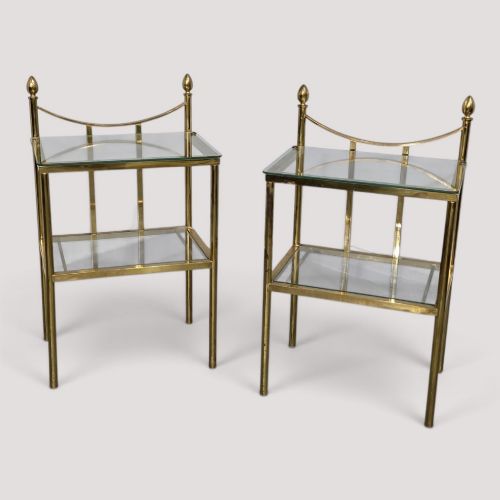
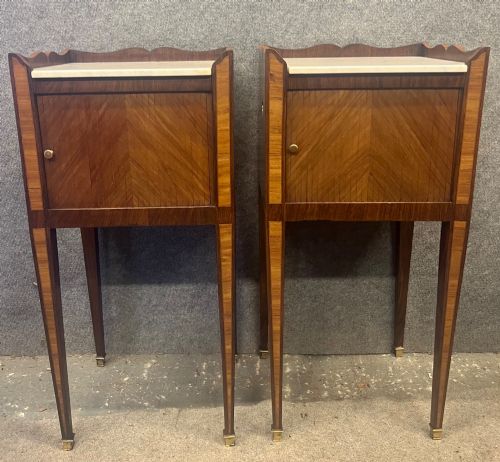
Surface ornamentation involved contrasting materials, notably inset leather writing surfaces on desks and polished white or decorative marble slabs fitted to lamp tables and plant stands. Gilt bronze and brass hardware were secured with traditional hand-cut screws and fixings appropriate to each period.
Among the heavy timbers and gleaming brass columns, a lone copper coal scuttle waits quietly by an imaginary hearth.
Markers of quality
Quality rests upon the proportion of the timber, the crispness of the brass casting and the integrity of the secondary woods used in internal drawer construction. Superior examples display substantial gauge brass fittings that are securely bedded into the surrounding wood rather than surface-applied.
The refinement of the joinery distinguishes standard utility pieces from high-status items, particularly in the dovetailing of desk drawers and the stability of multi-pillar dining tables. Original surface patination on both the timber and the unlacquered brass components further elevates the standing of an individual piece.
Trollope and Sons
The Vintage Brass Pedestal Glossary
- Pedestal desk
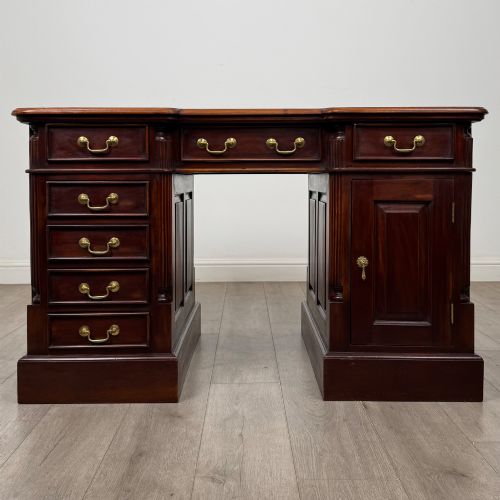
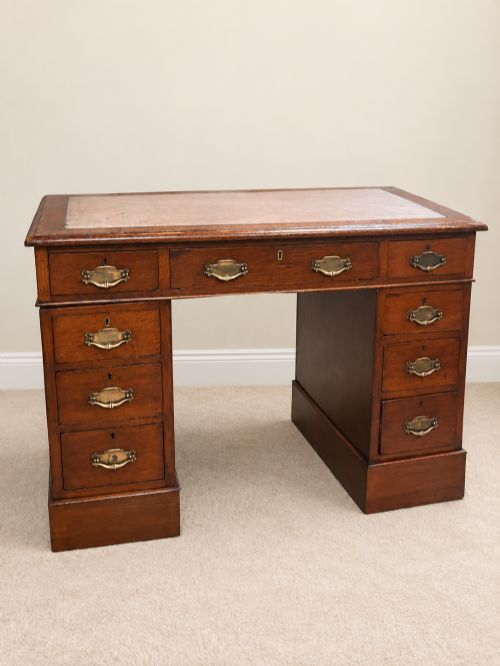
- A heavy freestanding office desk supported by two banks of drawers rather than four legs. These typically feature inset leather tops and substantial brass drawer pulls.
- Gilt bronze
- An alloy of copper and zinc treated with a gold wash or mercury gilding to impart a rich metallic lustre. It appears frequently on decorative nineteenth-century lamp bases and tazze.
- Kneehole
- The central recessed space beneath a desk or dressing table designed to accommodate the user's legs. It is often flanked by pedestals containing multiple drawers.
- Corinthian column
- An ornate classical architectural order characterised by bell-shaped capitals decorated with acanthus leaves. This motif is commonly cast in brass for tall nineteenth-century table lamps.
- Navette
- A pointed boat-like oval shape typical of small decorative brass containers and snuff boxes from the Georgian period.
Vintage Brass Pedestal: Frequently Asked Questions
What is a pedestal desk?
A pedestal desk is a large, sturdy writing table supported by two vertical columns of drawers that rest directly on the floor. These pieces provide substantial storage capacity while maintaining a formal presence in a study.
Most examples are constructed from dense hardwoods like mahogany or oak and feature inset leather writing surfaces alongside cast brass hardware.
How do I date a brass lamp?
Dating a metal lamp involves examining the casting quality, the wiring style, and the composition of the base materials. Heavier pieces often display crisp Corinthian detailing characteristic of the nineteenth century.
Later twentieth-century adaptations typically reveal modern electrical fittings and machine-finished threads that differ from older hand-turned components.
Where were plant stands used?
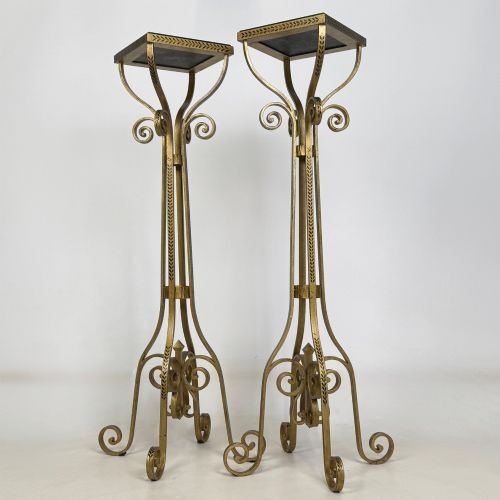
Plant stands served as decorative interior display furniture for drawing rooms and reception halls during the Victorian and Edwardian periods. They allowed homeowners to elevate ferns and floral arrangements to eye level.
These pieces frequently combine marble tops with brass mounts and slender wooden or metal supports to ensure stability on domestic floors.