



Vintage Brass Optics
Vintage brass optics are precision instruments and magnifiers spanning the Georgian, Victorian, and Edwardian periods, prized for their functional engineering and polished metal finishes.
Vintage Brass Optics
Vintage brass optics encompass scientific instruments, telescopes, desk accessories, and surveying equipment manufactured from the eighteenth century through the early twentieth century.
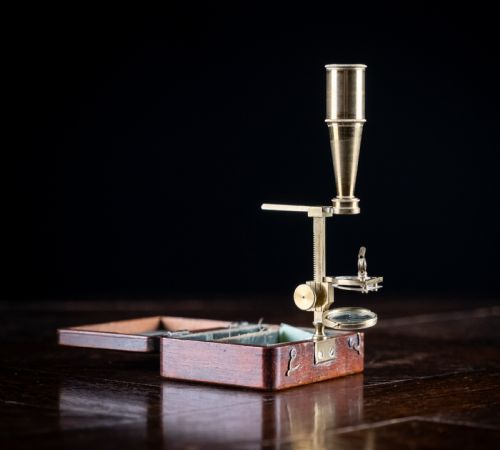
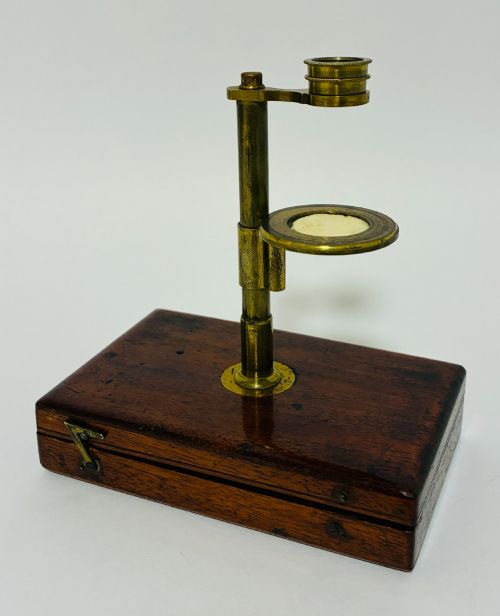
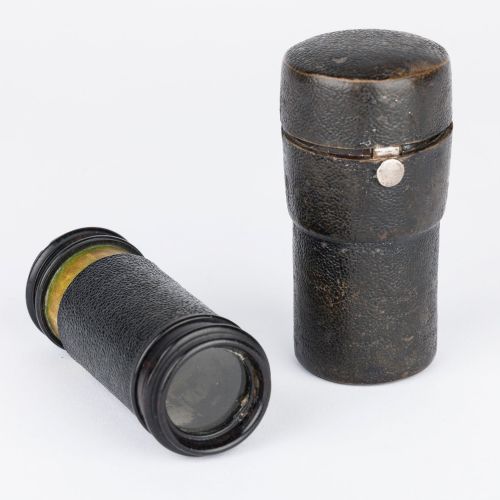
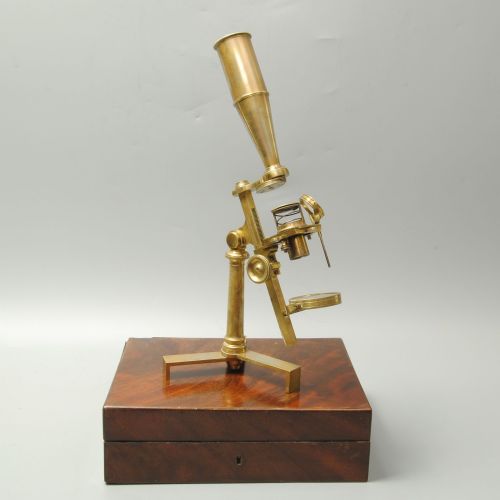
You will frequently encounter Victorian maritime telescopes, pocket spyglasses, and scientific microscopes housed in wooden cases alongside magnifying glasses mounted on stands.
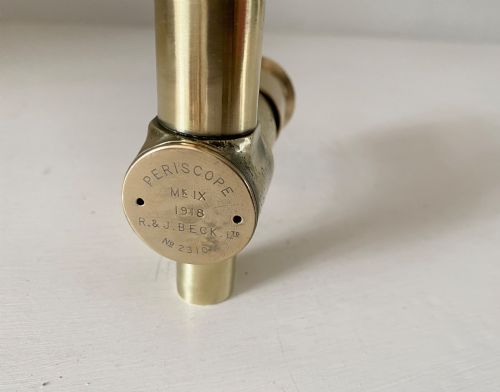
The selection ranges from Georgian library telescopes to First World War military periscopes and pocket microscopes utilised in the field.
Materials and construction
These instruments are constructed primarily from polished brass paired with glass lenses, utilising turned wood, mahogany, or leather for barrels and storage cases.
Makers incorporated bone, velvet, iron, and fabric detailing, combining cast and turned metal components with precision optical glass.
The selection includes items spanning from the mid eighteenth century through the First World War, utilising brass, glass, mahogany, and leather.
Judging quality
Quality rests in the precision of the optical glass and the mechanical smoothness of focusing mounts, draw tubes, and pivoting stands.
Superior examples retain original fitted wooden cases, maker signatures on the brass barrel, and auxiliary lenses or candle shades intact.
R & J Beck Ltd·M Pillischer of London·Matthew Berge London·John Gilbert·WF Stanley
The Vintage Brass Optics Glossary
- Achromatic lens
- An optical lens designed to reduce chromatic and spherical aberration by combining two types of glass with different dispersive properties.
- Periscope
- An optical instrument utilising prisms and lenses to allow observation over obstacles, frequently utilised in military contexts.
- Bullseye lens
- A thick, strongly convex lens mounted on a stand or frame to concentrate light or magnify text.
- Spyglass
- A small, portable refracting telescope typically constructed with multiple sliding brass draw tubes.
- Microscope
- A scientific instrument featuring objective and compound lenses mounted in brass for examining specimens at high magnification.
Vintage Brass Optics: Frequently Asked Questions
How do I date a brass telescope?
Examine the optical design, the number of sliding draw tubes, and any maker inscriptions engraved onto the brass barrel or eyepiece.
Compare the materials of the case and secondary components, such as mahogany bodies or leather wrappings, against known production periods.
Can I still use antique microscopes?
Many nineteenth-century compound and botanical field microscopes remain fully functional for low-power observation when the lenses are clean.
Care should be taken when adjusting the brass focusing rack to avoid placing undue stress on historic mechanical joints.
What is a Gregorian telescope?
A Gregorian telescope is a reflecting optical design invented by James Gregory in the seventeenth century that uses secondary concave mirrors to produce an upright image.
These instruments appear mounted on tabletop stands and represent early forms of astronomical and terrestrial viewing apparatus.
How should I clean antique brass?
Dust brass optics gently with a soft, dry cloth and avoid harsh chemical polishes that remove historic patination.
Optical glass requires specialised lens cleaning tissue and fluid to prevent scratching the delicate vintage surfaces.