



Vintage Brass Mahogany Holders
These vintage brass mahogany holders combine rich timber and bright metal for functional display, bringing period character to any room.
Vintage Brass Mahogany Holders
Vintage brass mahogany holders encompass a varied group of utilitarian and decorative objects made from rich tropical hardwood combined with cast or sheet brass fittings. When you search for vintage brass mahogany holders, you encounter items designed for organising papers, holding books, illuminating rooms, or containing fuel.
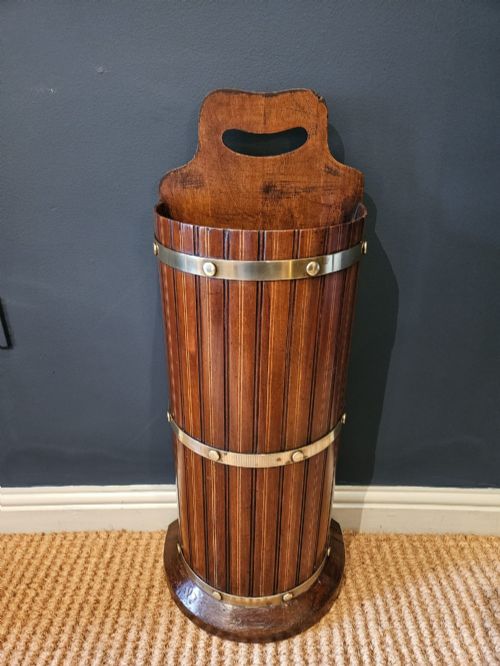
The selections span distinct historical eras, with pieces originating from the Georgian, Regency, and Victorian periods up through the early twentieth century. Common forms include multi-division canterburys, desk accessories, umbrella stands, and candlesticks that merge structural timber with polished metal mounts.
How they were made
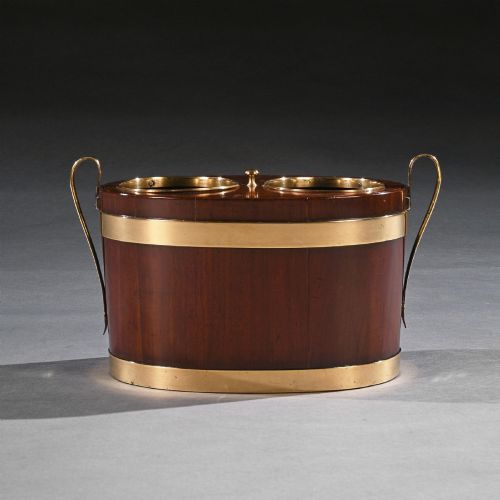
Cabinet makers constructed the main bodies using dense mahogany, sometimes adding satinwood inlay, leather accents, or coopered stave construction for cylindrical vessels such as wine coolers and log bins. Brass appeared as structural carrying handles, cast paw feet, gallery rails, hinges, and decorative mounts fastened securely to the timber.
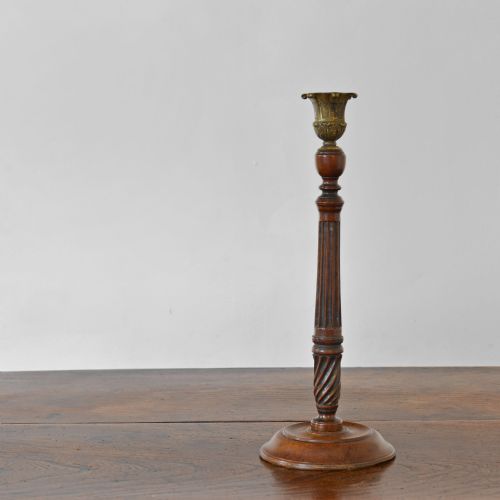
Joinery techniques relied on traditional methods like dovetailing for drawers and boxes, while turned wooden elements such as candlestick shafts demonstrated the use of the lathe. Metal components were cast, hand-finished, and polished to contrast with the deep reddish-brown tones of the polished wood.
One unexpected offering pairs a mahogany structure with a dedicated cricket novelty bat, ball, and wicket design for sporting enthusiasts.
What varies in quality
Quality rests in the crispness of the brass casting and the selection of the mahogany timber, where straight or figured grain patterns indicate careful material choice by the maker. Superior examples display refined proportions, integrated brass details that fit flush without excess solder or screws, and original fittings rather than later replacements.
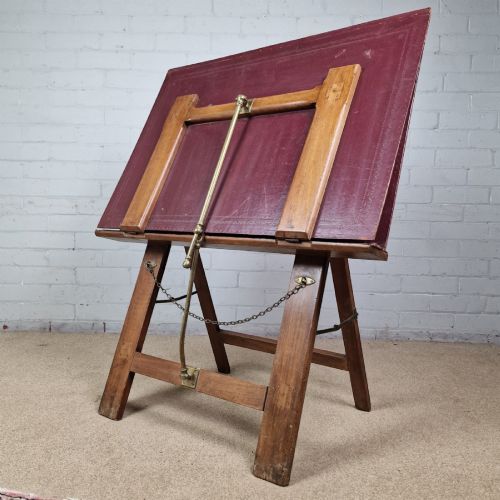
Subtleties in hand-turned woodwork and the robustness of internal divisions mark the distinction between everyday utility pieces and finer salon items. Items retaining original working mechanisms, such as adjustable stands or authentic label holders, show greater fidelity to their original period manufacture.
Shoolbred
The Vintage Brass Mahogany Holders Glossary
- Canterbury
- A low, multi-partitioned stand used originally for holding sheet music, folios, or newspapers. They typically feature slatted sides and low castors.
- Coopered
- A method of construction where narrow staves of wood are joined vertically and bound with metal hoops, used primarily for cylindrical containers like wine coolers and peat buckets.
- Ormolu
- Finely ground high-carat gold mercury-gilded onto a bronze or brass base object. It provides a bright, durable metallic finish often seen on decorative mounts.
- Satinwood inlay
- Contrasting light-coloured timber veneer set into recesses cut into the darker mahogany surface. It creates geometric or botanical decorative borders.
- Turned
- Shaped on a rotating lathe using cutting tools to produce symmetrical cylindrical forms such as candlestick stems or support columns.
Vintage Brass Mahogany Holders: Frequently Asked Questions
What were canterburys used for?
Canterburys served as dedicated stands for organising sheet music, folios, and periodicals near a piano or seating area. Their partitioned design kept paper items upright and accessible.
Over time, owners adapted them to hold modern magazines and newspapers while retaining their mobility on small castors.
How do I care for brass and mahogany?
Dust mahogany surfaces regularly with a soft, dry cloth and apply occasional beeswax to nourish the timber. Avoid placing items in direct sunlight or near heat sources to prevent the wood from drying out.
Polish brass elements gently with a suitable cloth, taking care not to let cleaning compounds stain the surrounding wood.
How can I tell a Georgian piece from a Victorian one?
Georgian items generally exhibit restrained classical proportions, understated bracket or slender tapering feet, and hand-cut joinery specific to eighteenth-century workshops. Brass mounts on these earlier objects tend to be simpler and heavier.
Victorian pieces often introduce more eclectic revival styles, heavier turned elements, and sometimes machine-assisted manufacturing marks or tubular brass components.
Were wine coolers used for wine?
Georgian wine coolers and monteiths were lined with lead or metal to hold ice and water for chilling bottles at the dining table. They sat on the floor near the host.
Later owners frequently repurposed these substantial timber vessels as large planters or indoor jardinières for housing potted plants.