

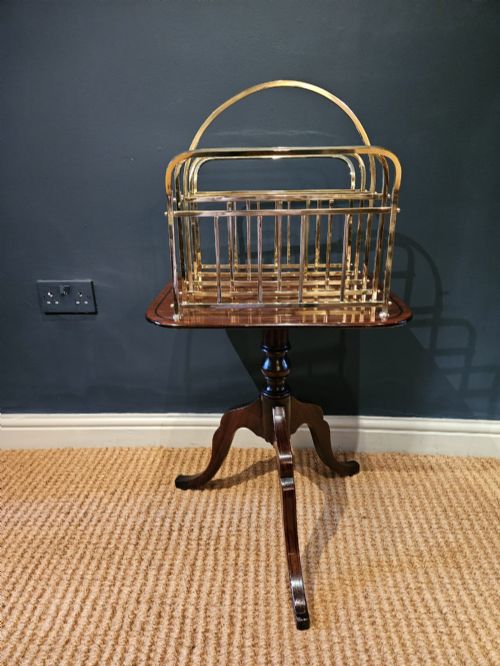
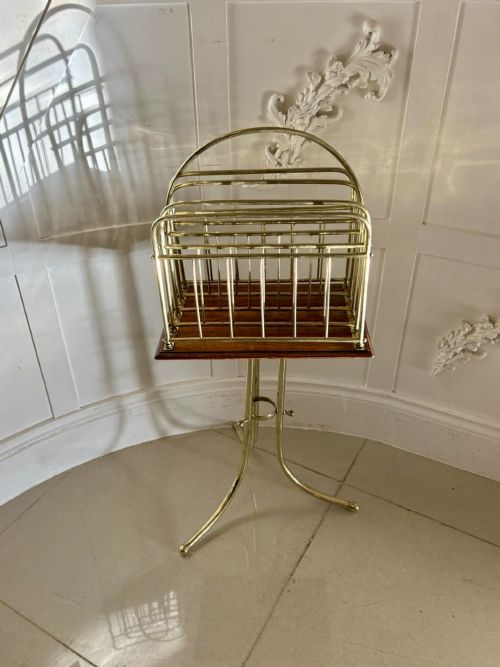


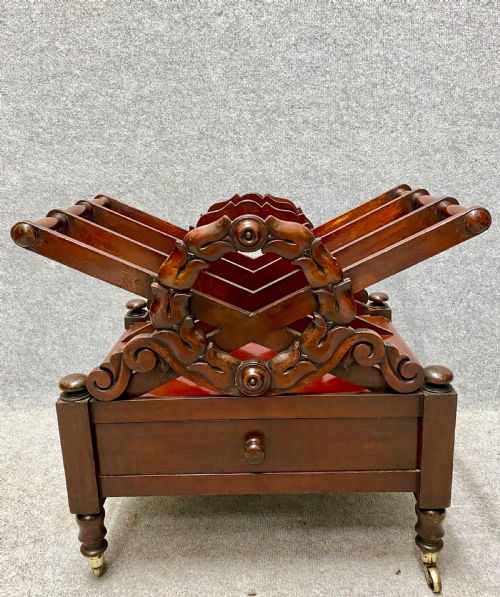


Vintage Brass Magazine Holder
A vintage brass magazine holder brings polished metal and structured utility to a room, holding papers neatly while catching the light.
Vintage Brass Magazine Holder
A vintage brass magazine holder covers a range of practical stands designed for newspapers, folios and periodicals, with designs drawing on the Regency, Victorian, Edwardian and Arts and Crafts periods. The selection here spans freestanding metal racks, revolving stands and traditional wooden canterburys fitted with brass handles and bars.
Most examples combine polished metal with timbers such as mahogany, oak, walnut and rosewood. Forms range from boat-shaped and four-division canterburys to kidney-shaped bamboo-style frames and revolving table-top book containers.
How they were made
Construction relies on joining solid hardwoods like mahogany and oak with tubular or cast brass components, often secured with visible screws and brackets. Metal elements are shaped into carrying handles, dividing rods, and revolving bases.
Wooden frames utilise traditional joinery for divisions and slatted sides, while brass sections are frequently combined with copper panels in Arts and Crafts examples to display hammered surface textures.
Vintage Brass Magazine Holder Retail Price Guide 2026
Typical asking prices for vintage brass magazine holder among the pieces listed under this phrase on Sellingantiques today, from the lower quarter to the upper quarter. They describe what is for sale here now, not the wider market.
What varies in quality
Quality shows in the weight of the brass and the choice of timber, with finer pieces using solid rosewood or figured mahogany rather than secondary woods. Superior stands display robust structural framing that supports heavy folios without loosening at the joints.
Execution of detail defines the better examples, from turned wooden finials and neatly dovetailed partitions to substantial cast brass handles and smooth mechanisms on revolving stands.
The Vintage Brass Magazine Holder Glossary
- Canterbury
- A low, open-framed piece of furniture featuring multiple vertical divisions for holding music, newspapers and books. Originating in the eighteenth century, these stands often include a carrying handle and low legs.
- Folio stand
- A large rack designed for holding oversized sheets of paper, prints or maps. These stands typically feature adjustable or fixed sloping sides.
- Tubular brass
- Hollow metal tubing used to form lightweight yet rigid handles and structural rails on nineteenth-century stands. This method allowed makers to incorporate metalwork without adding excessive weight.
- Revolving bookcase
- A compact shelving unit mounted on a concealed rotating mechanism that turns freely on a fixed base. These pieces allow access to books or magazines from all sides.
Vintage Brass Magazine Holder: Frequently Asked Questions
What is a canterbury?
A canterbury is a low compartmentalised stand originally built to hold sheet music and newspapers near a chair or piano.
Over time, the form evolved to serve as a general repository for magazines and periodicals in sitting rooms.
How do I date a brass magazine rack?
Dating relies on identifying the underlying timber, the fastening methods, and the stylistic details associated with periods like Regency or Edwardian.
Heavier cast brass elements and tubular construction typically point towards Victorian and Edwardian manufacturing methods.
Can these hold heavy books?
Most stands with wooden partitions and sturdy brass bars manage standard periodicals and daily newspapers with ease.
Heavier folio volumes require solid timber canterburys built with oversized proportions rather than light metal-framed racks.
Where should I place a revolving rack?
Revolving stands work well beside an armchair or near the corner of a room where users can spin the rack to reach different titles.
Their enclosed sides also suit placement on a side table or desk top.