
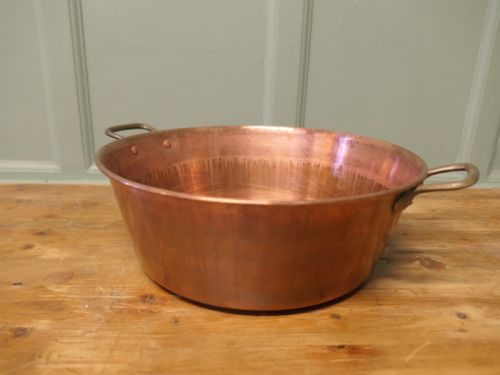


Vintage Brass Gauge
These vintage brass gauge instruments record atmospheric changes, pressure, and atmospheric data with mechanical precision.
Vintage Brass Gauge
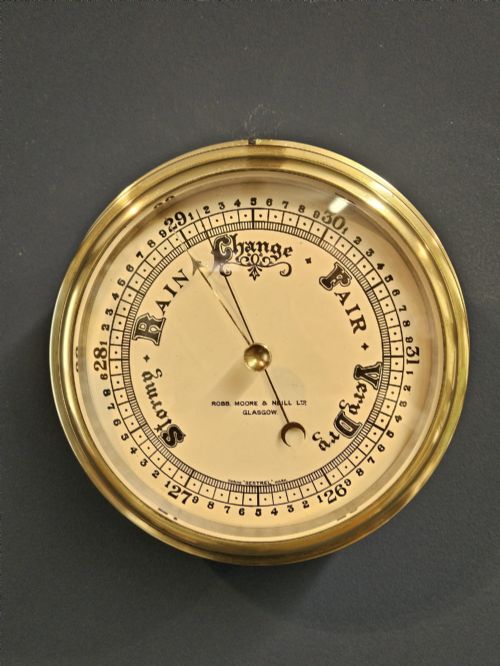
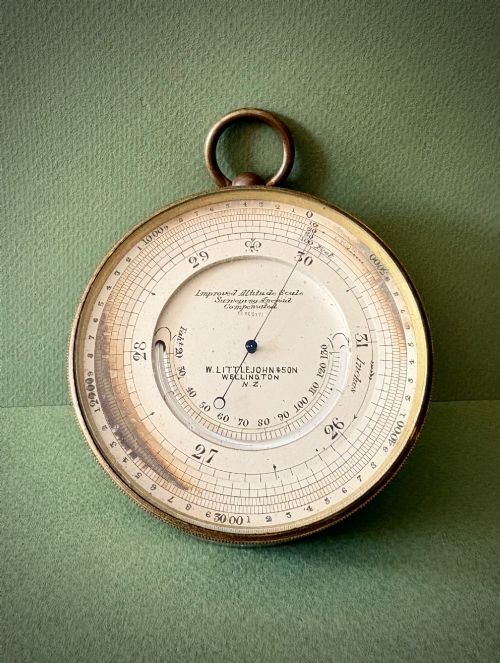
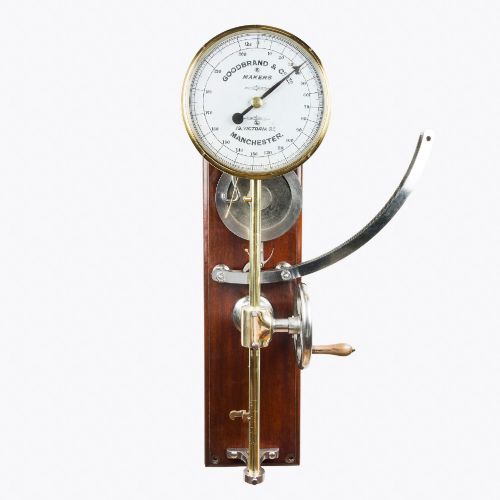
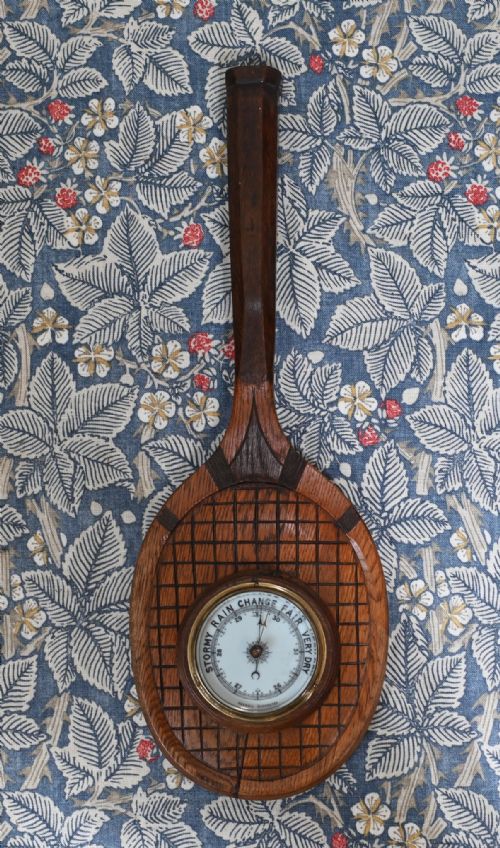
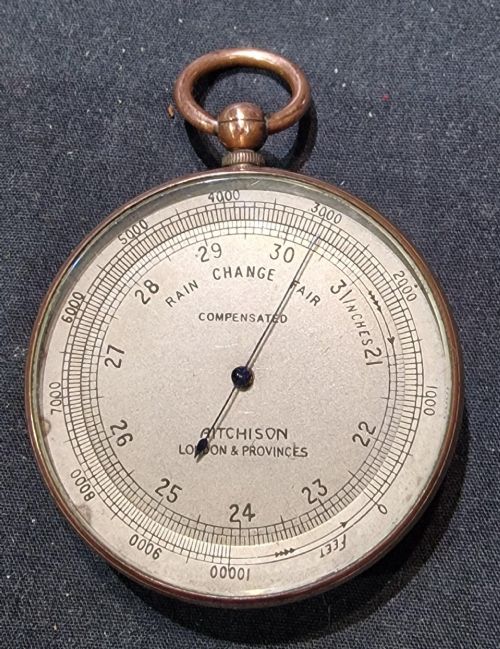
A vintage brass gauge encompasses a range of scientific, meteorological, and industrial instruments housed in polished metal casings. When searching this phrase, collectors encounter barometers, weather stations, hygrometers, altimeters, and pressure gauges spanning the nineteenth and early twentieth centuries.
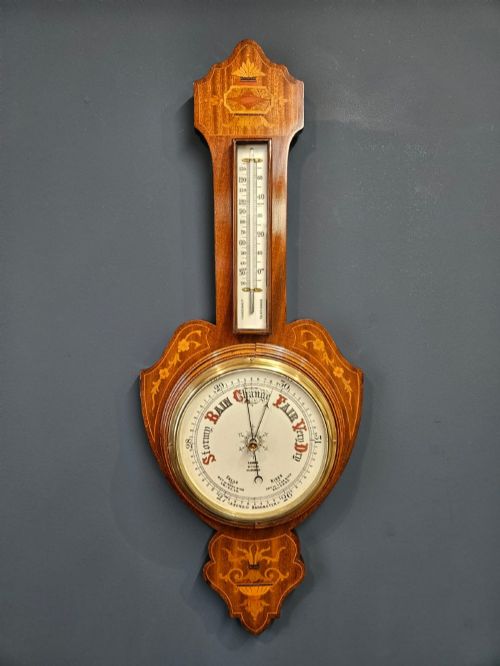
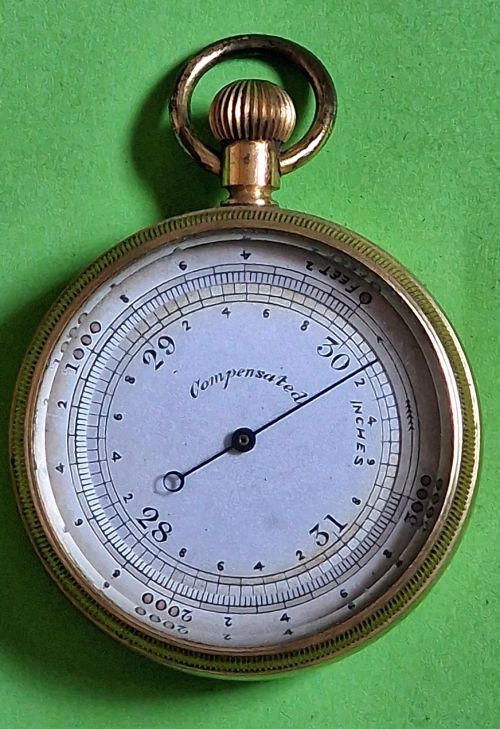
The most common examples on this page are aneroid barometers and scientific metres originating from Victorian and Edwardian workshops. These pieces combine utilitarian function with domestic display, reflecting an era when scientific measurement entered the home and workplace.
How they were made
The construction relies on precision mechanical engineering, utilising sensitive internal springs, diaphragms, and hair elements to register atmospheric shifts or pressure changes. Artisans engraved dials by hand and mounted delicate needles to display readings accurately.
Some nineteenth-century weather watchers relied on captive leeches in glass jars to predict storms before barometers took over the mantelpiece.
What varies in quality
Quality in a vintage brass gauge rests on the reputation of the maker and the complexity of the internal mechanism. Examples signed by established scientific instrument makers display superior precision and finer engraving on the dial plates compared to unsigned commercial pieces.
The weight of the brass casting and the clarity of the protective glass also distinguish finer examples. Instruments retaining their original fitted wooden cases and complete mechanical linkages command greater interest among collectors.
Wilh. Lambrecht·Poulenc Freres·Short & Mason·Alfred Apps·Patrick Adie·Negretti & Zambra·J Hicks·Dewrance of London·C F Casella·Alexander Wright·James H Kelly·Blake & Son·Dollond
The Vintage Brass Gauge Glossary
- Aneroid barometer
- A device that measures atmospheric pressure without using liquid, relying instead on a flexible metal box. It expands and contracts as pressure changes, moving a dial indicator.
- Hygrometer
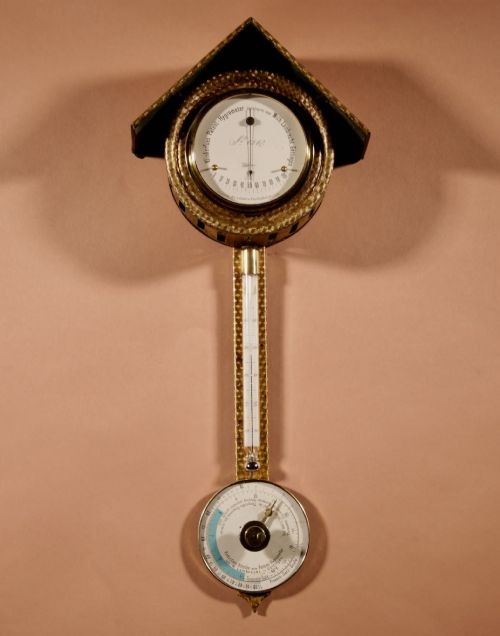
- An instrument designed to measure humidity in the air. Nineteenth-century versions often utilised human hair or sensitive plant fibres.
- Altimeter
- A specialised gauge that measures altitude above a fixed level by sensing atmospheric pressure. These were utilised in aviation, mountaineering, and observation balloons.
- Barograph
- A recording barometer that draws a continuous line of atmospheric pressure onto a rotating paper chart over a week. They are typically housed in mahogany or glass cases.
- Anemometer
- A wind gauge used to measure wind speed and pressure. Pedestal and pattern examples record airflow in meteorological stations.
Vintage Brass Gauge: Frequently Asked Questions
What does an aneroid barometer measure?
An aneroid barometer measures changes in atmospheric pressure to help forecast weather conditions locally. It registers increases and decreases without requiring any liquid mercury.
Changes in pressure move an internal vacuum capsule connected to the dial pointer, showing shifts towards rain, change, or fair weather.
How do I read a hair hygrometer?
A hair hygrometer displays relative humidity by utilising the natural expansion and contraction of treated animal hair. As moisture in the air changes, the hair stretches or tightens.
This movement turns the attached pointer across a calibrated scale to indicate the percentage of moisture present in the room or environment.
Where were these instruments used?
These gauges and barometers were utilised in domestic hallways, maritime ships, scientific laboratories, and industrial observation settings. Weather stations monitored local conditions for agriculture and navigation.
Pressure gauges served military observation balloons and factory water systems, ensuring mechanical safety and precise operational control.
How do I date an Edwardian barometer?
An Edwardian barometer can be dated by its manufacturing style, casing design, and the specific maker's signature on the dial. The period spans from nineteen hundred to nineteen ten.
Inlaid wood cases and simplified Edwardian scientific lettering distinguish these pieces from more heavily ornamented Victorian counterparts.