


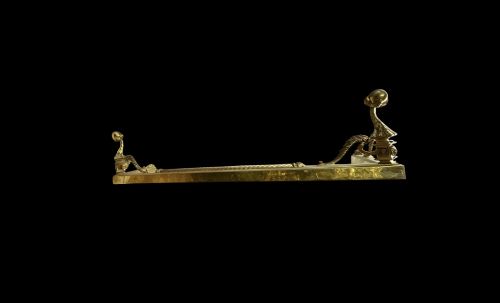


Vintage Brass Fire Surround
A vintage brass fire surround brings hearth and metalwork together, framing fires with period weight and polish.
Vintage Brass Fire Surround
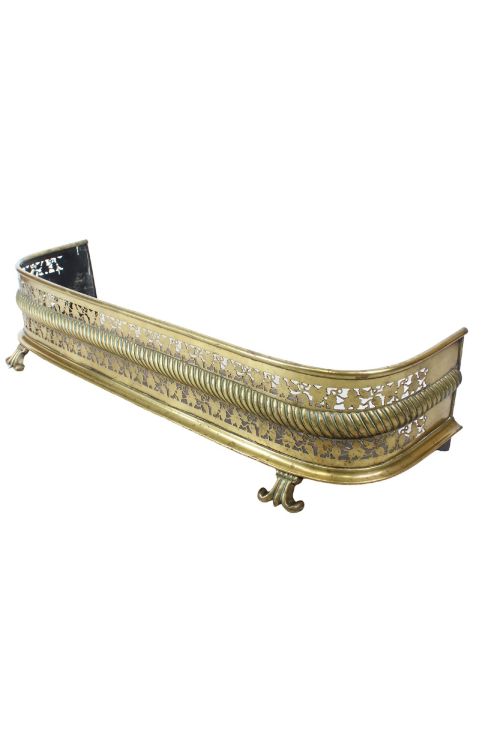
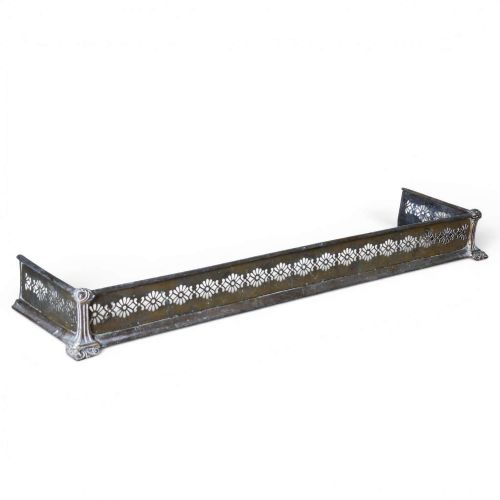
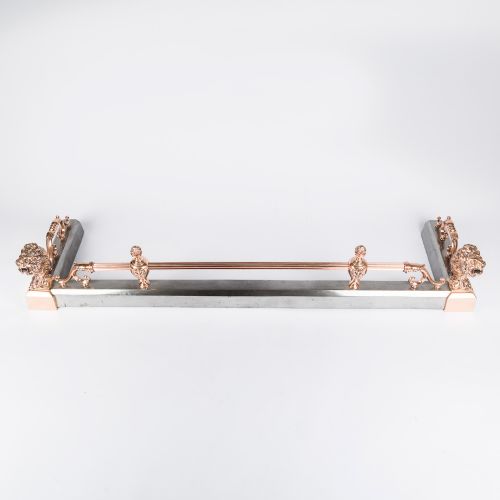
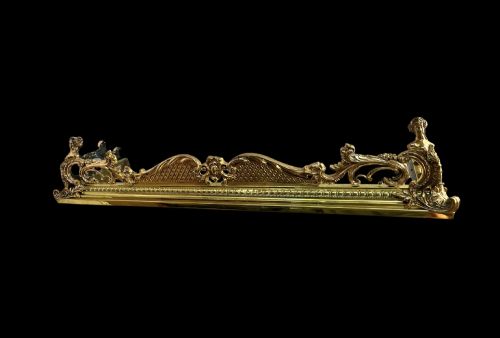
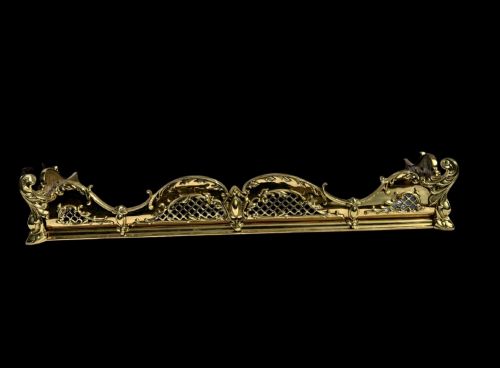
A vintage brass fire surround typically takes the form of a fireplace fender or kerb, designed to sit on the hearth and keep embers contained. These pieces define the perimeter of an open fire while adding a distinct metallic presence to the room.
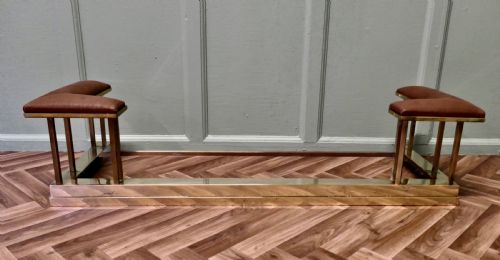
The versions most commonly met on this page date from the nineteenth century into the early twentieth century, spanning Victorian, Edwardian, and Art Nouveau periods. They range from simple polished kerbs to substantial club fenders featuring upholstered seating.
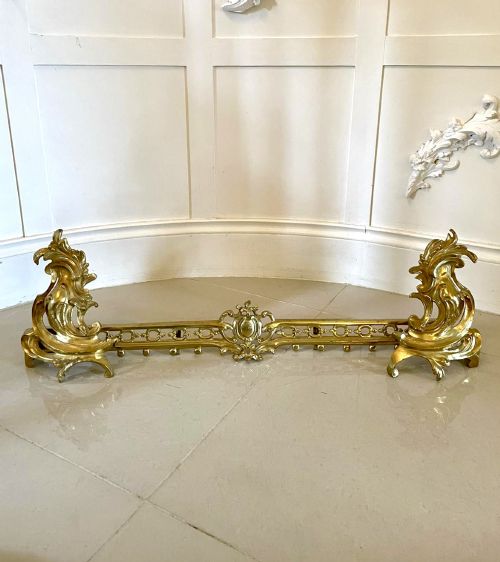
Makers and designers of these hearth furnishings utilised various styles, including Regency, French Rococo, and Louis XVI Neoclassical alongside domestic Victorian designs. Each object serves both a practical containment role and an architectural framing function for the fireplace.
Materials and construction methods
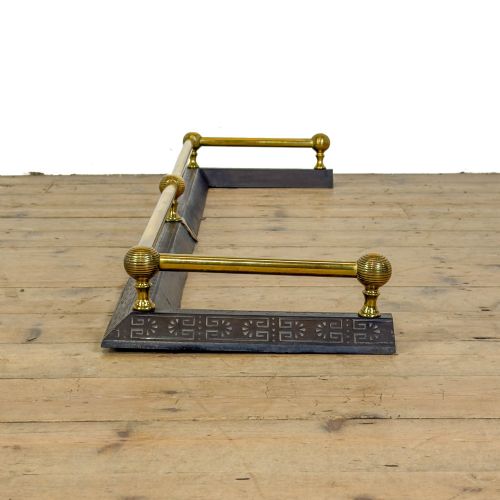
Makers combined brass with structural metals such as iron and steel to give these fenders rigidity and weight on the hearth. Pierced brass work, castings, and rolled steel sections form the main bodies of these pieces.
Surface treatments included polished finishes and patinated bronze effects, while club fenders incorporated leather upholstery for integrated seating. Gilded brass and copper details frequently appeared on finer French and English examples.
Listings feature brass combined with iron, steel, copper, bronze, and leather across Victorian, Edwardian, and Art Deco periods.
Distinctions in quality and execution
Quality in a vintage brass fire surround rests upon the thickness of the metal gauge and the crispness of any pierced or cast ornamentation. Fenders with substantial brass and integrated steel frames hold their structural integrity better over decades of hearth use.
The refinement of decorative details, such as hand-pierced gallery work, robust spindle turnings, and quality leather upholstery on club variants, separates standard utility pieces from exceptional examples.
The Vintage Brass Fire Surround Glossary
- Fender
- A low metal guard placed around the hearth to prevent burning logs or coals from rolling onto the floor. They form the primary structure of most fire surrounds.
- Club fender
- A low, wide fender featuring upholstered top seats, originally designed to provide comfortable seating close to the fire. They often combine brass frames with leather pads.
- Kerb
- An alternative term for a hearth fender, marking the boundary between the fire opening and the room flooring. These often feature pierced or scrolled brass plates.
- Spindle
- A turned or shaped vertical metal rod used within the body of a fender to create an open gallery effect. Spindles add architectural rhythm to the metalwork.
Vintage Brass Fire Surround: Frequently Asked Questions
How do I measure for a fire fender?
Measure the width and depth of your hearth space directly where the fender will rest, ensuring you account for the projection of the fireplace surround itself.
Allow a small clearance around the hearth edges so the metal frame sits securely without overlapping uneven flooring or hearth stones.
What is a club fender used for?
A club fender incorporates padded leather seats along the top rails, allowing people to sit close to the warmth of the hearth.
These versatile pieces combined a protective metal barrier with practical fireside seating in nineteenth-century drawing rooms.
How do I clean antique brass?
Dust the metal surface regularly with a soft cloth to prevent soot and ash accumulation from settling into the details.
Avoid harsh chemical abrasives that strip away historic patination, opting instead for gentle cleaning methods suited to aged brass.
Can fenders be adjusted for size?
Extending brass fenders are constructed in sliding sections that allow the overall width to be adjusted to fit different hearth dimensions.
Fixed-frame fenders must be selected to match the exact measurements of your fireplace opening and hearth.