

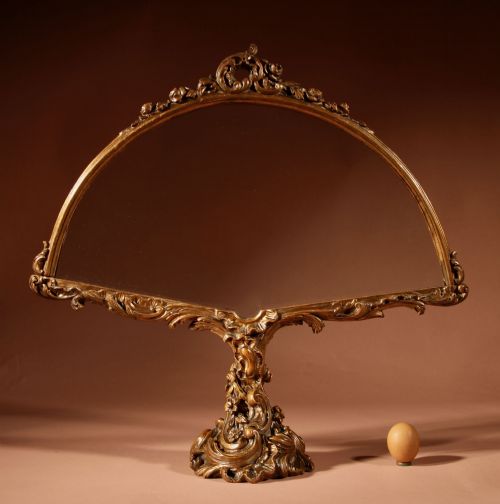


Vintage Brass Display Case
A vintage brass display case brings structural clarity and bright metal framing to small collections, scientific instruments and personal treasures.
Vintage Brass Display Case
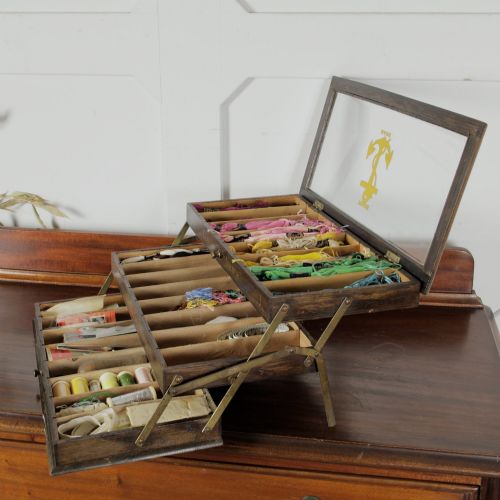
A vintage brass display case encompasses everything from tabletop bijouterie tables and countertop shop counters to tall vitrines and specialised instrument housings. When searching for a vintage brass display case, buyers encounter items originating from the Victorian and Edwardian eras through to the Art Deco period of the nineteen twenties and thirties. These pieces emerge in domestic furniture forms as well as commercial shop fittings designed to highlight merchandise or instruments.
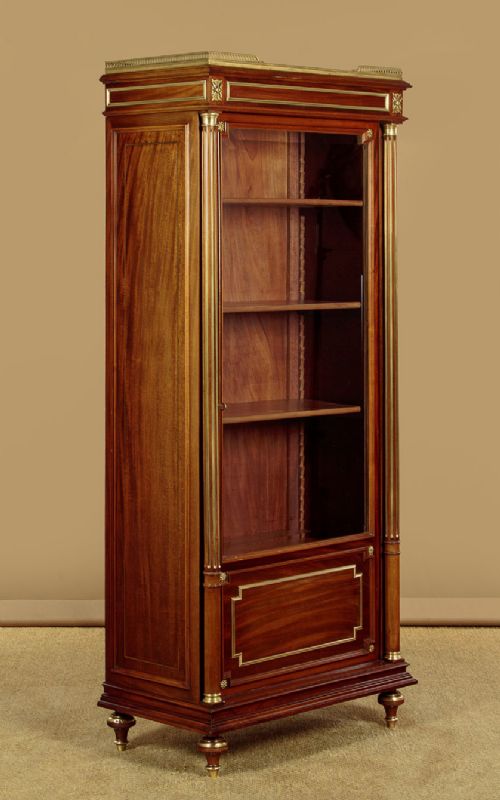
The objects listed range from glazed shop counters and freestanding cabinets to scientific enclosures and velvet-lined jewellery cases. Brass framing provides the skeletal structure for glazed panels, allowing light to enter from multiple angles and illuminate the contents within. Cabinet construction frequently incorporates woods such as mahogany, oak and kingwood alongside the characteristic metal framing.
How they were made
Makers constructed these cabinets using brass for structural framing, hinges and mounts, pairing the metal with timber carcasses built from mahogany, oak, walnut or kingwood. Glass panels, often bevelled or flat, fit into the metal channels to enclose the interior while maintaining visibility from outside. Interiors often utilise velvet, leather or mirrored surfaces to line the base and backboards of the display space.
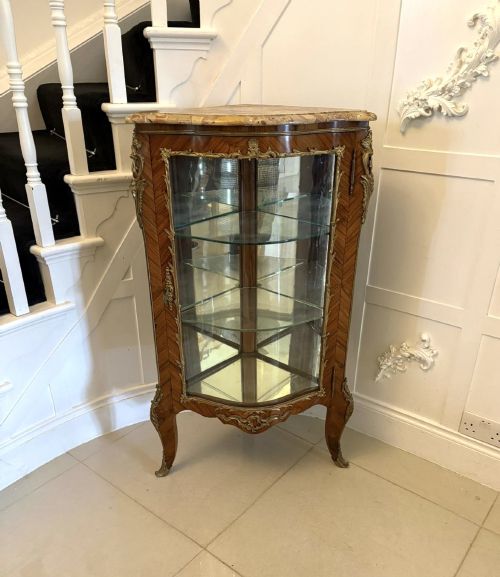
Joinery methods reflect the commercial and domestic standards of the nineteenth and twentieth centuries, employing dovetailed drawers, mortise and tenon joints, and secured brass locks. Ormolu mounts and fine veneers decorate French revival pieces, whereas commercial shop counters rely on robust timber frames with brass-framed glass upper sections. Specialist scientific cases integrate brass dials, hinges and glazed compartments built to protect precision instruments.
Vintage Brass Display Case Retail Price Guide 2026
Typical asking prices for vintage brass display case among the pieces listed under this phrase on Sellingantiques today, from the lower quarter to the upper quarter. They describe what is for sale here now, not the wider market.
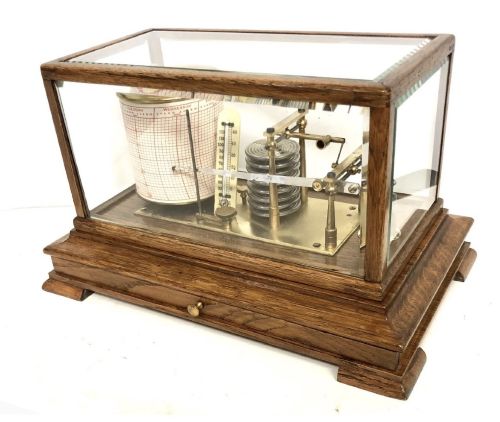
Several cabinets once recorded atmospheric pressure or tested optometry lenses before retiring to civilian life as display furniture.
What varies in quality
Quality rests in the precision of the brass framing joints, the weight and clarity of the bevelled glass panes, and the selection of cabinet timbers such as figured mahogany or kingwood. Superior examples exhibit substantial metal castings, crispormolu mounts, and integrated locking mechanisms bearing maker stamps from established firms.
Lesser pieces show simpler joinery, thinner sheet brass, and replacement glass or linings. The integration of mirrored interiors, dovetailed chart drawers in barographs, and well-preserved velvet or leather interior surfaces distinguishes workshop-produced commercial and domestic items from standard utilitarian boxes.
F. Sage & Co.·Saml. Elliott & Sons·Siegel·De Grave, Short, & Co·Maison Jansen
The Vintage Brass Display Case Glossary
- Bijouterie cabinet
- A low display table or cabinet specifically designed with a glazed top and sides for holding small ornaments, jewellery, or curiosities.
- Barograph
- A recording meteorological instrument housed in a wooden case with glazed panels, often featuring a chart drum and thermometer.
- Ormolu
- Gilded bronze or brass mounts cast in decorative scrollwork or floral motifs and applied to the exterior of cabinets.
- Vitrine
- An all-glass or glass-fronted display cabinet used for presenting porcelain, glassware, or small decorative objects.
- Bevelled glass
- Glass panes with edges cut and polished at an acute angle to refract light and add a decorative border.
- Vernis Martin
- A simulated Japanese lacquer finish popular in French furniture revival pieces, notable for its layered translucent varnishes.
Vintage Brass Display Case: Frequently Asked Questions
What items fit inside a vintage brass display case?
These enclosures suit small collectibles, pocket watches, jewellery, medals, and scientific instruments. The interior depth and shelving determine whether the case accommodates flat documents or three-dimensional objects.
Countertop models and low bijouterie tables offer flat display surfaces, while taller vitrines incorporate adjustable shelves for vertical arrangement.
How do I clean brass frames safely?
Maintenance requires a soft cloth to remove dust from both the metal and the glass panels. Abrasive polishes should be avoided to protect any surrounding wood veneers and original patination.
Applying mild cleaners specifically formulated for antique metals prevents damage to delicate soldered joints and vintage lacquer coatings.
Are these cases suitable for retail use?
Many surviving examples originate from Edwardian and Art Deco shops, making them robust enough for modern retail display. Countertop cabinets and glazed shop counters provide secure, visible storage for high-value merchandise.
Locks and hinged doors allow working environments to secure items while keeping them visible to customers.
How do I distinguish Victorian from Edwardian cabinets?
Victorian examples often feature darker timbers like walnut and heavy, ornate carved details or classical Revival styles. Edwardian and later pieces tend to show lighter mahogany construction, cleaner lines, and commercial adaptations.
Hardware styles, timber selection, and construction marks help narrow down the decade of manufacture when style alone remains ambiguous.