




Glass Jewellery Display Box
A glass jewellery display box holds small treasures under clear panes, bringing order and visibility to a collection.
Glass Jewellery Display Box
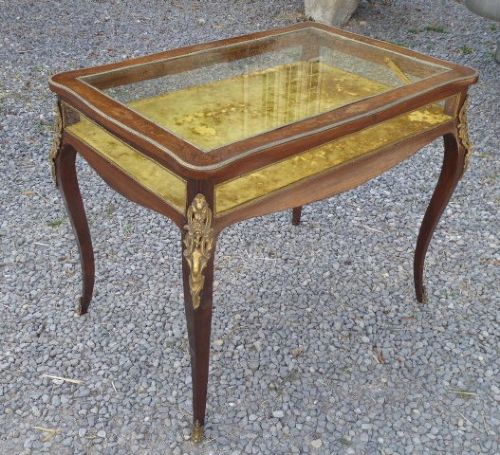
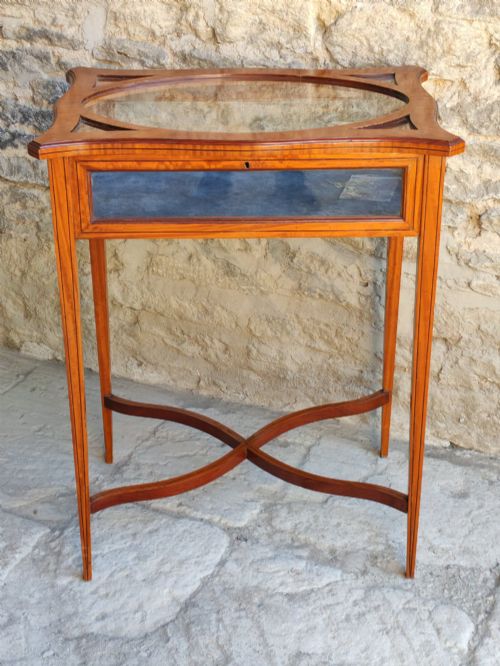
A glass jewellery display box takes several distinct forms across the Victorian, Edwardian and nineteenth-century periods, ranging from table-standing display cabinets and bijouterie tables to smaller trinket boxes. These pieces serve to showcase precious items behind glazed panels while keeping them secure.
The most common examples on this page are Edwardian and Victorian mahogany or satinwood display tables and bijouterie cabinets. They combine glazed top sections or drop-front doors with velvet or fabric linings suited for rings and brooches.
Originating largely from British and French workshops, these pieces vary from serpentine-shaped tables to compact brass-mounted boxes. Each style reflects the period's domestic demand for elegant desktop or tabletop storage.
How they were made
Cabinet makers utilised dense hardwoods such as mahogany, rosewood, kingwood and satinwood to build the structural frames of a glass jewellery display box. These timbers were frequently enhanced with marquetry, brass inlay or satinwood banding.
Glazing forms the central visual element, framed by cast or chased ormolu and brass mounts that secure the glass panels. Interiors are lined with velvet, satin or complementary fabrics to cushion the contents.
Glass Jewellery Display Box Retail Price Guide 2026
Typical asking prices for glass jewellery display box among the pieces listed under this phrase on Sellingantiques today, from the lower quarter to the upper quarter. They describe what is for sale here now, not the wider market.
Materials span mahogany, rosewood, kingwood, brass, ormolu and velvet across Victorian and Edwardian examples.
What varies in quality
The standard of a glass jewellery display box rests on the crispness of the cabinet work, from the tight mitres of the timber frame to the precision of any brass or ormolu mounts. Finer pieces demonstrate careful selection of veneers like burr walnut or kingwood and feature well-fitted bevelled glass.
Interior execution separates standard utility pieces from exceptional examples. The quality of the original fabric lining, the smooth action of hinges or drop-front doors, and the integration of functional locks define the upper end of the range.
The Glass Jewellery Display Box Glossary
- Bijouterie table
- A specialised display table featuring a glass-topped compartment designed for small decorative objects and jewellery. These tables typically stand on slender legs and open from the top.
- Ormolu
- Gilded bronze mounts applied to furniture and boxes, popular in French pieces. It provides bright metallic contrast against dark hardwoods like mahogany.
- Marquetry
- Decorative woodwork formed by fitted pieces of veneer applied to a carcase. It creates intricate patterns and floral motifs on table tops.
- Bevelled glass
- Glass panes with angled edges cut around the perimeter. This treatment refracts light and adds depth to the viewing window.
- Serpentine shape
- A curved outline featuring a convex centre flanked by concave curves. This profile adds fluid movement to the edges of display tables.
Glass Jewellery Display Box: Frequently Asked Questions
How were bijouterie tables used?
These tables sat in drawing rooms to display personal ornaments, medals and trinkets for guests to inspect.
The glass top kept items free from dust while placing them in plain view under natural light.
What is the difference between a vitrine and bijouterie table?
A vitrine functions primarily as an upright display cabinet with vertical shelves for porcelain and larger objects.
A bijouterie table provides a horizontal surface with a shallow glazed compartment specifically meant for low-profile jewellery.
How do I care for the fabric interior?
Original velvet or satin linings require gentle dusting with a soft brush rather than moisture or chemical cleaners.
Keeping the box out of direct sunlight prevents the fabric colours from fading over time.
Can I store modern jewellery inside?
These historical boxes suit modern rings, brooches and watches perfectly due to their soft fabric bases.
The secure lids and optional locks keep everyday pieces organised on a dressing table.