





Glazed Jewellery Cabinet
A glazed jewellery cabinet brings together glass and timber to hold small treasures in plain view.
Glazed Jewellery Cabinet
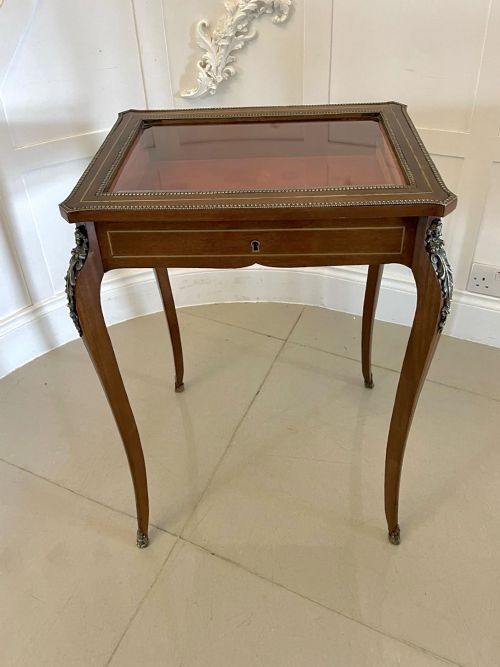
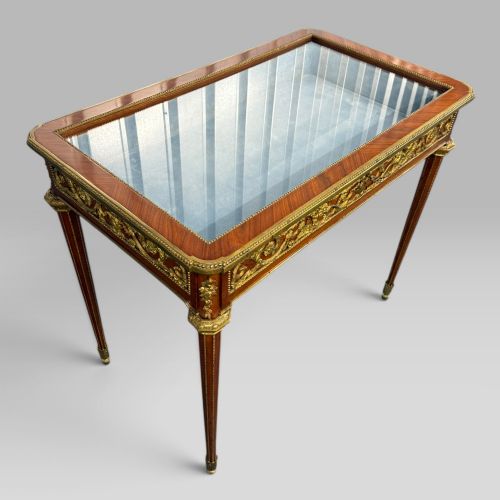
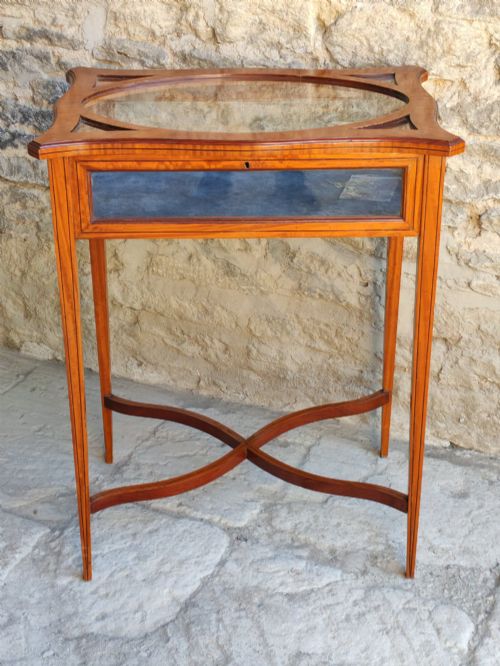
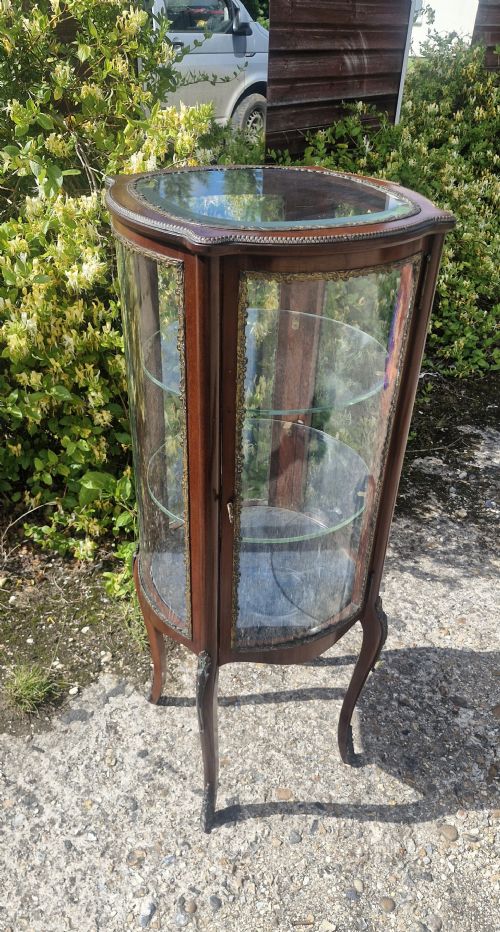
A glazed jewellery cabinet, frequently encountered as a bijouterie table or countertop vitrine, sits upon legs or rests on a surface to exhibit small items beneath glass. These pieces emerge primarily from Victorian, Edwardian, and later periods spanning into the twentieth century, taking forms such as serpentine, kidney, octagonal, and oval shapes. Workshops produced them to display personal ornaments and precious objects safely while keeping them visible.
The selection on this page relies heavily on Edwardian and nineteenth-century examples built from mahogany, satinwood, and walnut, often ornamented with brass or ormolu mounts. Makers also turned to kingwood, oak, and ebonised timber for specific display cases and vitrines. Buyers find both standing display tables and smaller countertop units designed for shop or domestic use.
How they were made
Cabinets and tables combine solid hardwoods and veneers like mahogany, satinwood, and kingwood over structural frames, housing glass panels within hinged or fitted lids and doors. Cabinetmakers employed precision joinery to secure the glazed sections and protect the contents from dust. Timber surfaces received careful polishing to reveal natural grain patterns.
Metal enrichment comes from brass, ormolu, and gilt metal mounts fixed around glass borders and along table rims, while interiors rely on fabric, velvet, or silk linings to cushion displayed objects. Inlaid decoration using contrasting woods appears across Edwardian and Sheraton style specimens, adding geometric or floral borders to table tops and cabinet fronts.
Glazed Jewellery Cabinet Retail Price Guide 2026
Typical asking prices for glazed jewellery cabinet among the pieces listed under this phrase on Sellingantiques today, from the lower quarter to the upper quarter. They describe what is for sale here now, not the wider market.
Some display tables retain vintage sign-written details from Breitling watches, hinting at past lives in high street shop windows.
What varies in quality
Quality rests upon the selection of timber veneers, the crispness of cabinet-making joints, and the weight of metal mounts. Superior examples employ finely figured mahogany, satinwood, or burr walnut paired with heavy cast brass or ormolu rather than lighter pressed metal.
Internal details distinguish finer specimens, such as hand-stitched velvet linings, accurately fitted glass edges, and robust locking mechanisms complete with working keys. The refinement of inlaid crossbanding and the structural stability of the legs or tabletop housing separate standard utility pieces from high-grade display furniture.
François Linke
The Glazed Jewellery Cabinet Glossary
- Bijouterie table
- A glass-topped display table specifically designed for small ornaments and jewellery. These pieces usually feature a hinged glazed lid opening above a velvet-lined interior.
- Ormolu
- Gilded bronze ornamentation applied to furniture mounts and borders. Cabinetmakers utilised it extensively on nineteenth-century French and English display cases.
- Vitrine
- A glass cabinet or display case used for showing ceramics, silver, or small treasures. The term derives from the French word for glass.
- Crossbanding
- A border of veneer laid around the edge of a table top or panel so that the grain runs perpendicular to the central wood. It frames the primary timber surface on many Edwardian cabinets.
- Serpentine
- A furniture shape featuring a double-curved edge that flows outward in the centre and curves inward at the sides. This contour appears on select nineteenth-century display tables.
Glazed Jewellery Cabinet: Frequently Asked Questions
What is a bijouterie table?
A bijouterie table is a specialised display piece featuring a glazed top and a shallow, fabric-lined interior. It allows personal ornaments and small valuables to be viewed from above while remaining enclosed.
These tables were popular in Victorian and Edwardian drawing rooms for exhibiting collections of medals, trinkets, and fine jewellery.
How were countertop display cases used?
Countertop display cases served merchants and jewellers as secure shop fittings for presenting goods to customers. They kept merchandise visible and protected upon sales counters.
Later examples include specialised vitrines bearing historical sign-written details from watchmakers and retailers.
Which woods are common in these cabinets?
Mahogany forms the primary structure for many surviving examples, often paired with satinwood crossbanding and inlay. Cabinetmakers also utilised walnut, oak, kingwood, and ebonised timber.
Finer pieces incorporate exotic veneers and contrasting borders to enhance the visual appeal of the display surface.
How do I date an Edwardian display cabinet?
Edwardian display cabinets typically date from the period between nineteen hundred and nineteen ten, exhibiting lighter woods and Sheraton revival influences. They frequently combine inlaid mahogany with delicate tapered legs and brass mounts.
Construction methods, lock types, and secondary woods inside the cabinet help confirm the manufacturing era.