

Vintage Brass Coat Hooks
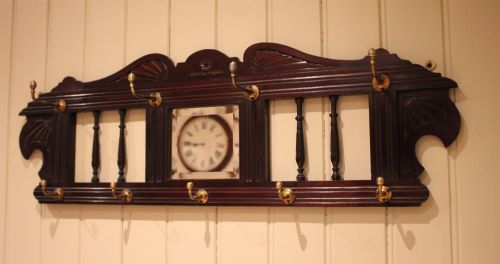
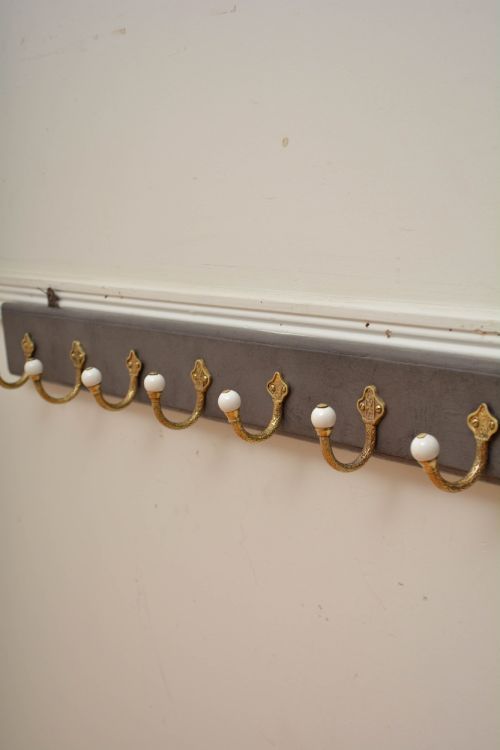
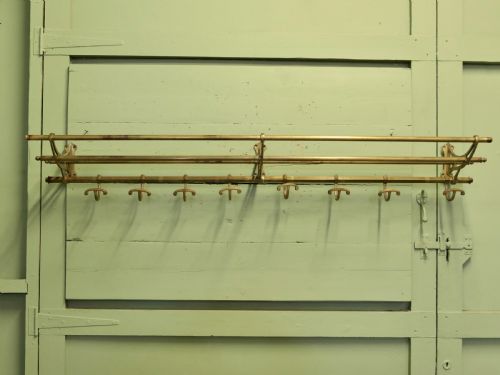
These vintage brass coat hooks range from compact Victorian hallway fixtures to long French hat and coat racks.
Vintage Brass Coat Hooks
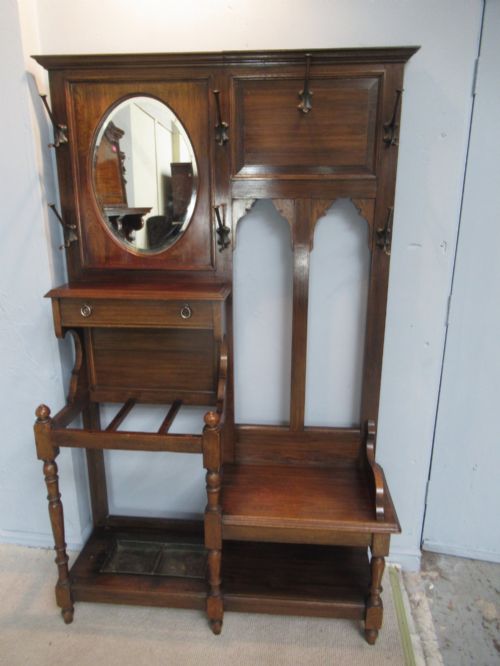
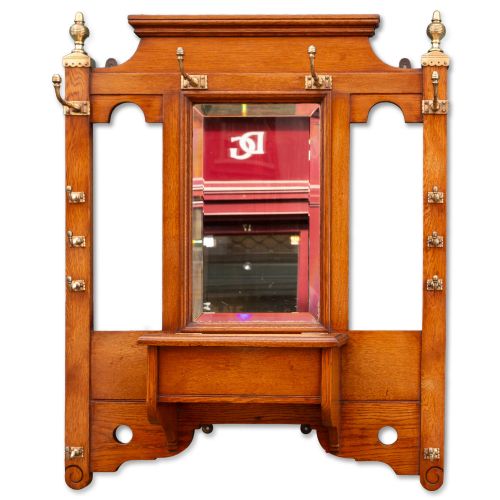
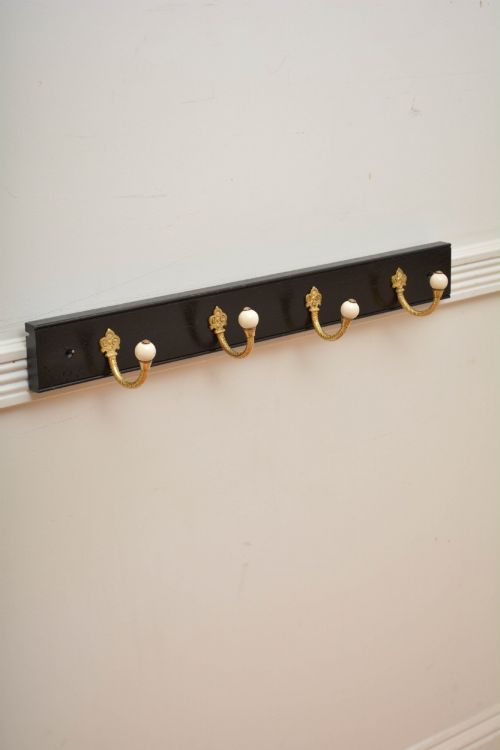
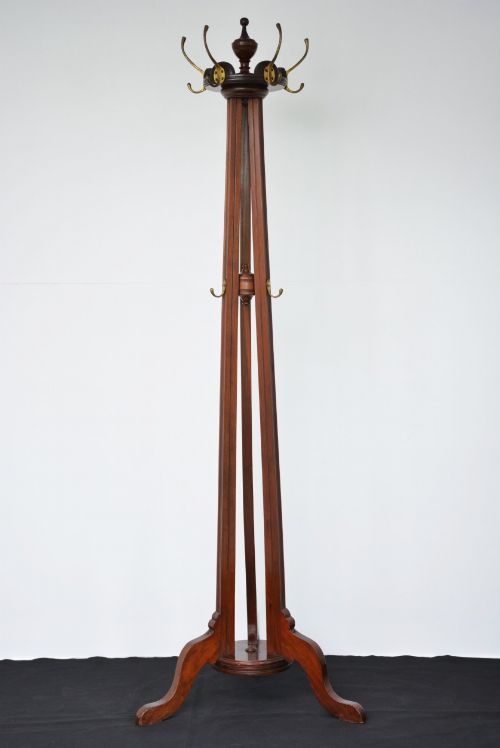
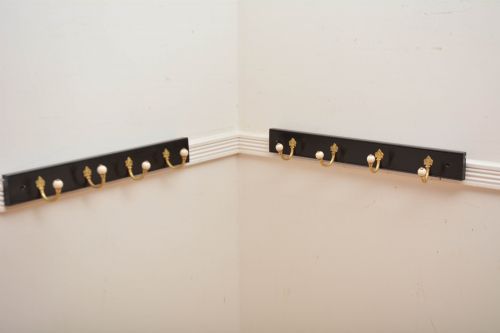
The selection includes French brass portmanteaus, aesthetic movement pieces, and arts and crafts stands designed for hallways and reception spaces. Many examples incorporate ceramic or porcelain knobs alongside the brass elements, while others combine storage with mirrors or umbrella stands.
How they were made
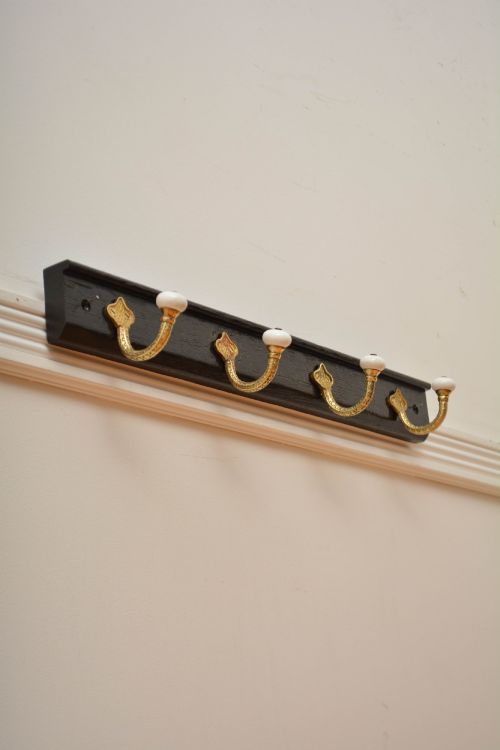
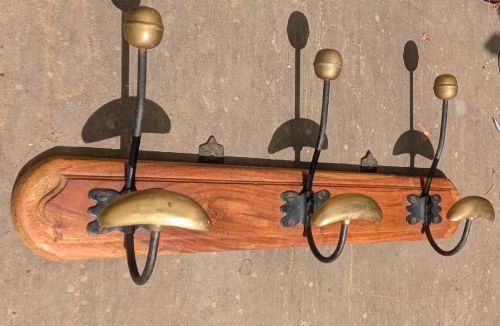
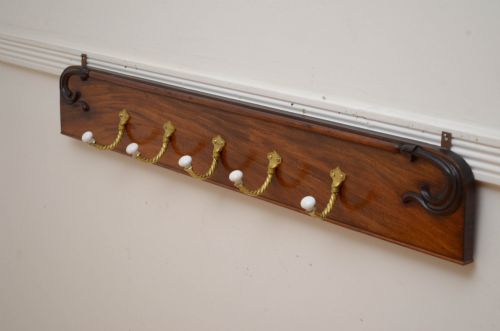
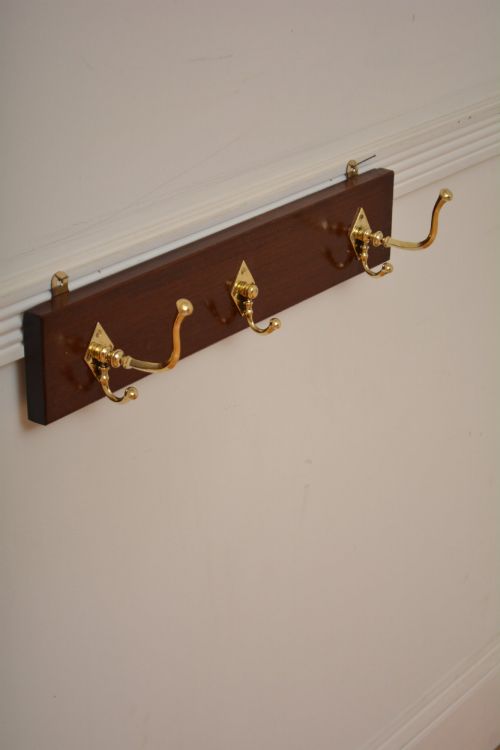
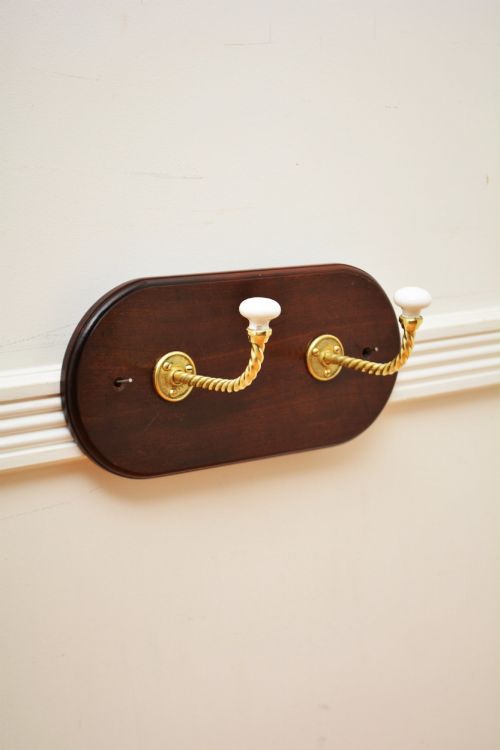
Craftsmen mounted cast brass hooks onto dense timber backboards such as mahogany, walnut, and oak, frequently securing them with slotted brass screws. The metal components were often cast with chased decoration or floral motifs, while ceramic and porcelain elements were integrated into the hook tips to protect garments.
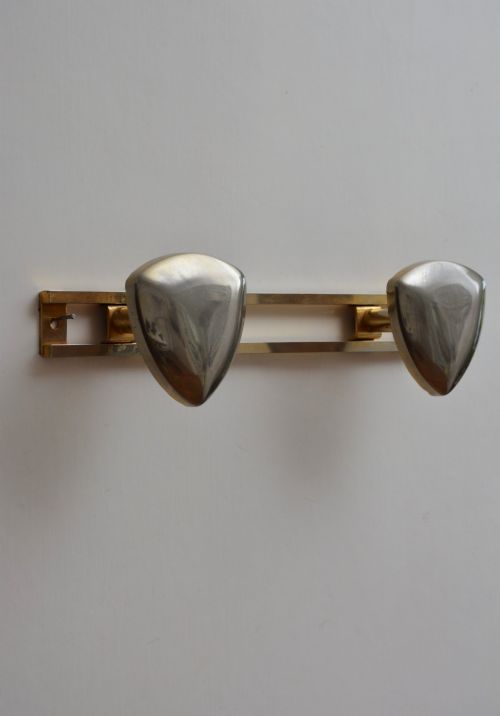
Backboards utilised solid timbers, sometimes ebonised to imitate exotic woods, shaped with moulded edges or shield-shaped mounting plates. French workshops produced elongated bracket frames and portmanteaus utilising heavy bronze and brass profiles alongside original mirrored glass plates.
Design styles span the Victorian, Edwardian, and Art Deco periods, alongside French bistro, chateau, and provincial aesthetics.
What varies in quality
Substance and weight separate standard utility fixtures from superior examples, with heavier brass castings and thick solid hardwood backboards indicating better manufacture. The crispness of the chased detail on the mounting plates and the quality of the ceramic knobs dictate the upper tier of the range.
Originality of the components determines the integrity of the piece, particularly where matching sets of hooks and period screws remain intact upon their original timber boards.
Jas. Shoolbred
The Vintage Brass Coat Hooks Glossary
- Portmanteau
- A combination hall stand incorporating coat hooks, hat racks, and frequently a mirror or umbrella storage. These large furniture pieces served as functional hallway furniture in nineteenth-century homes.
- Ebonised
- Wood treated with a dark finish to resemble ebony. This technique was common on Victorian and nineteenth-century pine and oak backboards.
- Aesthetic movement
- A late nineteenth-century design style emphasising visual beauty over narrative subject matter. Pieces from this period often feature stylised brass work and rich mahogany.
- Arts and crafts
- A design movement valuing traditional craftsmanship and visible construction. Stands and racks from this tradition display solid walnut and honest, unpretentious hook fixings.
- Backboard
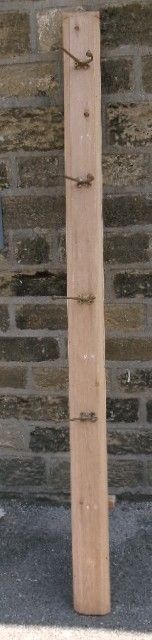
- The horizontal or vertical timber plank that supports the metal hooks. These boards were typically fashioned from oak, walnut, or mahogany.
Vintage Brass Coat Hooks: Frequently Asked Questions
How do I hang a heavy wooden coat rack?
Heavy racks require direct attachment to wall studs or the use of appropriate masonry wall plugs to support the weight of winter garments. The mounting holes on the timber backboard determine the fixing points.
Ensuring secure installation prevents the board from pulling away under load, particularly on substantial oak and mahogany pieces.
Are the ceramic knobs on these hooks original?
Many period hooks retain their original porcelain or ceramic knob inserts, though replacements occur due to accidental breakage over time. Close inspection of the seating where the metal meets the ceramic reveals whether the fixture has been restored.
Original glazed tips often show minor surface crazing and age patination consistent with nineteenth-century manufacture.
What is the difference between a rack and a portmanteau?
A coat rack is a linear board fitted with hooks designed solely for wall mounting. A portmanteau is a larger architectural hall piece that includes mirrors, hat shelves, and umbrella stands.
Portmanteaus stand independently on the floor or attach securely as substantial entrance furniture.
How do I clean antique brass hooks?
Gentle dusting with a dry cloth preserves the dark patination and age accumulated on nineteenth-century brass. Harsh metal polishes strip away the historical surface finish and reduce the visual depth of chased details.
Allowing the brass to retain its natural tone maintains the character expected from pieces originating in the Victorian and Edwardian eras.