


Vintage Brass Cherub Lights
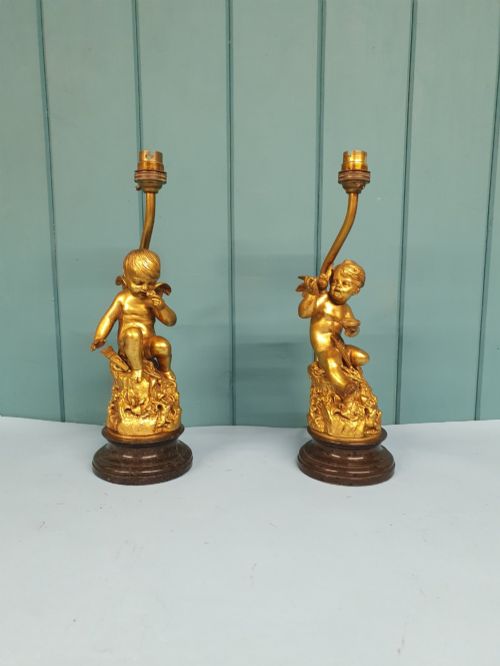
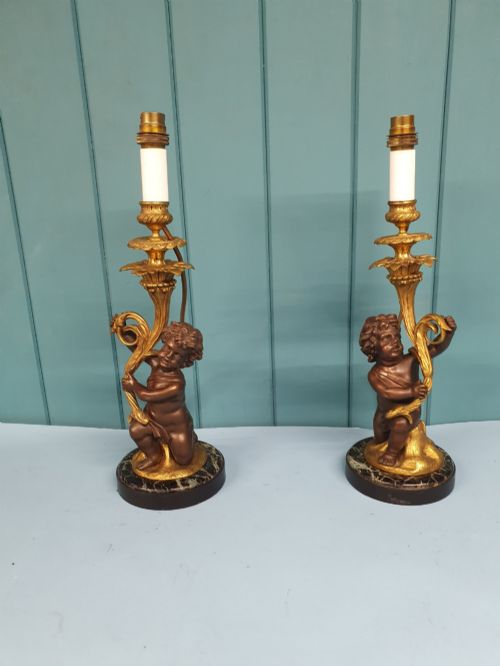
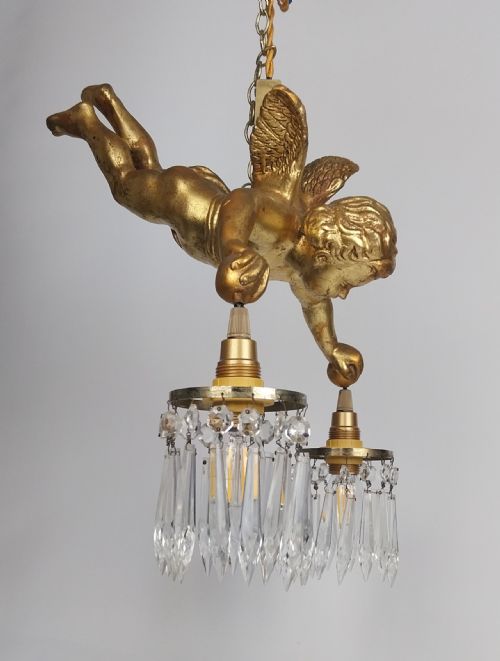
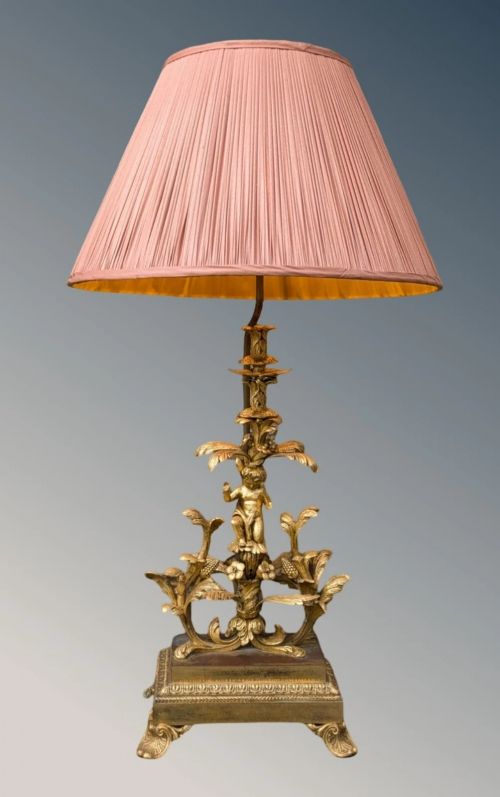
These vintage brass cherub lights bring figurative charm to interiors, combining cast metal figures with practical illumination.
Vintage Brass Cherub Lights
Vintage brass cherub lights comprise a varied group of lighting fixtures incorporating winged figures, putti, or cupids cast in metal. Buyers searching this phrase typically encounter wall lights, chandeliers, and table lamps originating from the nineteenth and early twentieth centuries.
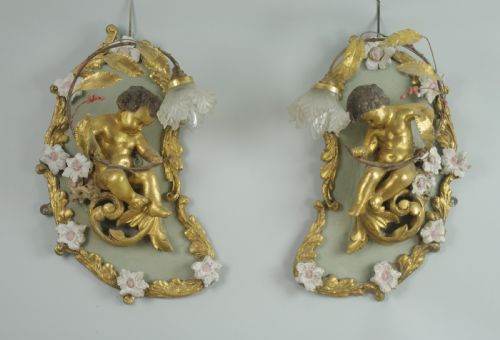
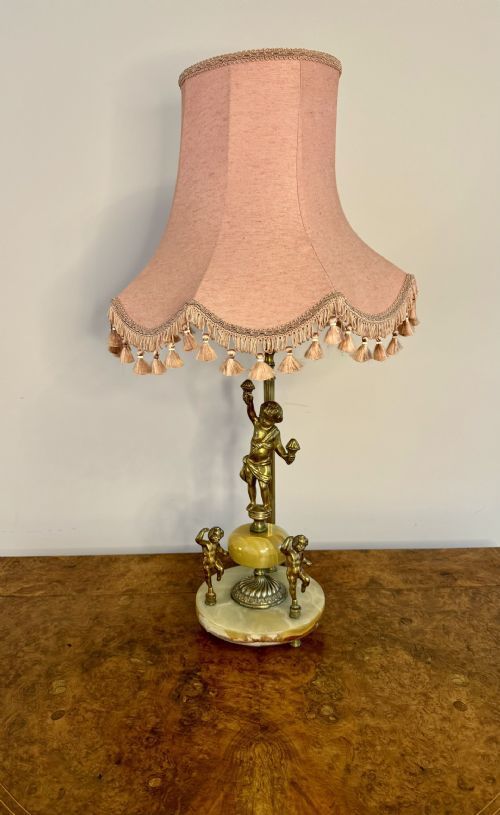
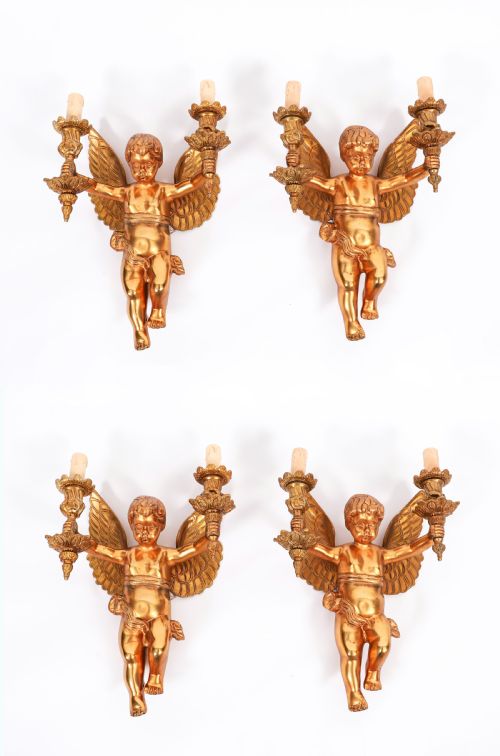
The selection ranges from pairs of French gilt bronze wall sconces and multi-arm chandeliers to converted oil lamps and table lights supported by marble or onyx bases. These pieces reflect revivalist tastes, particularly French Rococo and neoclassical styles.
Most examples date from the Victorian and Edwardian eras through to the 1930s, utilising brass, bronze, and gilt metal alongside glass and porcelain elements.
Materials and construction methods
Metalwork forms the foundation of these pieces, employing cast brass, bronze, and gilt metal, often finished with gilding or ormolu. Figures and mounts are frequently cast in sections before being assembled and chased by hand.
Many items incorporate secondary materials such as marble, onyx, crystal, and porcelain to add weight and contrast to the metallic structures. Wiring and fittings are frequently updated adaptations of original oil or candle configurations.
The listings span periods from the mid-nineteenth century up to the 1930s, featuring brass, bronze, and gilt metal.
Factors of distinction
The crispness of the chasing and the depth of the casting separate standard production from finer examples, particularly in the rendering of the cherubs' faces and wings. Finer items exhibit careful hand-finishing on the metal surfaces rather than flat, uniform casting.
The integration of secondary materials, such as heavy marble bases or matched crystal drops, indicates the original ambition of the piece. Consistency within pairs or sets of wall lights and candelabra also dictates the overall standard.
Sitzendorf porcelain
The Vintage Brass Cherub Lights Glossary
- Ormolu
- Gilded bronze applied to decorative hardware and mounts. This technique involves coating bronze with a mercury and gold amalgam before heating.
- Putti
- Plump, naked infants often depicted as winged cherubs in classical art. They appear frequently supporting candle arms or surmounting lamp columns.
- Chasing
- The manual tooling of metal surfaces to refine details after casting. It provides the texture and definition visible on hair and drapery.
- Sconces
- Wall-mounted lighting brackets designed to hold candles or electric lamps. They often feature multiple branches adorned with figurative motifs.
- Candelabra
- Multi-branched candlesticks that are frequently converted to electricity. They share stylistic vocabulary with contemporary wall lights and chandeliers.
Vintage Brass Cherub Lights: Frequently Asked Questions
How do I wire a vintage cherub lamp?
Conversion usually requires passing modern flex through the existing central channel without altering the external metalwork. Professional rewiring ensures safety while preserving the historic structure.
Many pieces were originally designed for candles or oil, meaning internal components need modern lampholders fitted securely.
Are these lights French in origin?
A significant portion of these fixtures reflect French design traditions, particularly Rococo and neoclassical revival styles. Makers in France produced numerous gilt bronze and ormolu examples during the nineteenth century.
English and Italian workshops also contributed to the market, producing similar cast brass and metal variations.
What is the difference between brass and ormolu?
Brass is an alloy of copper and zinc, commonly used for the structure of many wall lights and chandeliers. Ormolu specifically denotes gilded bronze, which presents a richer, warmer surface finish.
Gilt metal often describes lighter base metals that have received a gold-coloured finish rather than mercury gilding.
How do I clean gilt bronze lights?
Dusting with a soft brush prevents the accumulation of grime in the recessed chasing of the figures. Avoid abrasive polishes that can strip the original gilt surface.
Gentle wiping with a dry or slightly damp cloth is sufficient for maintaining the metal without damaging the patina.