


Vintage Boot Cleaner
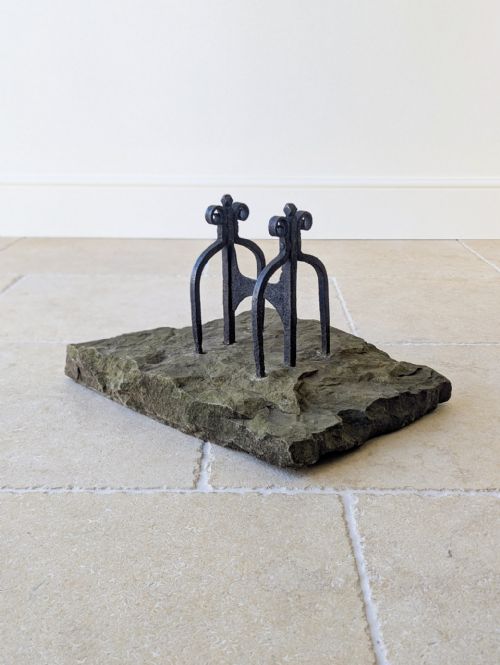
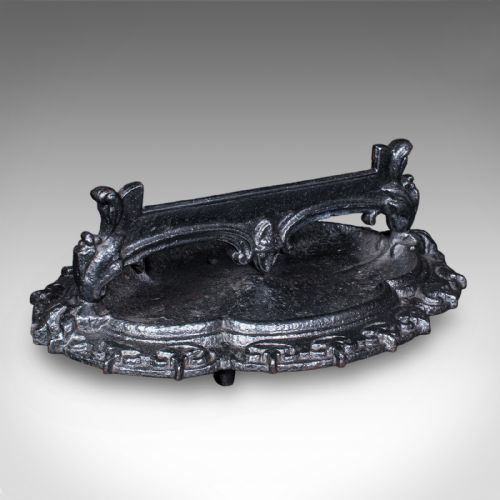
These vintage boot cleaner pieces are solid cast iron and stone entrance fixtures designed to keep heavy country mud off your boots.
Vintage Boot Cleaner
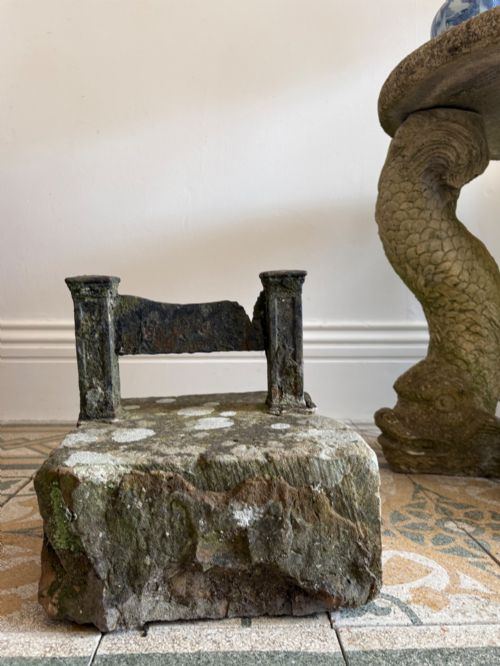
A vintage boot cleaner is essentially a sturdy boot scraper designed to clear heavy mud and dirt from footwear before entering a house. You will most commonly encounter cast iron blades mounted into heavy stone blocks or anchored for doorway placement.
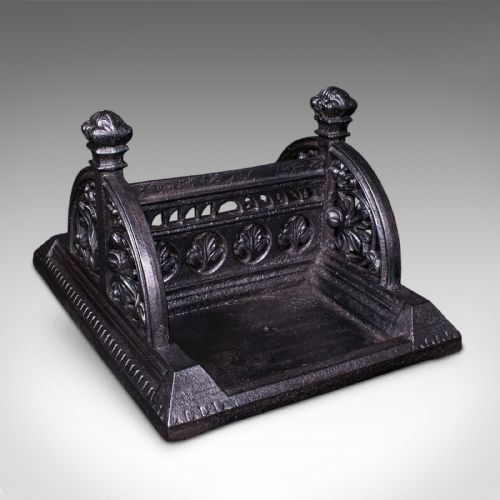
The pieces on this page span the Georgian and Victorian periods, taking forms such as entrance door scrapers, townhouse scrapers, and country house fixtures. They range from simple utilitarian cast iron blocks to elaborate Victorian Gothic Revival designs.
While the majority of examples utilise durable cast iron and wrought iron paired with stone or Yorkstone bases, you may occasionally find related items like novelty desk accessories. These functional iron implements reflect the practical domestic requirements of nineteenth century households.
How they were made
Makers shaped the heavy scraping blades from cast iron or wrought iron, often utilising moulds to achieve clean structural forms. These metal components provide the rigid edge needed for scraping mud from soles.
The iron scrapers are inset directly into hewn stone blocks, Yorkstone bases, or mounted near doorways to withstand heavy physical use. This combination of dense stone and robust iron ensures the cleaner stays firmly anchored during use.
Listings feature cast iron, wrought iron, stone, and Yorkstone materials across Victorian and Georgian periods.
What varies in quality
Quality rests in the heaviness of the cast iron and the substance of the supporting stone block. Substantial country house and townhouse examples demonstrate superior weight and more resolved architectural forms compared to smaller utility items.
Finer pieces incorporate decorative ironwork details or distinct styling such as Victorian Gothic Revival motifs. The integration between the metal scraper and its stone foundation also determines the overall robustness of the piece.
Coalbrookdale
The Vintage Boot Cleaner Glossary
- Cast iron
- A strong, hard alloy of iron and carbon poured into moulds to create rigid shapes. It forms the durable scraping blade on these pieces.
- Wrought iron
- Tough, malleable iron beaten into shape by hand rather than cast in a mould. It provides sturdy structural elements for older examples.
- Yorkstone
- A tough British sandstone traditionally used for paving and heavy building work. It serves as the solid mounting block for many scrapers.
- Boot scraper
- A fixed metal blade placed outside a doorway for scraping mud from boots. These utilitarian fixtures date primarily from the Georgian and Victorian eras.
Vintage Boot Cleaner: Frequently Asked Questions
Where were boot scrapers placed?
These cleaners were positioned directly outside entrance doors, townhouses, and country house doorways where visitors could scrape their footwear.
They stood on stone steps or were inset into pathways to catch dirt before it crossed the threshold.
What periods do these pieces span?
The available selection covers Georgian, Late Georgian, and Victorian eras, alongside mid-nineteenth century production.
Designs shift from earlier hand-wrought iron forms to mass-produced cast iron pieces from the later Victorian period.
How heavy are these cleaners?
They are exceptionally heavy, combining dense cast iron blades with substantial stone or Yorkstone anchor blocks.
This weight prevents the scraper from shifting when heavy boots are forcefully drawn across the metal edge.
Can I use an antique boot scraper outside?
Yes, because these fixtures were originally built from cast iron, wrought iron, and stone to endure exterior weather conditions.
They naturally weather outdoors, though placing them on a stable stone surface ensures they remain secure.