



Vintage Bookshelf Side Table
These vintage bookshelf side table examples combine storage and display in compact timber forms that suit smaller rooms.
Vintage Bookshelf Side Table
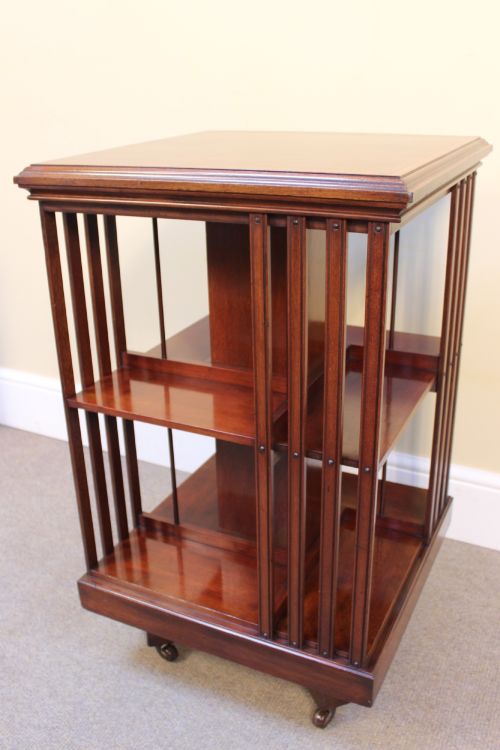
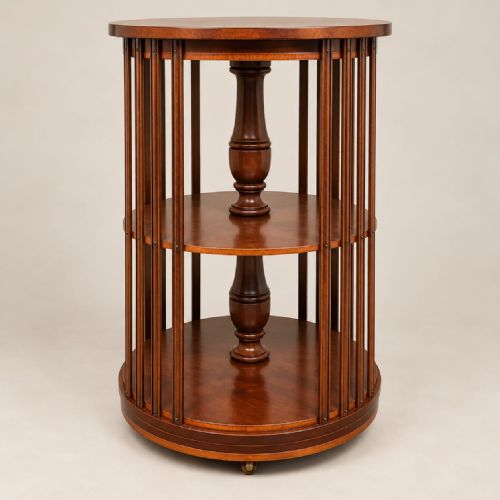
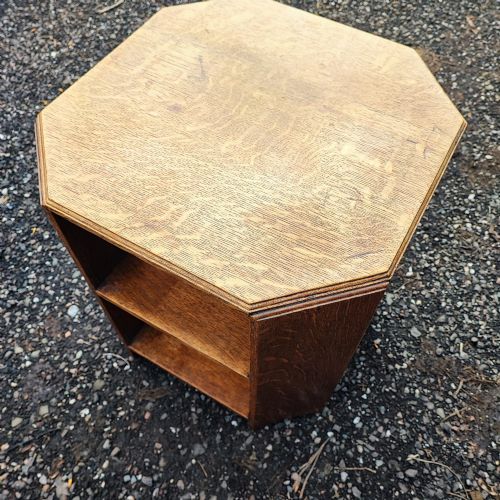
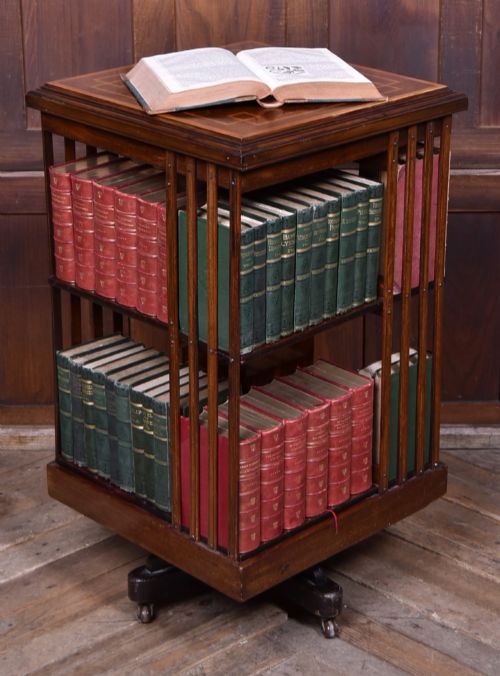
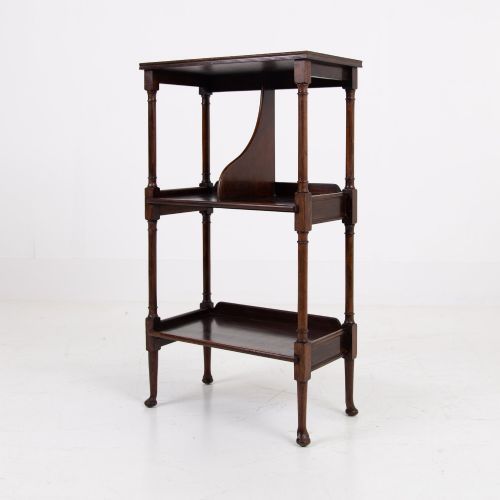
A vintage bookshelf side table bridges the gap between surface space and literary storage, offering a compact footprint for living spaces and reading rooms. The selection includes revolving bookcases, whatnots, book tables, and multi-tiered buffets spanning from the mid-nineteenth century through to the Art Deco era.
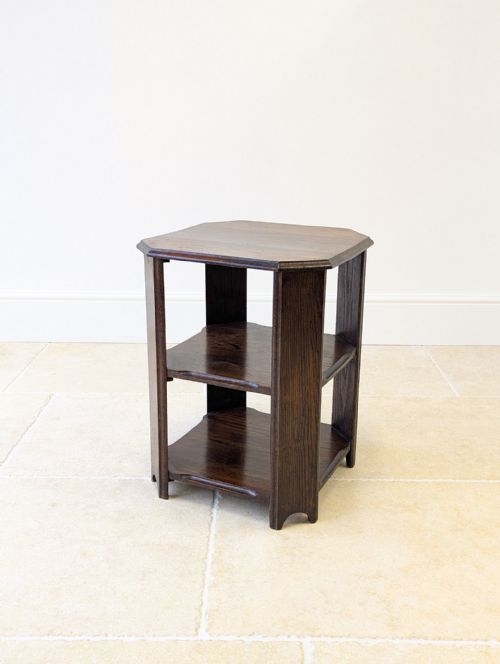
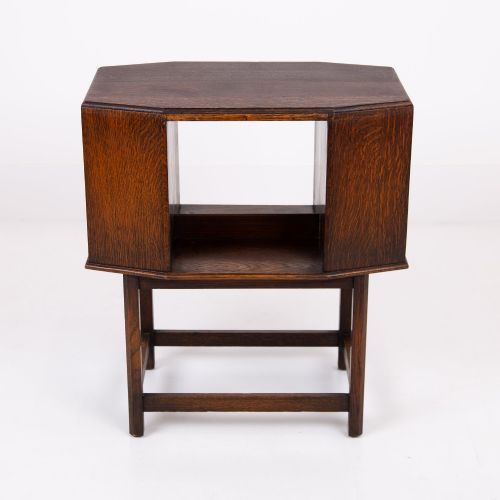
Buyers frequently encounter Edwardian mahogany revolving models and nineteen-thirties oak book tables alongside revivalist styles. These pieces provide accessible tiers or compartments designed to keep volumes close to hand while serving as functional tables.
Origins range from British Edwardian workshops to Anglo-Indian production and modern modernist interpretations. Each piece reflects the domestic habits of its period, prioritising utility alongside decorative timber grains and inlaid details.
Materials and construction
Makers utilised solid timbers and veneers including oak, mahogany, figured walnut, satinwood, and ebonised wood to build these items. Brass hardware appears on hinges and mountings, while iron provides internal structure for revolving mechanisms.
Construction techniques involve traditional joinery, turned supports, and intricate carving seen in padauk wood examples. Inlays add decorative contrast to mahogany and walnut surfaces, paired with limed or polished finishes.
Vintage Bookshelf Side Table Retail Price Guide 2026
Typical asking prices for vintage bookshelf side table among the pieces listed under this phrase on Sellingantiques today, from the lower quarter to the upper quarter. They describe what is for sale here now, not the wider market.
Spinning a revolving bookcase too fast during dusting tests the kinetic balance of your nineteenth-century collection.
Judging quality in practice
Quality rests upon the selection of timber figures, such as figured walnut and inlaid mahogany, which elevates a utilitarian item into a decorative focal point. The crispness of carved detail and the smoothness of revolving mechanisms distinguish finer examples from standard production.
Proportion and structural integrity dictate the standing of a piece, with well-balanced legs and tight joinery indicating superior craftsmanship. The presence of secondary timbers and the precision of revival styling further differentiate the range.
The Vintage Bookshelf Side Table Glossary
- Revolving bookcase
- A freestanding bookcase designed to rotate on a central pivot for easy access to volumes from any angle.
- Whatnot
- A multi-tiered piece of freestanding furniture used for displaying or storing books and small objects.
- Figured walnut
- Timber cut from walnut trees that displays an attractive, highly patterned grain, often utilised on cabinet fronts.
- Ebonised wood
- Timber treated with a finish to imitate expensive ebony, popular in nineteenth-century and Art Deco design.
- Buffet
- A low piece of furniture featuring multiple tiers, historically used for serving or storage.
Vintage Bookshelf Side Table: Frequently Asked Questions
Where should I place a revolving bookcase?
These pieces suit corners or spaces beside seating where rotation allows easy access to books without obstruction.
Their compact footprints mean they function well as both side tables and functional storage units in studies or sitting rooms.
How do I care for oak and mahogany surfaces?
Maintain timber surfaces by dusting regularly with a soft cloth and applying appropriate wax periodically to nourish the grain.
Keep pieces away from direct heat sources and strong sunlight to prevent the wood and polished finishes from drying out.
What is the difference between an Edwardian and a nineteen-thirties model?
Edwardian versions often feature inlaid mahogany and traditional turned supports reflecting revivalist tastes.
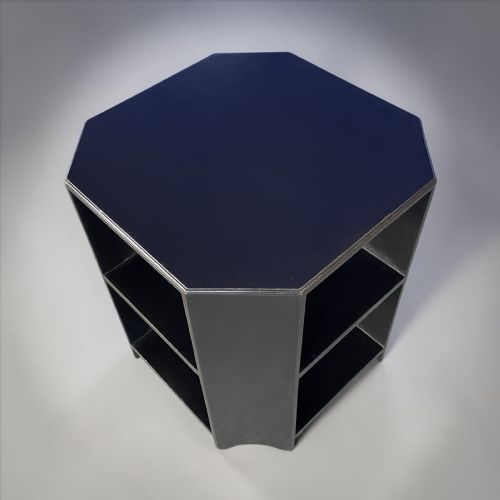
Nineteen-thirties pieces tend toward clean Art Deco lines, utilising oak, ebonised wood, and plain geometric forms.
Can these tables hold heavy volumes?
Most pieces are built from solid timbers like oak and mahogany designed to support standard book collections.
Revolving models distribute weight around a central pivot, though placing heavier folios on lower tiers ensures stability.