


Vintage Bohemian Glass
Vintage bohemian glass brings together rich colours, heavy cutting and enamelling across vases, decanters and scent bottles.
Vintage Bohemian Glass
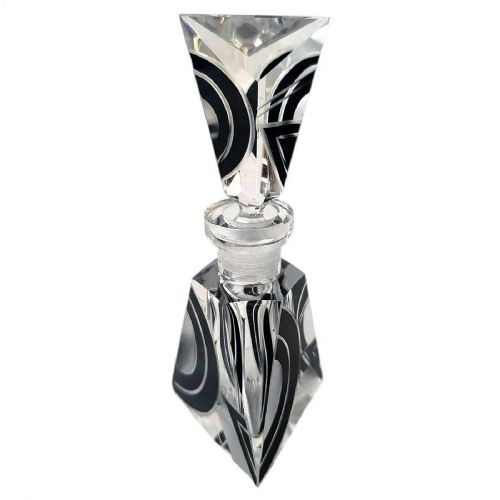
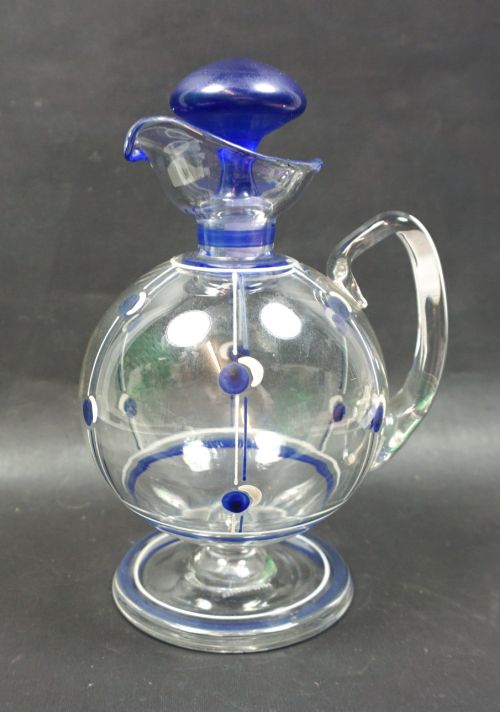
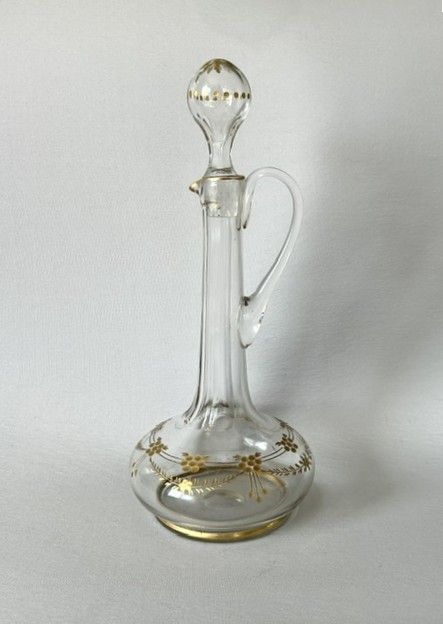
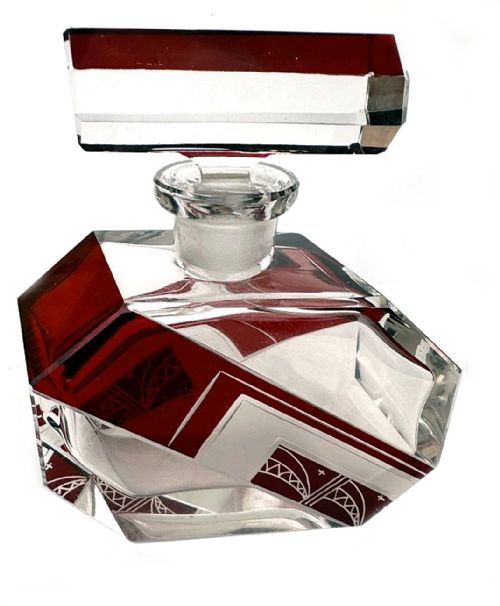
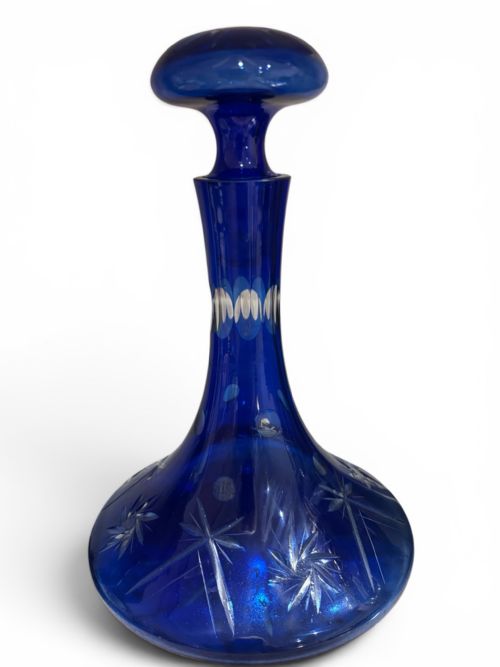
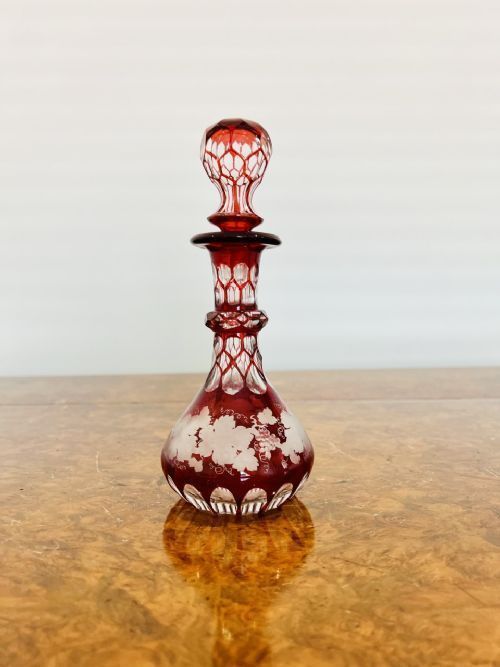
Vintage bohemian glass encompasses a diverse array of decorative and utilitarian objects, predominantly featuring vases, perfume bottles, decanter sets and glassware spanning from the Victorian era through to the Art Deco period of the 1930s. Buyers encountering this category will frequently find pieces rendered in striking ruby, cobalt and cranberry tones, alongside geometric crystal forms produced in Czechoslovakia.
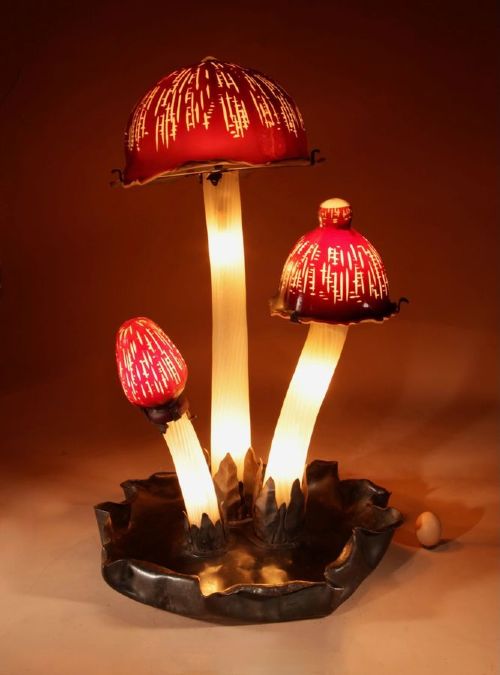
The historical scope reaches from nineteenth-century moulded and engraved tablewares to modernist Art Deco scent bottles and figural vessels. Forms range from large punch bowl sets and mushroom lamps to delicate wine glasses and mantel urns, reflecting the shifting aesthetic demands of European households over several decades.
How vintage bohemian glass was made
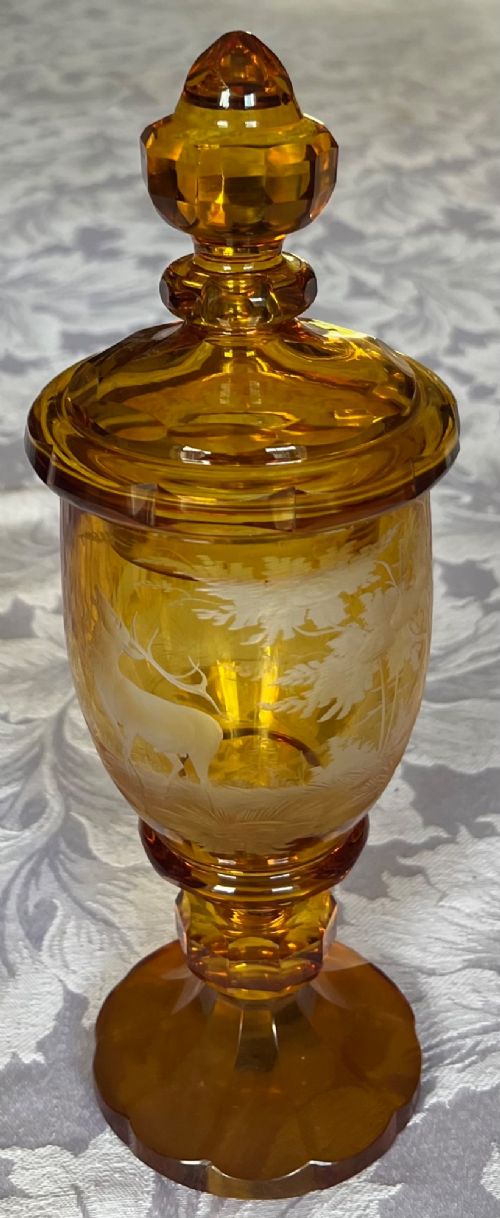
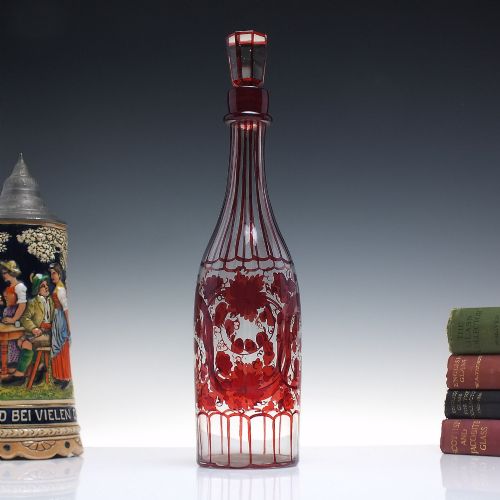
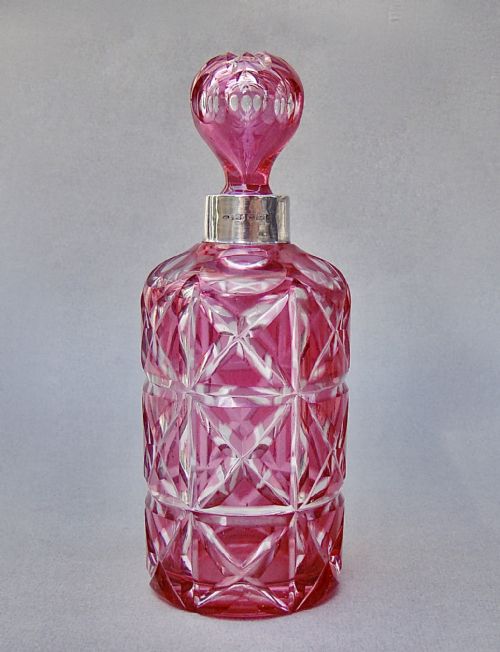
The creation of these objects relied upon traditional glassblowing and hot-working techniques, often combined with heavy manual cutting, wheel-engraving and faceted shaping. Coloured glass bodies were frequently achieved by casing clear crystal with layers of ruby, green or cobalt glass before cutting back the outer layer to reveal contrasting depths.
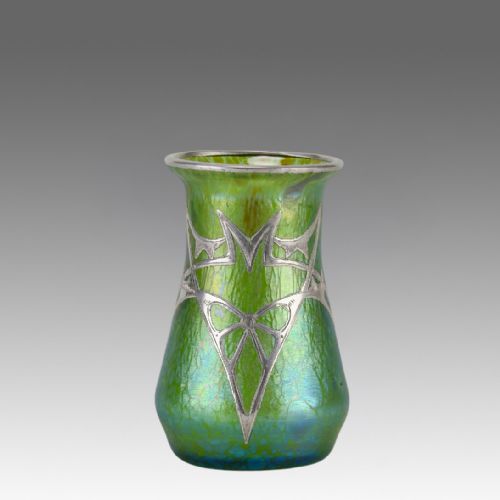
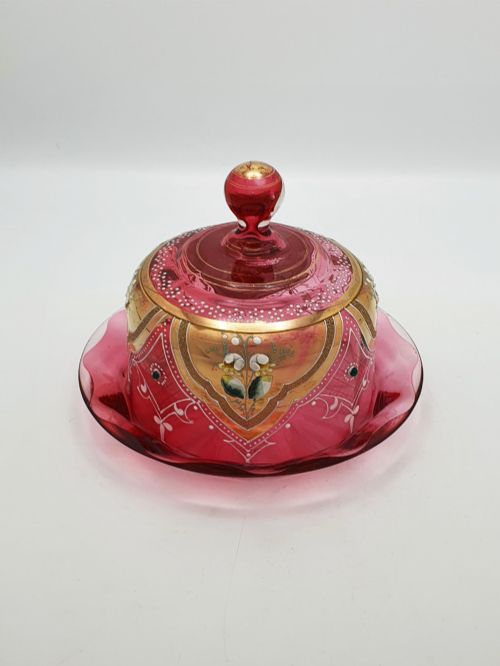
Surface ornamentation involved hand-painted enamel motifs, applied gold leaf, and silver mountings supplied by silversmiths. Molten glass was shaped into moulds or free-blown, then subjected to meticulous polishing and acid-etching to define the characteristic patterns of the Victorian, Art Nouveau and Art Deco styles.
Huntsmen on horseback gallop across green glass vases, eternally frozen mid-pursuit in hand-painted enamel.
What varies in quality
The distinction between ordinary production and finer examples rests upon the crispness of the wheel-cutting, the depth of the colour saturation and the precision of the gilding and enamel work. Superior items display sharp, clean facets without softening at the edges, alongside finely detailed hand-painted scenes or geometric arrangements that demonstrate complete control by the decorator.
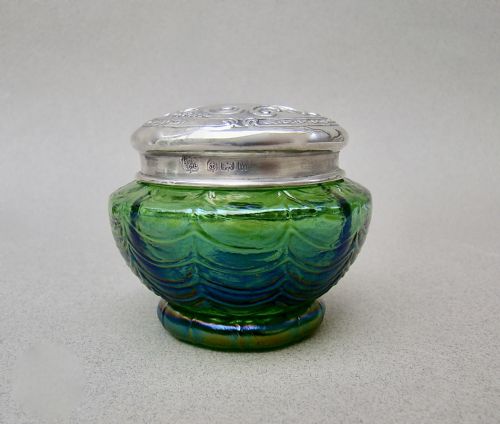
Material composition and weight further differentiate the range, with high-lead crystal and layered cased glass offering superior refraction and heft compared to simpler pressed alternatives. The integration of precious metal mounts, such as hallmarked silver collars or stoppers, adds a further dimension of craftsmanship that elevates certain pieces above standard glassware.
Karl Palda·Johann Loetz·Libochovice·Rudolf Hlousek
The Vintage Bohemian Glass Glossary
- Cased glass
- Glass formed of two or more distinct layers of different colours, often clear crystal overlaid with a coloured layer. This technique allows artisans to cut through the outer stratum to expose the contrasting base below.
- Ruby glass
- A deep red decorative glass produced by adding gold or copper compounds to the molten batch. It became a hallmark of central European manufacturing across the Victorian period.
- Enamel decoration
- Applied vitreous coloured glass paste fused to the surface through firing. It provides opaque, colourful pictorial or geometric designs across vases and scent bottles.
- Secessionist
- A modernist design movement contemporaneous with Art Nouveau that favoured geometric rigour and clean architectural lines. Pieces from this tradition often display stark, restrained metallic mounts.
- Cut glass
- Glassware shaped and patterned by holding the vessel against a rotating abrasive wheel. Deep incisions create brilliant light-reflecting facets across bowls, decanters and tumblers.
Vintage Bohemian Glass: Frequently Asked Questions
How do I clean vintage bohemian glass?
Wash pieces gently by hand using warm water and mild detergent, avoiding harsh scrubbing brushes or abrasive powders that might scratch the surface.
Dry immediately with a soft lint-free cloth to prevent water spots, taking extra care around gilded rims and applied enamel details.
Can I use these decanters for serving wine?
Many vintage decanters and carafes remain entirely functional for holding and serving beverages provided the interior is thoroughly rinsed and inspected.
Avoid subjecting antique glass to sudden temperature shifts, as thermal shock can cause vintage material to crack.
How do I distinguish Victorian pieces from Art Deco examples?
Victorian items typically feature ornate hand-painted floral motifs, heavy cranberry or ruby coloration, and elaborate gilded scrollwork.
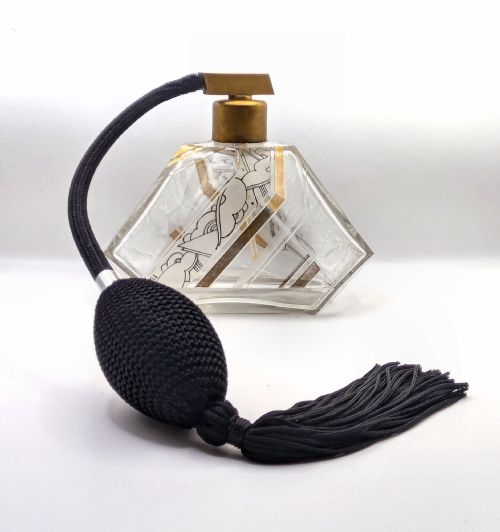
Art Deco objects, particularly from 1930s Czechoslovakia, favour sharp geometric cuts, streamlined silhouettes and stylized modernist motifs.
Why do some perfume bottles include silver mounts?
Many high-quality scent bottles and trinket boxes were fitted with hallmarked silver collars, lids and atomiser hardware by specialist metalworkers.
These precious metal additions often carry hallmarks that help date the exact year and manufacturing location of the finished object.