


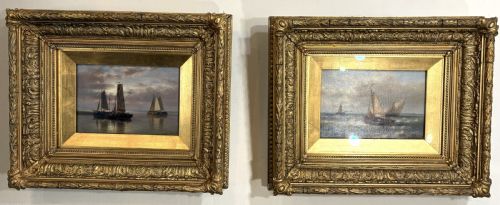


Vintage Boat Seascape Canvas
A vintage boat seascape canvas brings the movement of tides and historic shipping lanes directly into a room through oil paint and stretched linen.
Vintage Boat Seascape Canvas
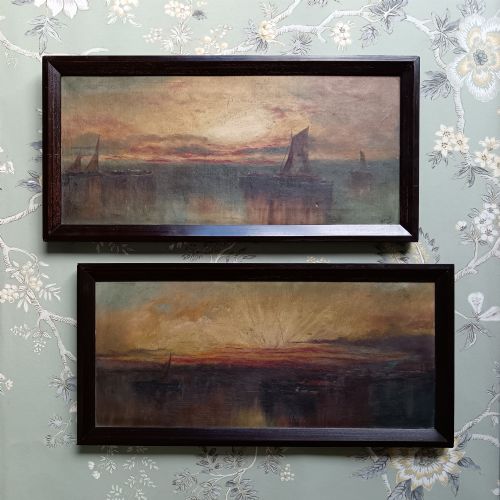
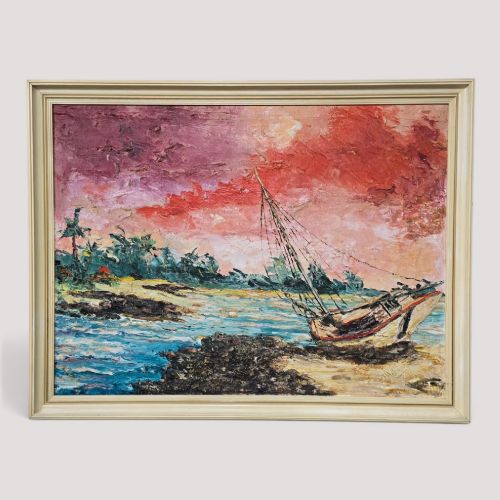
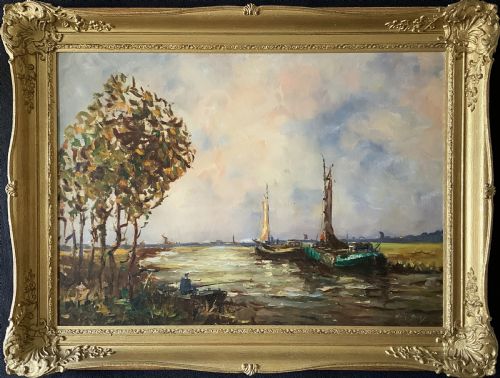
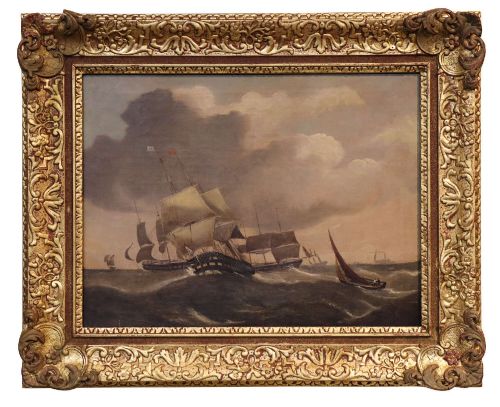
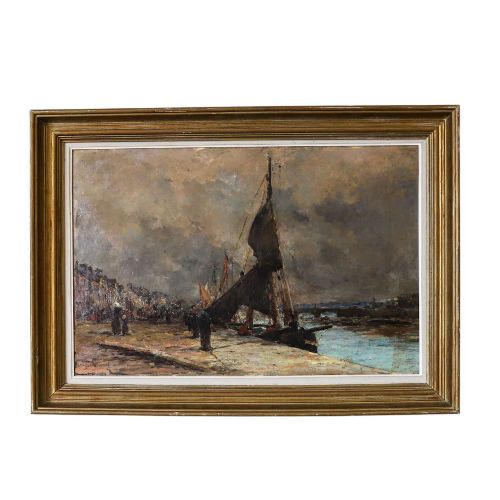
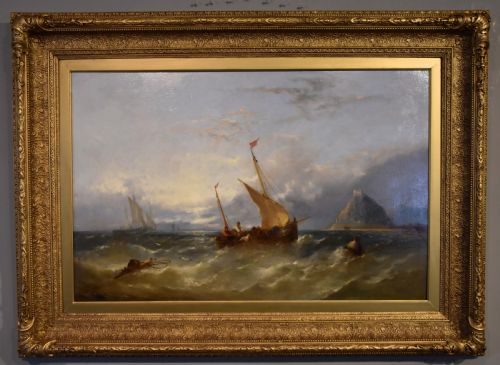
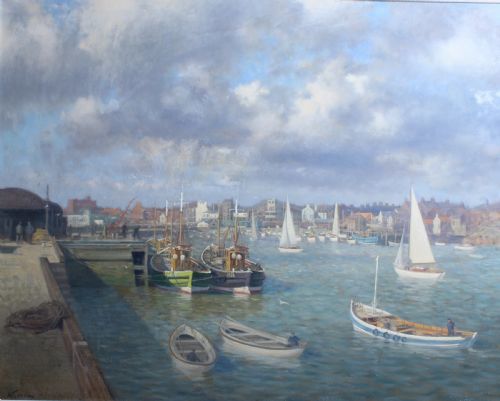
A vintage boat seascape canvas captures maritime subjects ranging from early Victorian shipping in heavy seas to mid-century harbour scenes and modern coastal abstractions. These works portray fishing boats, sailing yachts, and industrial barges navigating coastal waters, estuaries, and open oceans across various European schools.
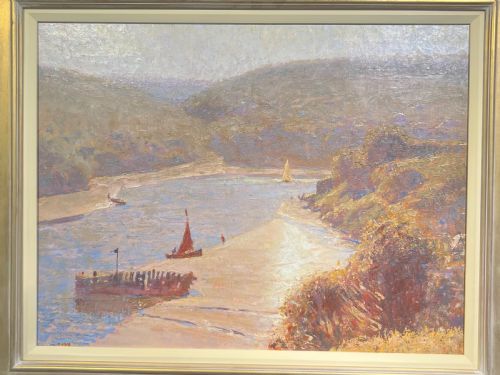
The selections encountered most frequently on this page span the nineteenth century through the mid-twentieth century, executed by both named painters and regional British or continental artists. Works vary from detailed nineteenth-century maritime realism depicting specific ports to impressionist and post-impressionist interpretations of light on water.
Subjects encompass calm harbour approaches at low tide, dramatic moonlit coastal views, and dynamic depictions of vessels making runs for home under heavy skies. Collectors encounter these maritime works framed in period wood or gilt mouldings that complement the palette of the canvas.
Materials and Technique
The foundation of these works is woven canvas or occasionally board, prepared with a ground layer before the application of oil paint. Artists utilised traditional tube colours, mixing pigments with oils to achieve varying consistencies from thin translucent glazes to thick impasto applications.
Brushwork ranges from tight, controlled academic detailing of rigging and hull construction to loose, expressive strokes characteristic of impressionism. Frames constructed from wood, often finished with gilt or moulded plaster, complete the physical construction of these artworks.
Listings feature works spanning the nineteenth century through the 1960s, executed in oil on canvas or board.
The Spectrum of Quality
Quality in a vintage boat seascape canvas rests upon the artist's command of light, atmosphere, and maritime anatomy, where accurate depiction of rigging and water movement elevates a composition. Superior works display confident handling of tone that conveys the weight of sea swell and the play of sunlight on wet timber.
The integration of the canvas with its period frame also influences the overall standard, particularly when original giltwood surrounds survive intact. Finer examples maintain surface stability and original pigment vibrancy without heavy overpaint obscuring the artist's initial brushwork.
Abraham Hulk I·William Henry Williamson·Charles Napier Hemy·Edward Seago·Gustave de Breanski
The Vintage Boat Seascape Canvas Glossary
- Impasto
- Paint applied thickly to a canvas, standing out in relief from the surface and creating a textured, three-dimensional effect that catches the light.
- Giltwood
- Wood that has been coated with a thin layer of gold leaf or gold paint, frequently used for traditional picture framing during the nineteenth and early twentieth centuries.
- Maritime Realism
- An artistic style focused on the accurate, detailed representation of ships, coastal architecture, and sea conditions without overt stylisation.
- Provenance
- The documented history of ownership of an artwork, which helps establish authenticity and attribution to a specific painter or school.
- British Impressionism
- A painting movement influenced by French techniques where artists worked outdoors to capture fleeting effects of light and atmosphere on British coastal subjects.
Vintage Boat Seascape Canvas: Frequently Asked Questions
How do I date a maritime oil painting?
Dating relies on stylistic evidence, artist signatures, framing materials, and the construction of the canvas support. Period costume, vessel design, and inscribed dates on the reverse also provide chronological markers.
Paintings from the nineteenth century often feature tighter academic brushwork and heavier gilt frames, whereas mid-century examples lean toward looser impressionistic interpretations of coastal light.
Where should I hang a seascape canvas?
These works suit rooms with stable humidity and indirect natural light to protect the oil pigments and wooden frames from degradation. Positioning the painting away from direct heat sources preserves both the canvas tension and the integrity of the paint layer.
Pairing the artwork with neutral wall colours allows the varied tones of the sea and sky to become the visual focus of the space.
How do I care for an antique oil painting?
Maintenance involves dusting the surface gently with a soft, dry brush and avoiding moisture or chemical cleaners on the canvas. Professional conservators should handle any structural repairs or removal of accumulated surface grime.
Checking the stability of the canvas tension and the condition of the frame backing periodically ensures the artwork remains secure over time.
What defines nineteenth-century marine art?
Nineteenth-century marine art prioritises topographical accuracy of harbours, sailing vessels, and atmospheric weather conditions over abstract interpretation. Artists frequently documented specific regional ports, fishing fleets, and notable historical ships during active voyages.
These compositions often use a tonal palette of deep blues, greys, and ochres to evoke the texture of open water and stormy skies.