
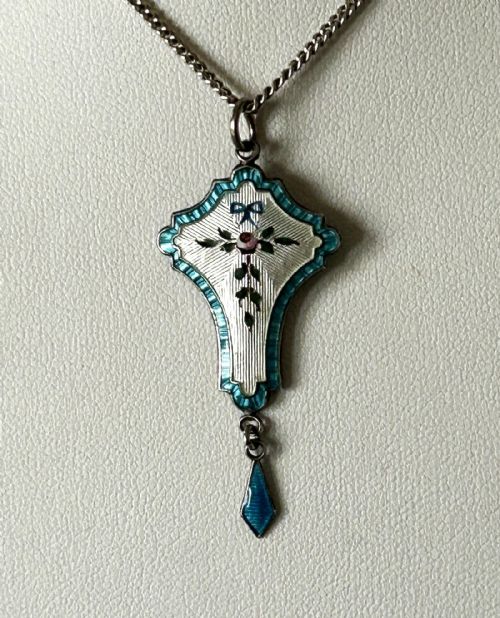


Vintage Blue Enamel Jewellery
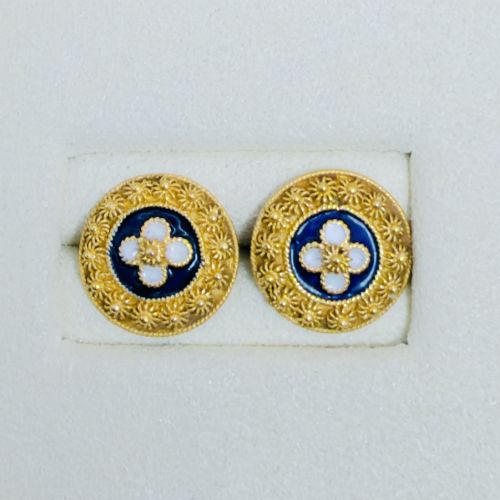
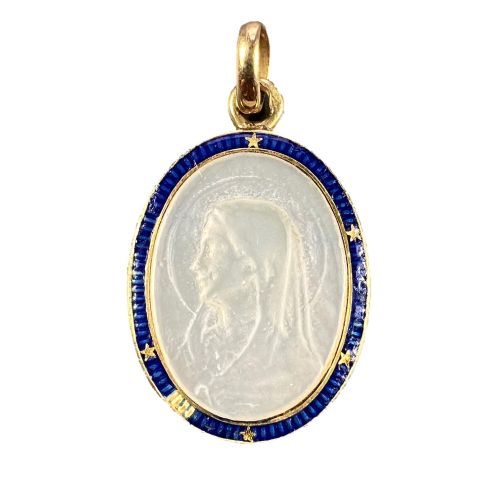
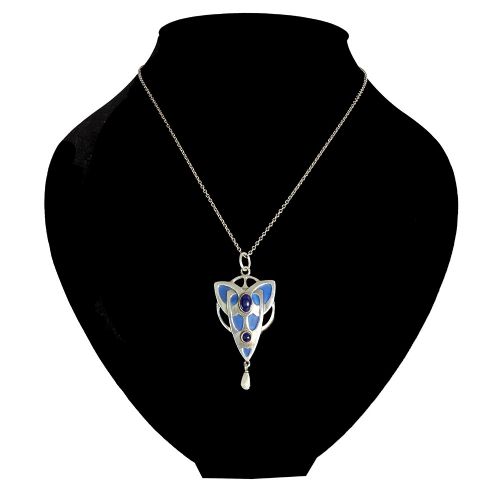
Vintage blue enamel jewellery brings together bright colour and precious metal across periods from Victorian to Mid-Century Modern.
Vintage Blue Enamel Jewellery
When searching for vintage blue enamel jewellery, collectors encounter brooches, pendants, bracelets, and earrings shaped by various historical movements.
The selections span Art Nouveau, Art Deco, Arts and Crafts, and Scandinavian Modern designs executed in silver, silver gilt, and gold.
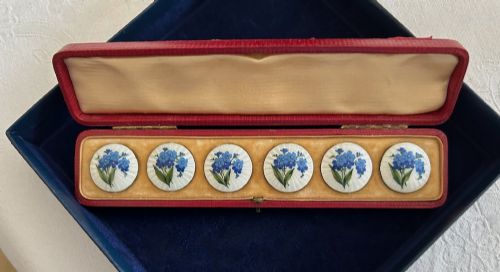
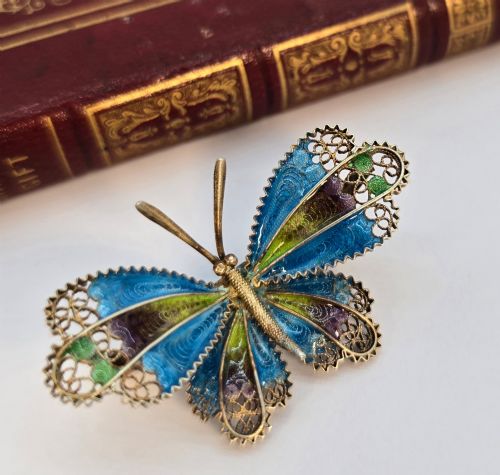
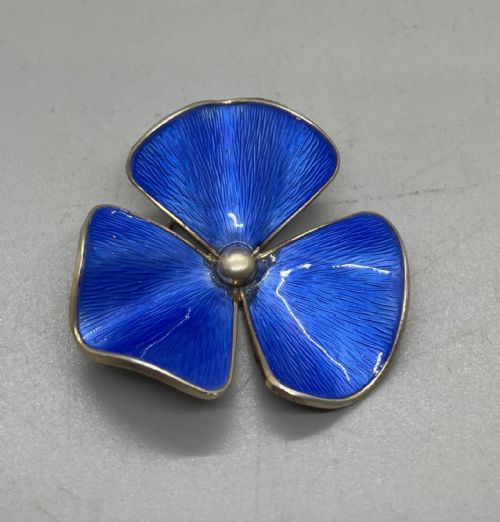
Pieces range from early twentieth-century flower motifs and butterfly subjects to geometric mid-century pieces and modernist links.
How they were made
Goldsmiths fused vitreous enamel powders onto silver, sterling silver, or gold bases through kiln-firing to create durable coloured surfaces.
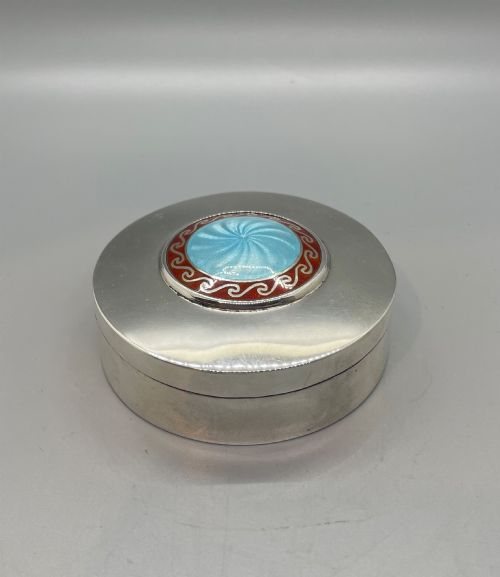
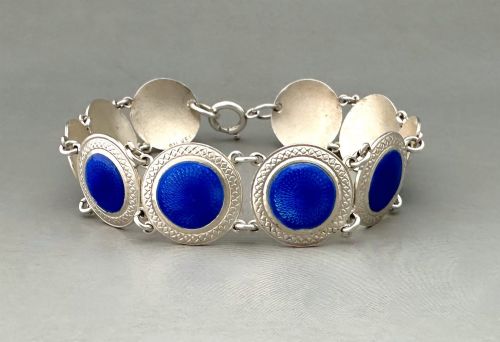
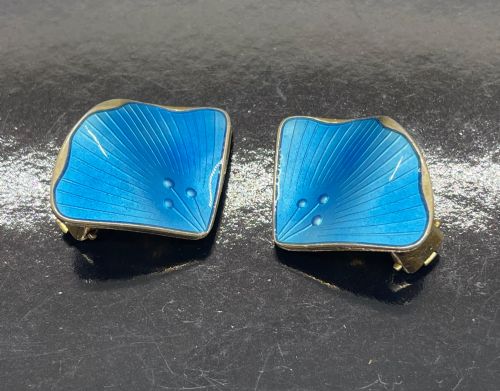
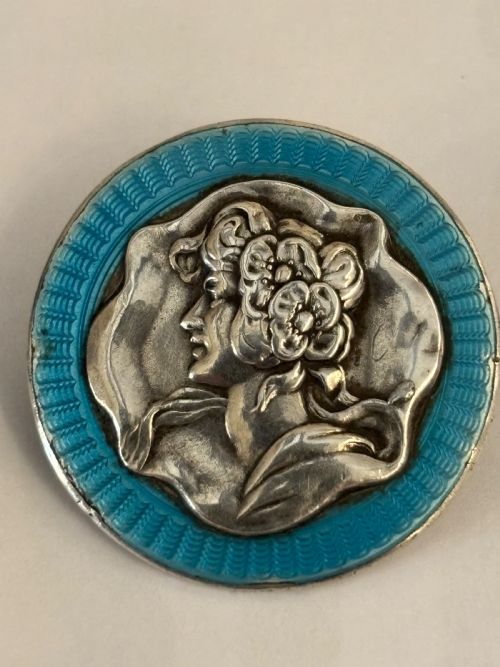
Techniques such as guilloche incorporated machine-engraved patterns beneath translucent blue enamel, while plique-a-jour suspended translucent enamel within open wire frameworks like stained glass.
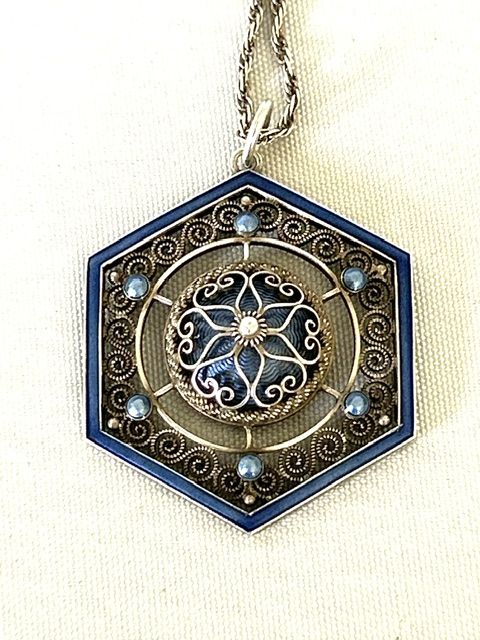
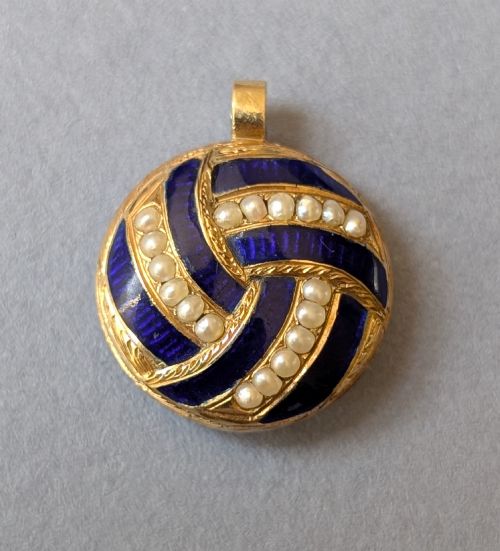
Makers integrated natural elements like pearls, moonstones, chalcedony, and diamonds into silver gilt or gold settings.
Materials utilised across the selection include silver gilt, chalcedony, mother-of-pearl, and diamonds.
What varies in quality
Excellence relies on the precision of the metalwork and the clarity of the enamel surface.
Makers achieved distinction through intricate guilloche engraving, even vitreous coverage, and secure stone settings.
Subtle hand-painted details and clean hallmarks separate workshop productions from standard items.
Marius Hammer·Jakob Bengel·Liberty and Co·Archibald Knox·Murrle Bennett·Henry Matthews
The Vintage Blue Enamel Jewellery Glossary
- Guilloche
- A decorative technique involving a precise, mechanical pattern engraved into metal beneath translucent enamel. This method creates depth and shimmering light reflection across the surface.
- Plique-a-jour
- An enamelling technique resembling stained glass where enamel is fired in open cells without a backing metal. Light passes directly through the translucent coloured glass.
- Vitreous enamel
- Glass powder fused to metal surfaces at high temperatures. It provides a durable, glossy finish that retains its colour over decades.
- Silver gilt
- Sterling silver coated with a thin layer of gold. This combination offers the warmth of gold alongside the structural support of silver.
- Arts and Crafts
- A design movement prioritising handcraftsmanship and traditional materials. Items often display stylised floral motifs and visible artisan touches.
Vintage Blue Enamel Jewellery: Frequently Asked Questions
How do I clean vintage blue enamel jewellery?
Clean these pieces gently using a soft cloth and lukewarm soapy water. Avoid harsh chemical dips or ultrasonic cleaners which can damage enamel and soft gemstones.
Dry the items thoroughly immediately after washing to protect silver and gold settings from moisture damage.
What periods do these pieces come from?
The inventory spans Victorian, Edwardian, Arts and Crafts, Art Nouveau, Art Deco, and Mid-Century Modern eras. Each period brings distinct metalwork styles and manufacturing techniques.
Twentieth-century Scandinavian designs sit alongside earlier British and European workshop creations.
Were these items made by hand?
Many pieces involve a combination of hand-tooling and specialised workshop techniques. Silversmiths shaped the metal mounts by hand while utilising tools for engraving and kiln-firing.
Signature marks often indicate specific workshops and master artisans who oversaw the fabrication process.