




Art Deco Geometric Bracelet
An art deco geometric bracelet brings sharp architectural lines and precise metallic symmetry to the wrist, offering a lasting statement of modernist design.
Art Deco Geometric Bracelet
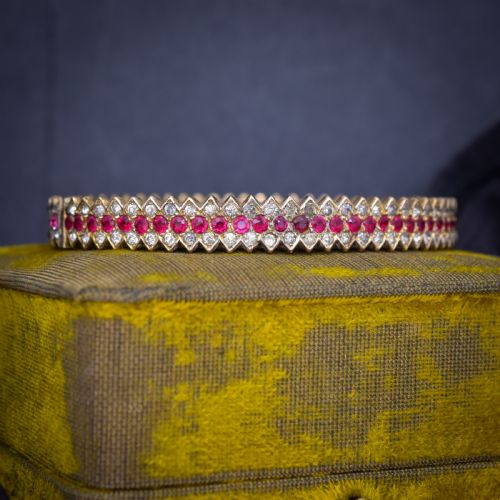
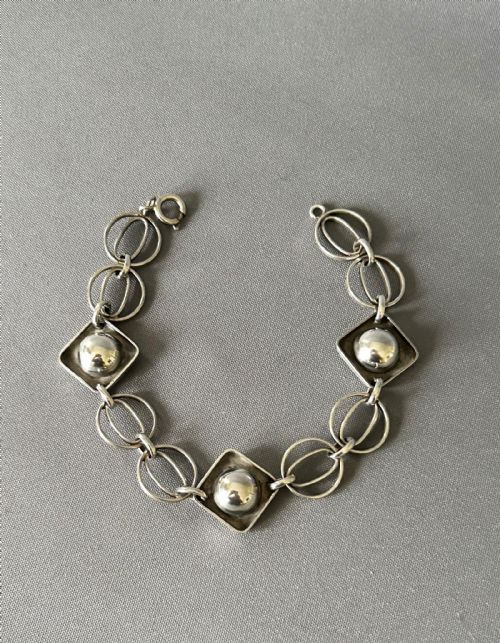
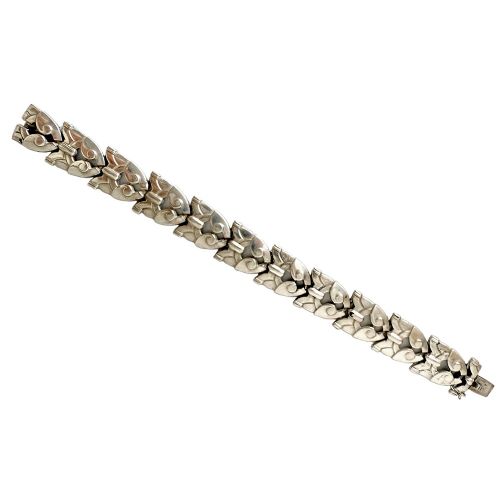
An art deco geometric bracelet comprises hinged panels, linked segments, and flexible bands designed to sit flat against the skin with clean structural precision. Pieces matching this phrase span the decades from the 1910s through the 1960s, capturing the transition from early modernist experiments to mid-century revivals.
The versions met most frequently on this page combine platinum or silver settings with symmetrical diamond patterns, alongside industrial chrome and enamel creations. Alongside traditional bracelets and bangles, the selection includes integrated cocktail watches and wristwatches that treat timekeeping as a secondary feature of the geometric design.
Makers and workshops from France, Germany, Austria, and beyond produced these items using distinct regional idioms, from the heavy brickwork link chains of industrial German workshops to delicate French diamond-set platinum ribbon links. Each piece relies on the repetition of triangles, chevrons, bricks, and rectangular panels to create rhythm along the wrist.
How they were made
Master jewellers constructed these bracelets primarily in platinum and yellow, white, or rose gold, utilising channel settings, millegrain borders, and precise claw mounts to secure diamonds, emeralds, sapphires, and seed pearls. The mounting metals were worked by hand to achieve thin, rigid frames that nonetheless articulated smoothly around the arm.
Industrial materials entered high fashion during this period, bringing chrome, enamel, paste stones, and chalcedony into the jeweller's repertoire alongside precious gems. German workshops notably paired chromium with coloured enamel in geometric brickwork and chevron patterns, offering a modern aesthetic distinct from traditional precious metal smithing.
Articulated joints and hidden box clasps required exceptional engineering to ensure continuous geometric patterns were not disrupted by hinges. Master craftsmen linked rigid panels through concealed pin joints, allowing the bracelet to bend naturally while maintaining the illusion of an unbroken architectural frieze.
The inventory spans six decades, running from the 1910s right through to the 1960s.
What varies in quality
The standard of an art deco geometric bracelet rests upon the integration of design and metallurgy, where superior examples display seamless articulation that hides every hinge within the pattern. Lesser pieces suffer from stiff movement, catching links, or misalignment in the repeating motifs that disrupts the architectural harmony.
Stone selection and cutting define the upper tier of the market, requiring calibrated diamonds and emeralds cut specifically to fit tight geometric channels without irregular gaps. Poorer specimens rely on uneven stones or mismatched paste and glass elements that fail to catch the light uniformly across the panel links.
Signature and provenance elevate certain pieces, particularly marked works by known industrial designers or luxury French houses whose workshops maintained rigorous standards of milling and stone security. Unsigned examples depend entirely on the weight of the platinum, the crispness of the engraving, and the structural integrity of the box clasp.
Jakob Bengel·Bucherer·Bulova
The Art Deco Geometric Bracelet Glossary
- Tank bracelet
- A robust, wide link bracelet inspired by the heavy treads of military tanks popular during the interwar years. These pieces often feature substantial yellow gold or platinum links with strong linear engraving.
- Millegrain
- A decorative technique involving a row of tiny raised metal beads along the edge of a setting. This softens the transition between metal and stone while adding a delicate textured border.
- Paste
- Hand-cut and polished lead glass used to simulate gemstones in period jewellery. High-grade paste stones are individually foiled and set into metal mounts with the same care as precious diamonds.
- Chevron
- A V-shaped pattern repeated in rows to create a dynamic sense of directional movement. In these bracelets, chevron motifs are formed through contrasting enamel colours or alternating diamond and metal sections.
- Articulated
- Designed with flexible joints between rigid metal sections to allow smooth movement around the wrist. Good articulation ensures the geometric design remains flat and comfortable during wear.
Art Deco Geometric Bracelet: Frequently Asked Questions
How do I wear a vintage panel bracelet daily?
These bracelets suit evening wear and formal daytime attire, pairing well with tailored cuffs and simple sleeves that allow the geometric metalwork to remain visible. Because many feature delicate box clasps and safety chains, securing the safety catch prevents accidental loss during active movement.
Store the bracelet flat in a dedicated lined box to prevent the hinged links from twisting or putting undue pressure on the setting pins. Avoid wearing them while swimming or performing manual tasks where hard knocks might bend the platinum or gold panel links.
Are cocktail watches considered bracelets?
Cocktail watches from this era function primarily as decorative wrist jewellery, concealing the watch face beneath a sliding geometric panel or integrating the dial seamlessly into the bracelet pattern. The watch mechanism is secondary to the overall design of diamond-set platinum links or engraved gold bands.
Many of these timepieces require specialist care to maintain the movement while preserving the original metal case and linked strap. They offer collectors the dual appeal of period horology and high-style modernist jewellery.
How do I distinguish 1920s work from 1950s pieces?
Twenties jewellery typically employs fine platinum settings, delicate millegrain work, and old-cut diamonds arranged in flat, intricate lace-like geometric arrangements. Fifties pieces often display heavier cast gold construction, bolder standalone links, and a sturdier volumetric presence on the wrist.
Examining the reverse of the bracelet reveals construction shifts, as earlier pieces relied on hand-pierced gallery work while mid-century examples often utilised cast components. Maker's marks and import stamps can also help narrow the decade of production.
What is a brickwork bracelet design?
Brickwork designs feature staggered rectangular metal blocks, often rendered in chrome and enamel, that mimic the appearance of running bond masonry. This industrial motif became popular in German workshops during the interwar period as a celebration of modern architecture and machine age aesthetics.
The alternating rows provide natural flexibility while creating a bold, graphic visual rhythm along the arm. These pieces represent the more accessible, avant-garde side of period design compared to diamond-laden platinum luxury.