







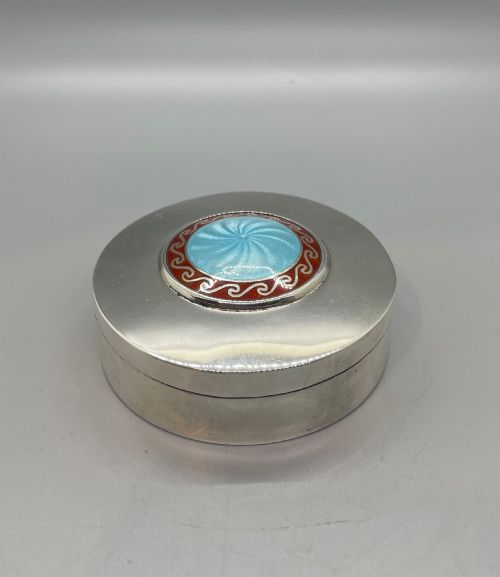

Vintage Blue Dish
A vintage blue dish brings together centuries of cobalt decoration and skilled ceramic work, offering both a decorative surface and a piece of functional history.
Vintage Blue Dish
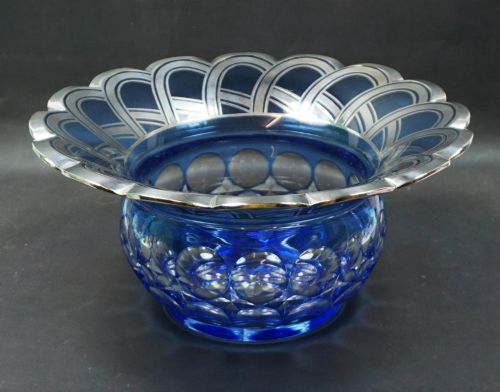
When you search for a vintage blue dish, you encounter a diverse selection of ceramics, porcelain, and enamelware spanning several centuries. The inventory ranges from large chargers and cabinet plates to serving dishes and trinket boxes.
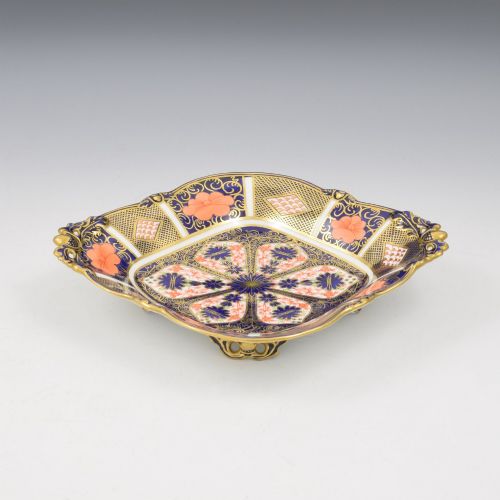
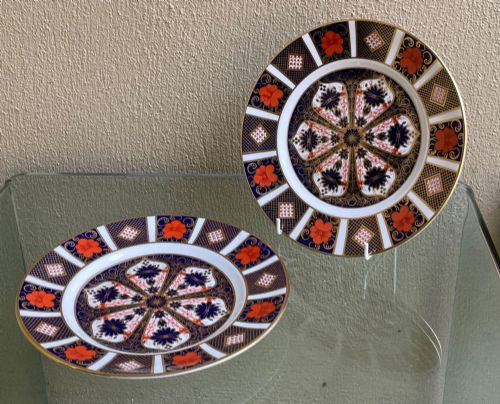
You are most likely to meet pieces originating from the nineteenth and twentieth centuries, including Japanese Imari wares, English transferware, and painted porcelain from factories like Royal Worcester. Forms vary from traditional round plates to scalloped bowls, leaf-shaped dishes, and cheese covers.
The selection encompasses continental faience, Delftware, and French pieces alongside British output. These items served both utilitarian roles in the dining room and purely decorative functions in the drawing room.
How they were made
Makers utilised porcelain, earthenware, and bone china as the physical base for these objects, shaping them on the potter's wheel or pressing them into moulds. Cobalt blue pigment served as the primary colourant for hand-painted motifs and transfer-printed designs.
Gilding, gold leaf, and enamel additions frequently decorated the surfaces after initial firing, adding metallic highlights or vibrant secondary colours. Opalescent glass examples relied on mould-pressing techniques to achieve their characteristic translucent finish.
Specialised techniques such as guilloche enamel and tin-glazing on faience required precise temperature control in kilns. Hand-painted fruit and landscape scenes demanded skilled brushwork from trained artists working within established potteries.
Vintage Blue Dish Retail Price Guide 2026
Typical asking prices for vintage blue dish among the pieces listed under this phrase on Sellingantiques today, from the lower quarter to the upper quarter. They describe what is for sale here now, not the wider market.
Several items double as cheese dishes, proving that earlier generations took their dairy presentation remarkably seriously.
What varies in quality
The standard of painting and the clarity of the cobalt transfer dictate the visual success of the piece. Crisp lines in transfer-printed patterns and delicate, deliberate brushwork on hand-painted fruit indicate skilled workmanship.
The application of gilding and enamel details separates standard production items from superior examples. Intricate piercing, unusual moulded forms such as leaf shapes or scallop edges, and signed artist work elevate the standing of the object.
The weight and translucency of the porcelain or bone china body reflect the care taken during raw material selection and firing. Maker attribution, through factory marks or artist signatures, provides a reliable marker of origin and pedigree.
Guild of Handicrafts·Royal Crown Derby·Rene Lalique·Royal Worcester·George Jones·Hicks And Meigh·John Rogers And Son
The Vintage Blue Dish Glossary
- Imari
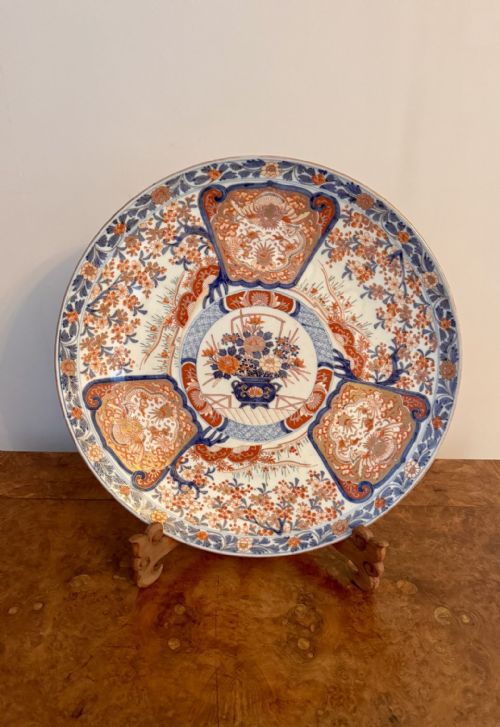
- A style of Japanese porcelain featuring deep cobalt blue and iron red, often highlighted with gold. This aesthetic heavily influenced European factories during the nineteenth century.
- Transferware
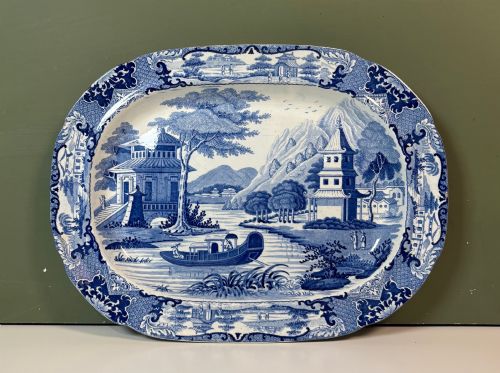
- Pottery decorated by applying a printed design from an engraved copper plate to ceramic using tissue paper. This method allowed for intricate pictorial scenes in blue and white.
- Majolica
- A type of earthenware coated with an opaque tin glaze and painted with coloured metal oxide glazes. It is known for vibrant tones and naturalistic botanical or animal forms.
- Faience
- European tin-glazed earthenware produced across France, England, and the Netherlands. Pieces often display hand-painted floral or architectural decoration.
- Guilloche
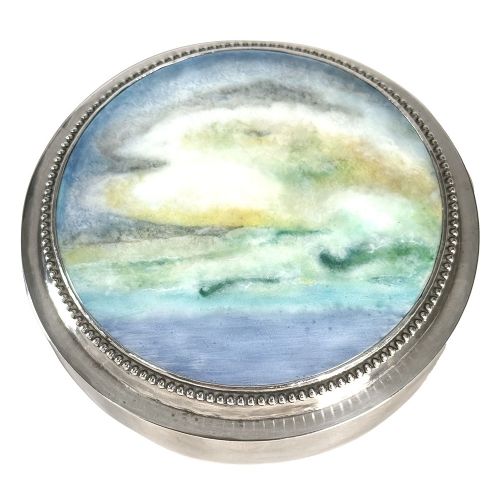
- An ornamental pattern produced by a mechanical engraving engine that creates precise, intricate geometric bands. It frequently appears beneath translucent enamel on silver boxes and pots.
Vintage Blue Dish: Frequently Asked Questions
How do I identify Imari designs?
Imari pieces typically combine deep underglaze blue with iron red and gold leaf accents over a porcelain body. The patterns often incorporate floral, architectural, or brocade motifs originating from Japanese export traditions.
European factories subsequently adopted these distinctive palettes for their own porcelain and earthenware lines, creating similar visual arrangements on plates and chargers.
What is transferware?
Transferware is pottery decorated by transferring a printed design from an engraved metal plate onto the ceramic surface using a tissue medium. This technique enabled factories to produce consistent, detailed pictorial scenes in blue.
Most examples date from the nineteenth century and feature elaborate landscapes, historical events, or botanical borders.
How were cabinet plates used?
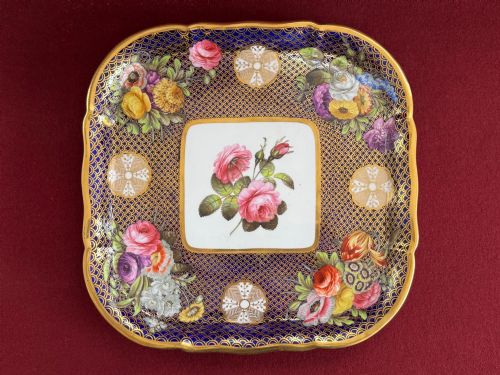
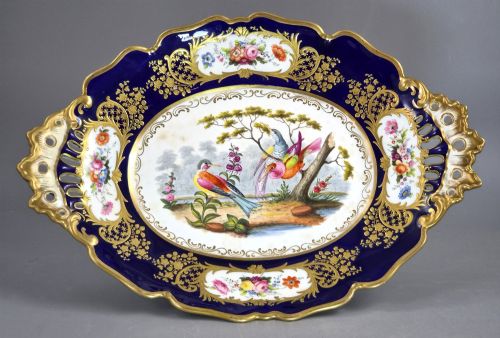
Cabinet plates were created primarily for display in drawing rooms and cabinets rather than for dining purposes. They often feature elaborate hand-painted scenes, rich gilding, or pierced rims.
Their survival in good condition usually reflects their protected status away from daily domestic use.
What distinguishes Majolica?
Majolica is characterised by a heavy earthenware body covered in coloured lead glazes that pool in relief details. The surfaces often take the form of natural objects such as leaves, fruit, or animals.
Victorian makers utilised this technique to produce decorative tableware and large cheese stands with striking visual presence.