
Vintage Blue Cocktail Ring
A vintage blue cocktail ring brings an unmistakable flash of colour to the hand, designed to command attention from across a crowded room.
Vintage Blue Cocktail Ring
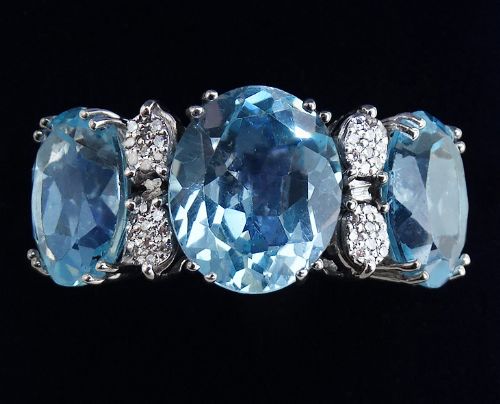
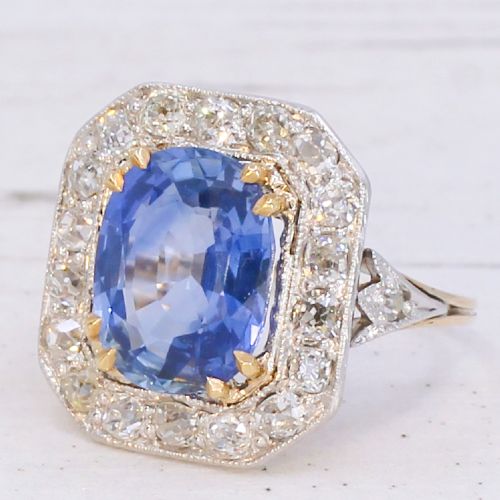
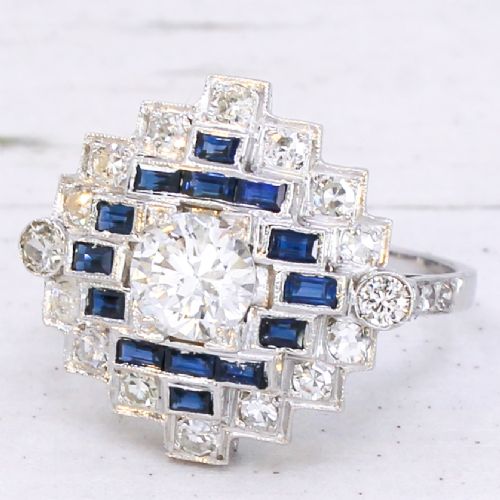
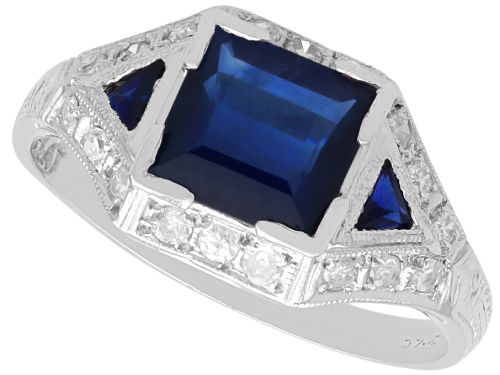
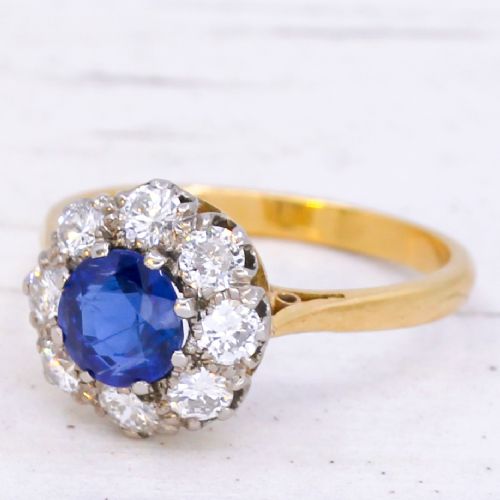
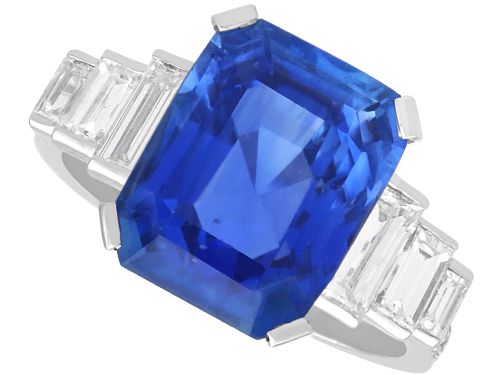
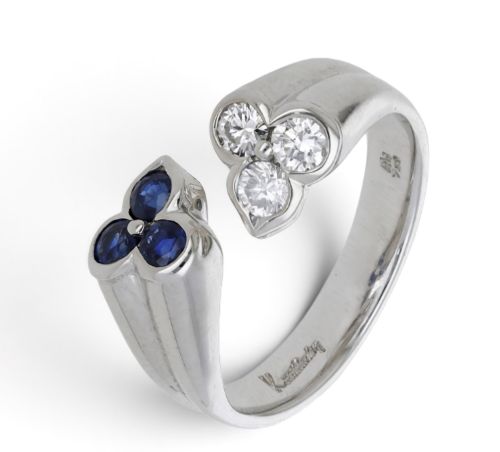
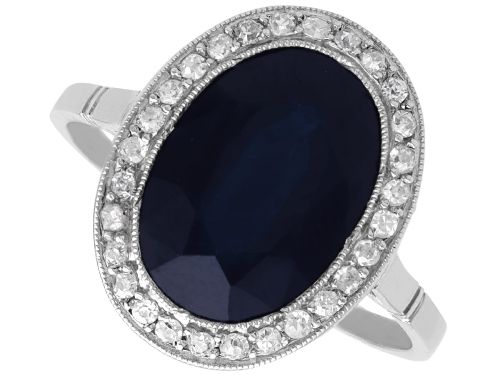
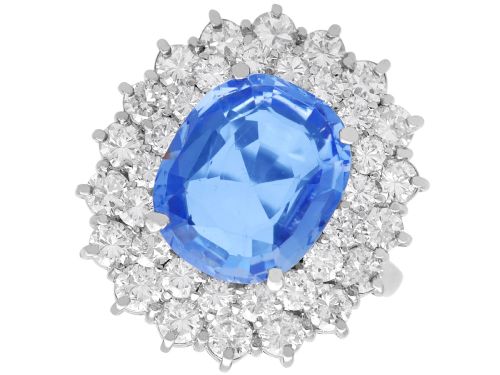
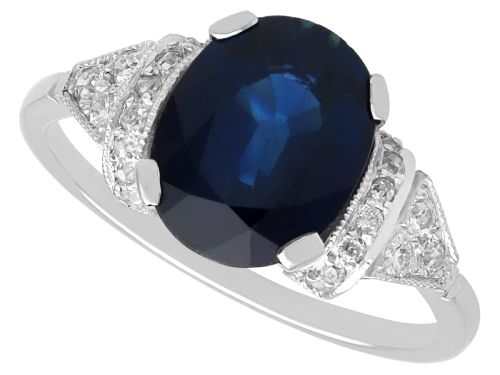
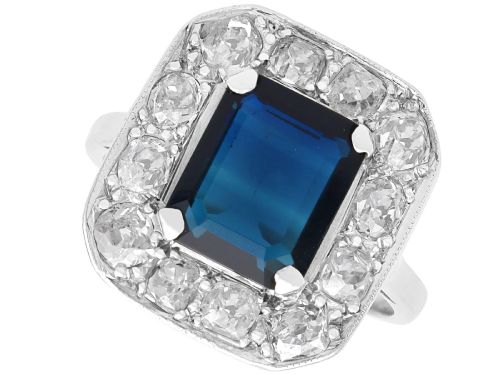
When you search for a vintage blue cocktail ring, you enter a sphere of jewellery defined by high-impact stones and sculptural metalwork. These pieces span the Edwardian era through to the mid-century modern period, taking forms such as substantial cluster rings, navette shapes, and flower configurations. The most frequent iteration encountered here is the Art Deco platinum or 18ct white gold cluster, framing a substantial central blue sapphire alongside brilliant-cut diamonds.
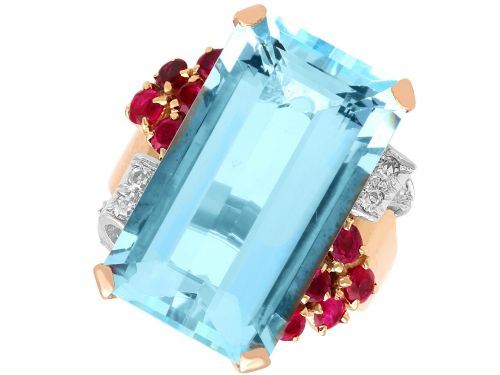
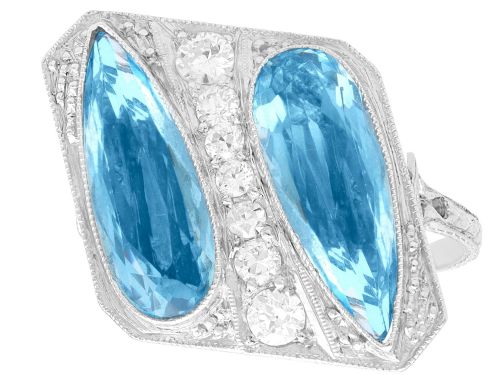
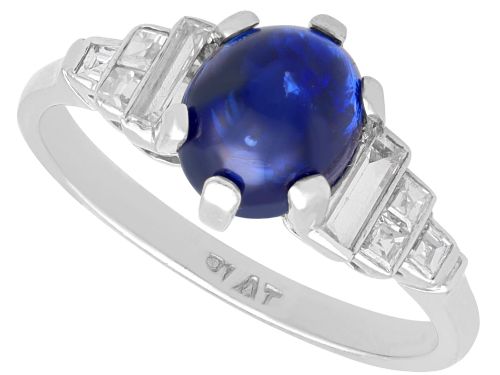
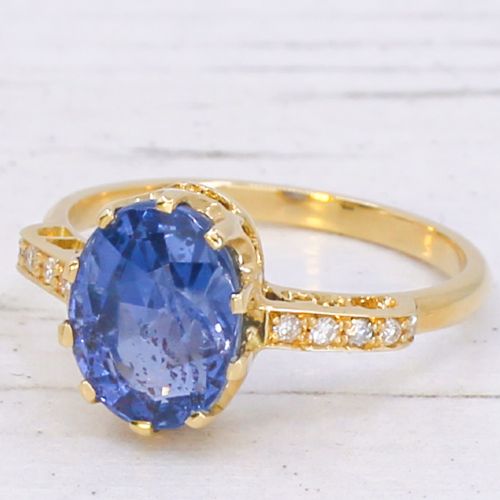
Beyond sapphire, the selections encompass aquamarine, blue zircon, turquoise, moonstone, and tanzanite set within yellow gold or platinum mountings. These rings were originally conceived for evening wear and social gatherings, prioritising visual presence and scale over understated daily adornment. Consequently, the finger coverage is often generous, utilising elongated oval, marquise, or high-domed cabochon cuts to maximise the impact of the central blue gem.
Materials and construction methods
The construction relies heavily on durable precious metals such as platinum and 18ct white or yellow gold, chosen for their ability to securely support sizeable gemstones. Platinum gained particular favour during the Art Deco period for its tensile strength, allowing jewellers to fabricate delicate millegrain edges and intricate pierced galleries without risking structural integrity.
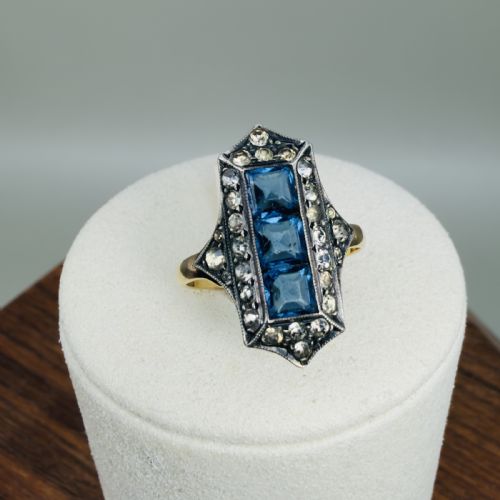
Gemstones are typically held in claw settings or precise box settings, accompanied by accent diamonds in old-cut, single-cut, or calibre-cut formats. Master goldsmiths and platinum-smiths combined hand-fabrication with early casting techniques, often integrating contrasting materials like onyx or white paste stones to heighten the geometric contrast of the design.
The listings span eight distinct eras, ranging from Georgian and Edwardian examples to mid-century modern designs in platinum and gold.
Distinctions in quality
Quality in these pieces is dictated by the natural pedigree and optical performance of the central blue stone, alongside the finesse of the metalwork. Unheated sapphires with certified origins or stones displaying deep, even saturation command greater regard than heavily treated stones with uneven colour zoning.
The standard of the secondary diamonds and the integrity of the platinum or gold work further separate standard productions from exceptional examples. Fine hand-finished gallery work, crisp calibre-cut shoulders, and minimal metal wear indicate superior workshop origins.
Le Vian
The Vintage Blue Cocktail Ring Glossary
- Cluster ring
- A ring design featuring a prominent central gemstone encircled by a border of smaller stones, usually diamonds.
- Navette
- A boat-shaped or elongated marquise silhouette tapering to sharp points at either end, popular in Art Deco rings.
- Millegrain
- A decorative technique featuring a fine, beaded edge along the platinum or gold settings.
- Calibre-cut
- Small gemstones cut precisely in geometric shapes to fit tightly together without visible metal partitions.
- Cabochon
- A gemstone shaped and polished with a smooth, convex domed surface rather than faceted.
Vintage Blue Cocktail Ring: Frequently Asked Questions
What defines a cocktail ring?
A cocktail ring is an oversized, decorative piece of jewellery traditionally worn at evening parties and formal social events. These rings prioritise visual drama, often pairing a large central gemstone with elaborate diamond surrounds.
Their substantial scale emerged during the early twentieth century as a symbol of personal autonomy and style. On this page, they appear primarily in cluster, navette, and flower configurations dating from the Georgian era through to the mid-century.
How do I identify an Art Deco ring?
Art Deco rings are characterised by geometric precision, symmetrical layouts, and a strong preference for white metals like platinum and 18ct white gold. Look for calibre-cut stones, millegrain detailing, and structural motifs inspired by architecture and machinery.
These pieces frequently feature sharp angles, elongated navette shapes, and contrasting accents of black onyx or calibre sapphires. The metalwork is often pierced to create lightweight yet robust frameworks supporting prominent central gems.
How should I care for a vintage ring?
Vintage rings require gentle maintenance to preserve delicate metalwork like millegrain edges and secure old-cut diamond or sapphire settings. Avoid exposing them to harsh ultrasonic cleaners, abrasive chemicals, or heavy physical impact during daily activities.
Periodic inspection by a professional jeweller ensures that the claws and settings remain tight and secure. Storing each ring individually in a soft-lined compartment prevents scratching between pieces.