
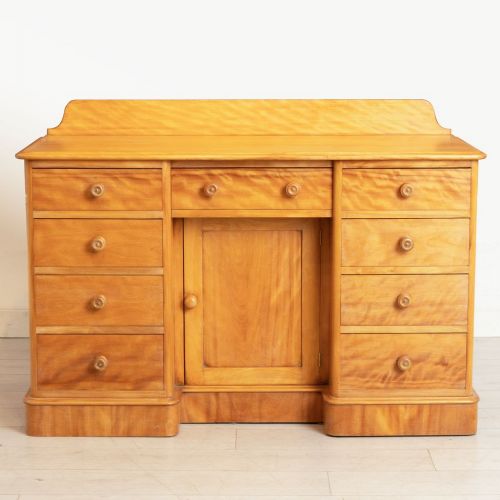


Vintage Blonde Wood Desk
A vintage blonde wood desk brings pale, figured timber and clean modernist lines directly into a modern study.
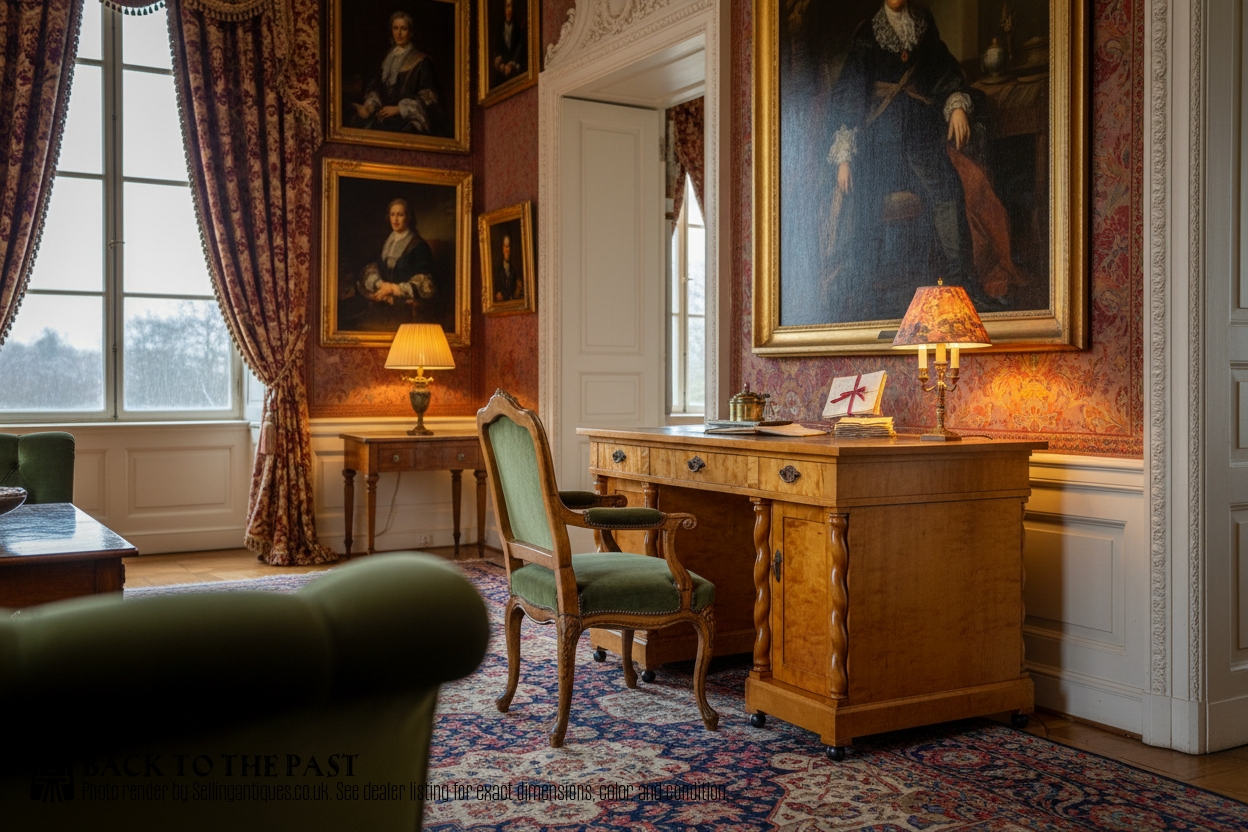
Vintage Blonde Wood Desk
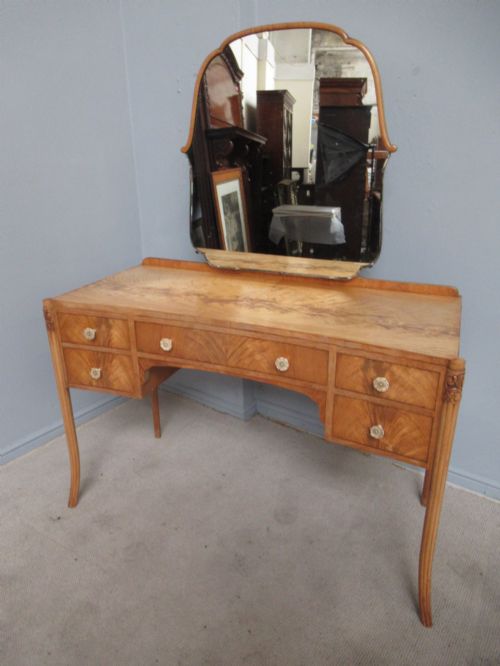
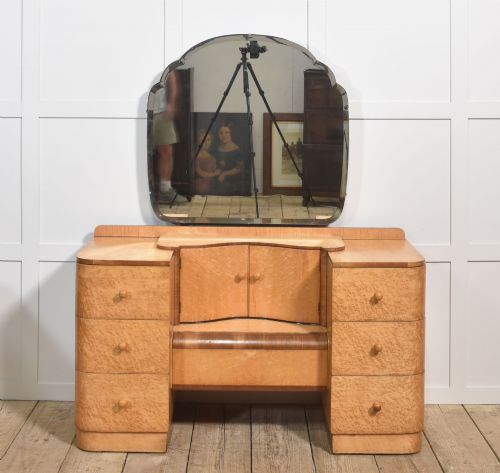
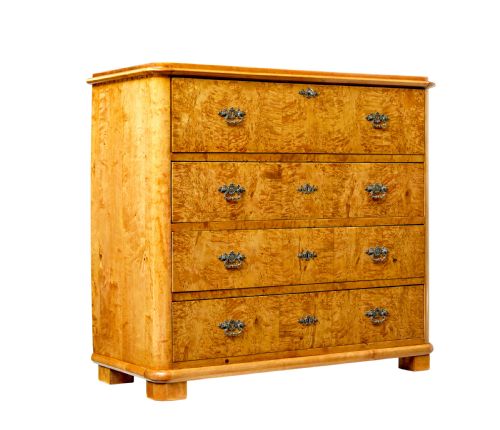
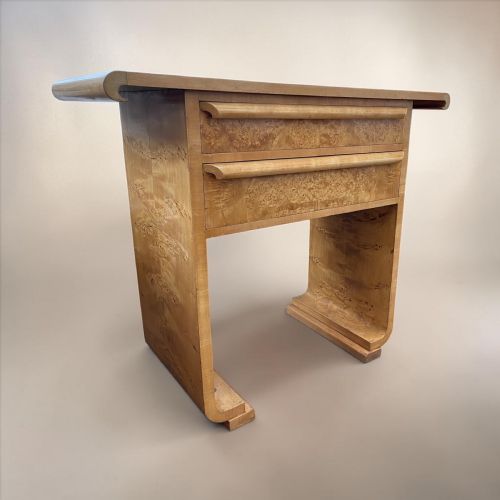
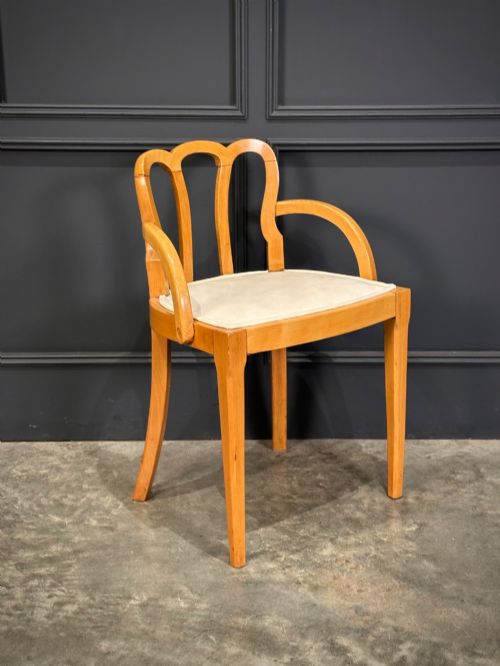
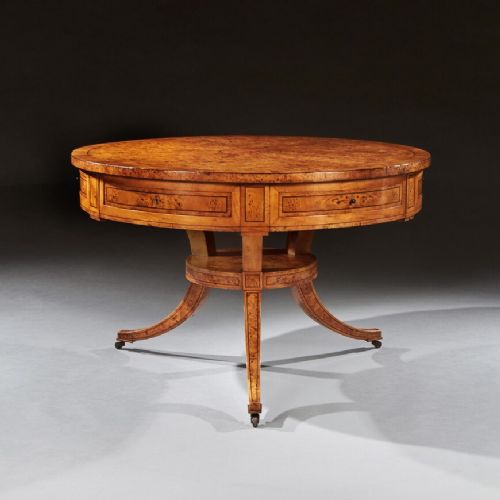
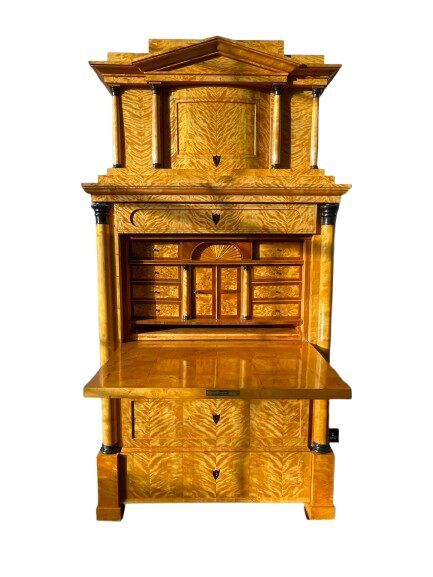
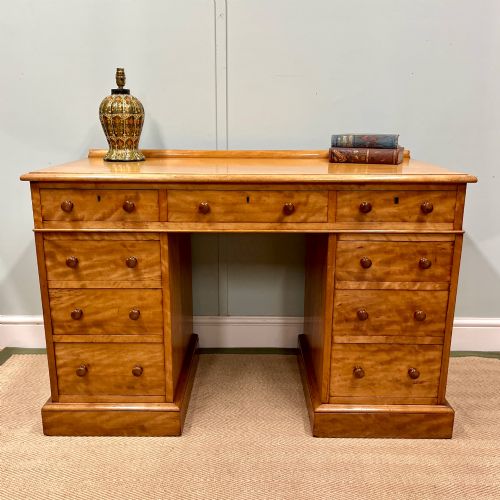
A vintage blonde wood desk brings pale, figured timber and clean architectural lines directly into a workspace. When searching for a vintage blonde wood desk, buyers encounter diverse forms ranging from twentieth-century pedestal desks to nineteenth-century secretaire chests and writing tables.
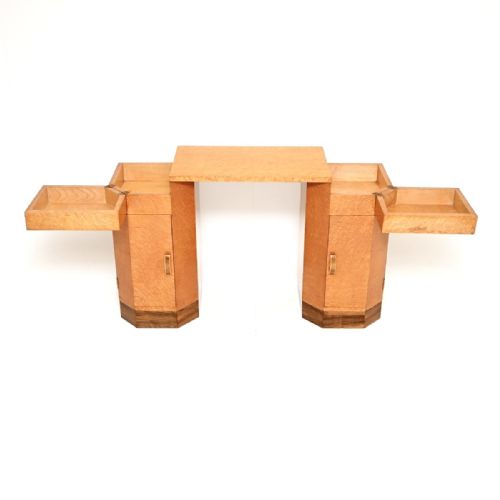
The material palette draws heavily on lighter timbers, with satin birch, birdseye maple, satinwood, and burr birch appearing across nineteenth-century and Art Deco periods. Many examples originate from Scandinavian workshops or British makers working in modernist and period revival styles.
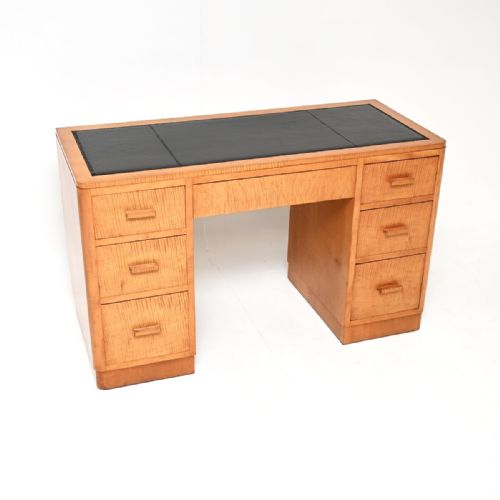
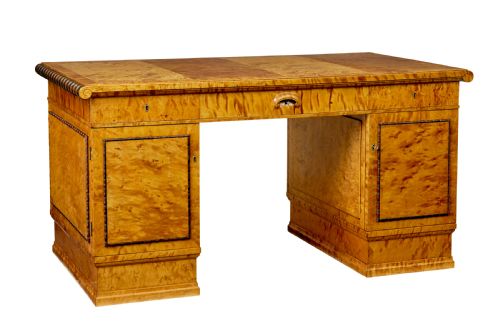
Pedestal formats with leather inserts sit alongside simpler writing tables and elaborate dressing tables adapted for study use. The visual weight remains light due to the blonde tones, suiting compact rooms as effectively as expansive libraries.
How They Were Made
Cabinet makers utilised select light timbers such as satin birch, ash, and birdseye maple to achieve striking grain patterns across flat surfaces and drawer fronts. Veneers were carefully matched to display natural figuring, supported by solid wood carcases and drawer linings.
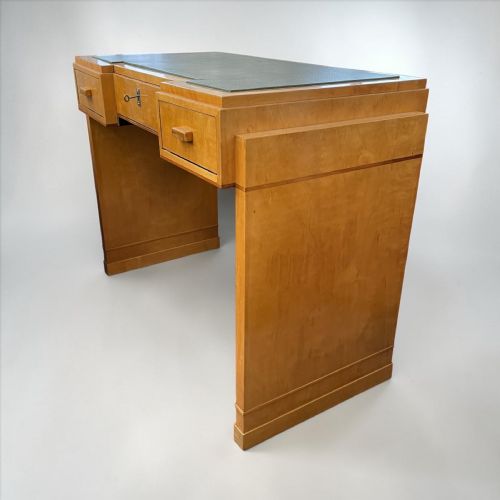
Structural hardware frequently incorporates brass fittings, while writing surfaces often feature inset leather panels tooled with gilt borders. Construction methods combine traditional joinery with the sleek geometric proportions characteristic of twentieth-century design and earlier neoclassical revivals.
Some nineteenth-century burr birch tables hide secret compartments just deep enough for a love letter or a very small snack.
What Varies in Quality
Quality rests upon the selection and matching of timber veneers, where continuous grain patterns across multiple drawers signal superior cabinet work. The depth and clarity of the finish reveal how successfully the natural blonde hue has been preserved and protected over decades.
Original hardware, including brass pulls and fitted leather writing surfaces, elevates an individual piece beyond later replacements. Structural integrity in the drawers and pedestal framing determines whether a desk maintains its daily utility alongside its decorative presence.
Fortnum and Mason·Heal and Son·Harry and Lou Epstein·Hille·Betty Joel
The Vintage Blonde Wood Desk Glossary
- Satin Birch
- A dense, pale hardwood with a lustrous, shimmering grain frequently utilised in high-end nineteenth-century and Art Deco cabinet making. Its reflective surface gives furniture a bright, clean appearance.
- Birdseye Maple
- A figured timber characterised by tiny swirling eyes that disrupt the smooth grain. Highly prized by twentieth-century designers for dramatic drawer fronts and table tops.
- Pedestal Desk
- A freestanding writing table supported by two vertical banks of drawers rather than simple legs. This configuration offers substantial storage beneath a broad desktop.
- Secretaire
- A cabinet or chest incorporating a fitted drop-front writing drawer that conceals smaller compartments and pigeonholes. It combines storage with a concealed writing surface.
- Biedermeier
- A dominant Central European style from the first half of the nineteenth century prioritising utilitarian comfort and clean lines over excessive ornamentation. It often highlights the natural beauty of blonde veneers.
Vintage Blonde Wood Desk: Frequently Asked Questions
Are these desks suitable for daily computer work?
Many vintage pedestal and writing desks offer sufficient surface area and knee clearance for modern laptops and writing tasks. Drawer configurations vary, so check internal dimensions if you need to store modern office equipment.
Consider the height of the desk relative to your chair, as nineteenth-century and early twentieth-century writing furniture was occasionally built lower than contemporary standards.
How do I distinguish Art Deco from nineteenth-century pieces?
Art Deco desks from the 1920s and 1930s typically feature streamlined geometric forms, stepped pedestals, and minimal ornamentation that lets the satin birch or birdseye maple grain dominate. Nineteenth-century examples often lean towards revival styles, classical proportions, or Biedermeier restraint.
Examine the interior drawer construction, backboards, and handles, as manufacturing techniques shifted significantly between the Victorian era and the interwar period.
What is satin birch?
Satin birch is a European hardwood prized for its pale straw colour and shimmering, reflective figure. It was a favourite material for quality cabinet makers working in both the Victorian period and the Art Deco era.
The timber takes a fine polish, creating a luminous surface that brightens dark interiors without losing its natural organic warmth.