


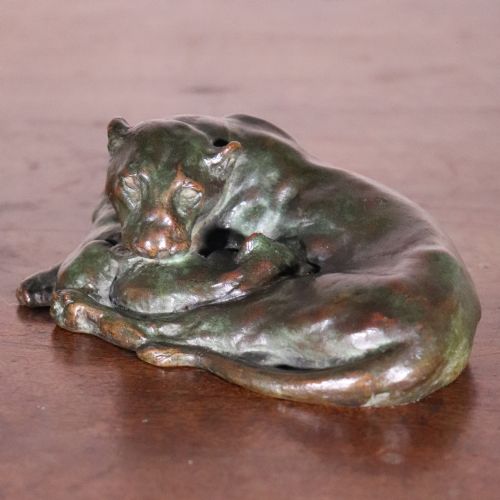


Vintage Big Cat Sculpture
These vintage big cat sculpture pieces capture feline menace in bronze, wood and spelter, bringing muscular grace to any interior.
Vintage Big Cat Sculpture
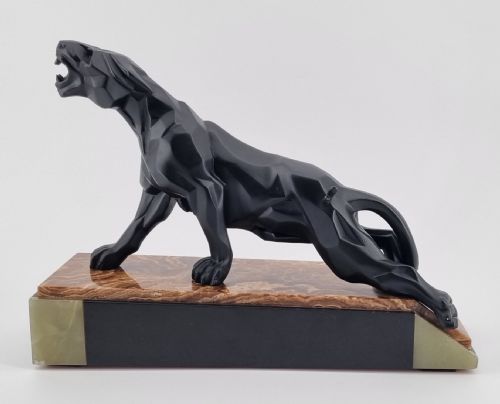
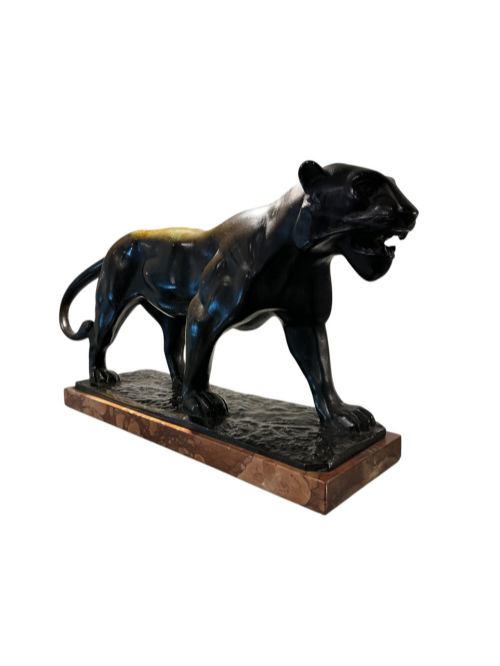
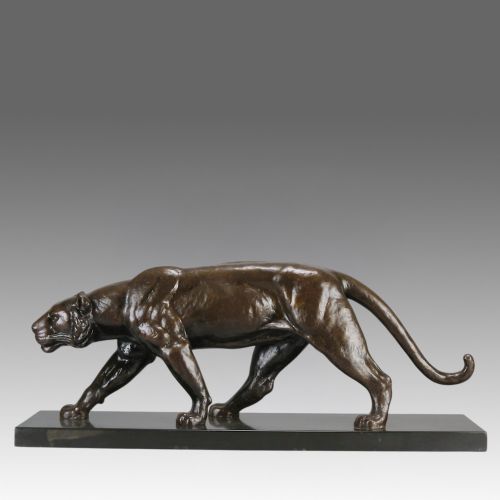
A vintage big cat sculpture brings prowling panthers, stalking tigers and resting lions into domestic spaces through varied artistic interpretations. You encounter these feline depictions across several decades, capturing the raw power of the predators.
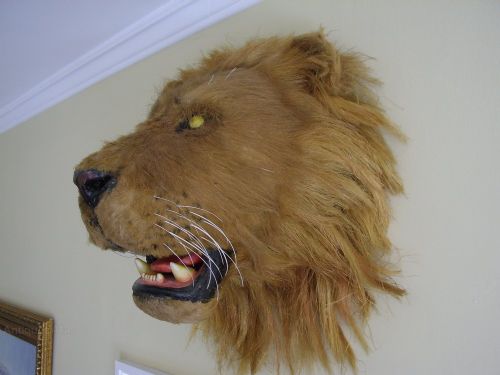
The selections on this page lean heavily towards Art Deco creations and Animalier studies, often mounted on contrasting marble bases. These pieces range from compact tabletop figures to large cabinet sculptures and wall-mounted props.
French Animalier works and Austrian school bronzes dominate the offerings, spanning the late nineteenth century through to mid-twentieth century modernism. Buyers select these works to introduce commanding presence and dramatic form into a room.
How they were made
Foundries utilised traditional casting methods for metallic pieces, applying patination or cold painting techniques to render spotted and tawny coats. Bronze and spelter formed the primary metallic mediums, often shaped via the lost-wax method to capture muscular tension.
Wood carvers worked with walnut and local timbers to shape fluid feline forms, accentuating grain patterns to suggest fur texture. Alabaster and composite resin additionally serve as structural bodies for specific twentieth-century interpretations.
Marble bases provide heavy foundations for many heavy metal and carved wood figures, anchoring the dynamic postures of stalking panthers and leaping tigers. Faux fur and painted elements appear in theatrical and prop variations.
Several panthers come permanently mid-pounce, proving that domesticating a big cat is much easier when it is cast in heavy metal.
What varies in quality
The fidelity of anatomical observation dictates the standing of an Animalier piece, separating convincing predators from stiff representations. Sculptors who captured the weight and stretch of muscle raise the standard of the work.
Material density and the crispness of surface chasing define the upper tier of bronze and spelter castings. Clean separation between the cat and its marble plinth, alongside precise signature stampings, marks superior execution.
Alexandre Ouline·Eugene Emile Borga·G.Gardet·Anna Vaughn Hyatt Huntington·Michel Decoux·Louis Riche
The Vintage Big Cat Sculpture Glossary
- Animalier
- A nineteenth-century artistic movement focusing on the realistic depiction of animals, particularly predators in motion. Practitioners mastered the anatomical structures of wild cats.
- Spelter
- A zinc alloy commonly utilised as a cost-effective alternative to bronze, frequently finished with a dark patination to mimic heavier metals. It appears frequently in twentieth-century French decorative figures.
- Patination
- The chemical or natural surface treatment applied to metal to alter its colour and protect the underlying material. Variations in tone add depth to muscular contours.
Vintage Big Cat Sculpture: Frequently Asked Questions
How do I date a bronze panther?
Examine the style of the base and the casting technique. Art Deco pieces from the early twentieth century often feature geometric marble plinths paired with stylised feline forms.
Signatures or foundry marks stamped into the metal help narrow down the production era to specific decades like the nineteen-twenties or thirties.
What is spelter?
Spelter is a zinc-based alloy used by makers to produce affordable sculptural figures. It is lighter than bronze and typically carries a dark patination layer.
Careful inspection reveals that spelter lacks the dense weight and resonant chime of genuine cast bronze.
Where should I display a heavy sculpture?
Place heavier marble-based sculptures on sturdy sideboards or low console tables where the piece can be viewed from multiple angles. Ensure the supporting surface can bear the weight of stone and metal combinations.
Keep figures away from direct sunlight to preserve the patination and any painted surface details.
Are all these cats panthers?
The selection includes a wide range of feline species including lions, tigers, leopards and cheetahs. Artists historically favoured different big cats depending on the stylistic movement of their period.
Animalier sculptors studied lions for majesty, while Art Deco designers preferred the sleek lines of panthers.