
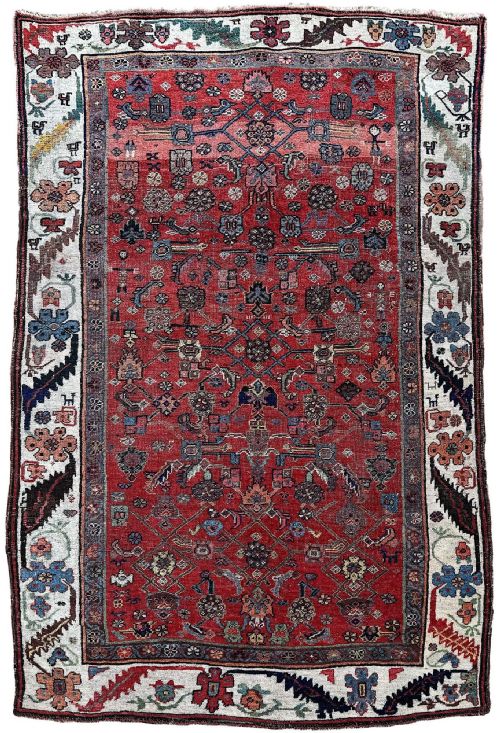
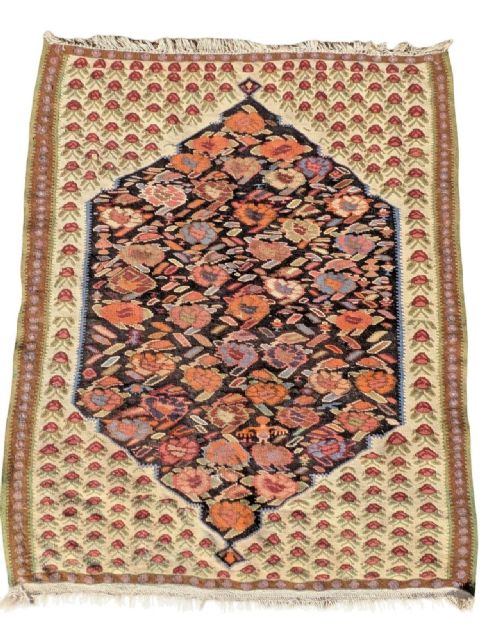
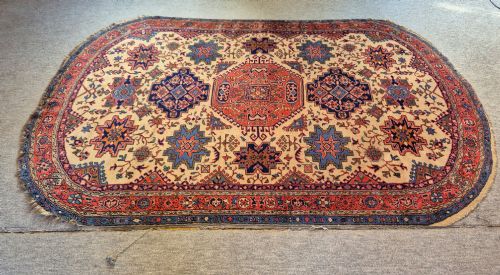
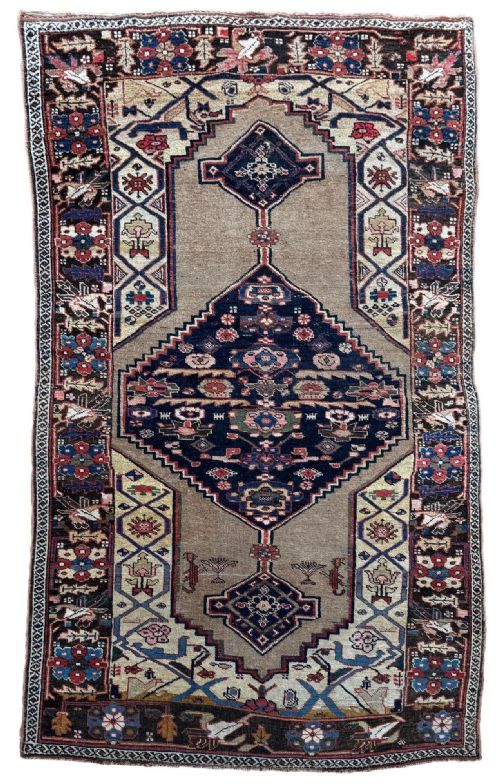
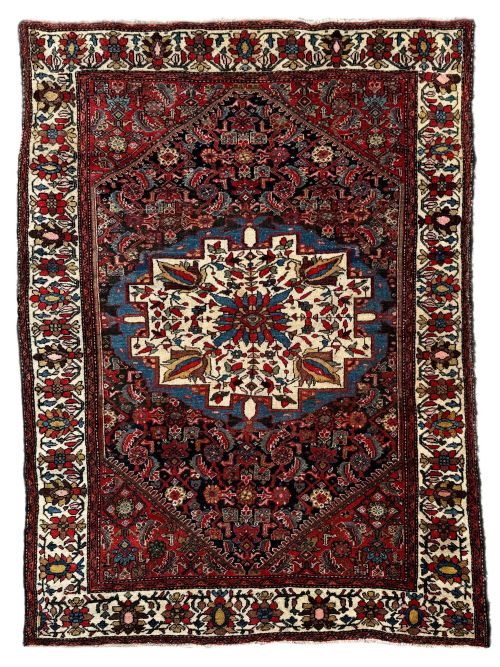


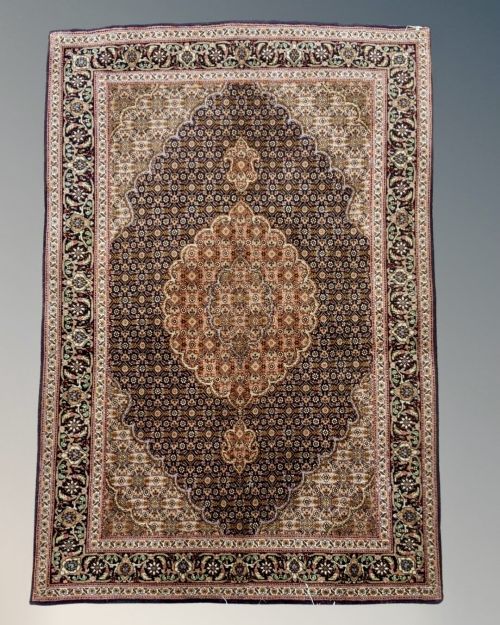


Vintage Bidjar Wool Rug
A vintage bidjar wool rug brings heavy structure and dense tribal pattern into a room, forged to endure generations of footfall.
Vintage Bidjar Wool Rug
A vintage bidjar wool rug represents the robust weaving tradition of Kurdish artisans in Western Persia, known widely as the iron rugs of Iran. When you search for a vintage bidjar wool rug, you encounter floor coverings that span from the late nineteenth century through to the interwar decades of the twentieth century. These pieces appear in various formats, ranging from small bag faces and scatter rugs to elongated runners, kellehs, and large room-sized carpets.
The objects on this page reflect distinct traditional Persian and tribal design vocabularies, often associated with the Kurdish tribes of Bijar. You will find standard rugs alongside flatwoven kilims and curve-ended examples that display individual regional flair. The materials remain consistent across the selection, anchoring each piece in authentic village production.
How they were made
Makers constructed these floor coverings using wool pile knotted firmly onto cotton foundations, creating a dense and heavy fabric. The reliance on wool for the surface provides resilience, while cotton warps and wefts lend structural stability to the heavy formats.
Weavers hammered the knots down densely during construction, a technique that yields the characteristic stiffness and durability associated with the region. This tight packing of the foundation and pile prevents dirt from penetrating easily, contributing to the longevity of each carpet.
Some weavers incorporated an unexpected lemon ground colour into their wool palettes, offering a cheerful departure from standard deep reds and blues.
What varies in quality
The primary distinction in quality lies in the density of the weave and the precision of the tribal pattern execution. Finer examples display intricate motifs and tightly packed knots that maintain structural rigidity without becoming pliable.
Another factor is the character of the palette and the preservation of the pile across large expanses. Distinctive ground colours, such as an unusual lemon tone, combined with an intact, even wool surface, elevate the standing of an individual rug.
The Vintage Bidjar Wool Rug Glossary
- Bidjar
- A town in western Iran and the surrounding region where Kurdish weavers produced notoriously heavy, durable carpets. These pieces earned a reputation for resilience due to a tightly packed knotting technique.
- Kelleh
- A traditional long rug format, narrower than a full carpet but broader than a standard runner. This proportion suits placement in hallways or alongside larger furniture.
- Kilim
- A flatwoven textile produced without a raised pile, utilising warp and weft interlacing to form geometric patterns. These lighter structures function as reversible rugs or decorative hangings.
- Bag face
- The front panel of a nomadic storage sack, detached and preserved as a small decorative mat. These compact fragments display concentrated tribal designs.
Vintage Bidjar Wool Rug: Frequently Asked Questions
How do I clean a vintage bidjar wool rug?
Vacuum gently without using a rotating brush roll to protect the wool pile from unnecessary friction.
For deeper cleaning, consult a professional specialist experienced in handling antique Persian textiles rather than using household chemical treatments.
Where should I place a heavy Persian rug?
Position these substantial wool carpets in high-traffic areas such as hallways, living rooms, or studies where their dense structure can absorb continuous daily use.
Ensure you place a quality underlay beneath the rug to prevent slipping and to cushion the heavy cotton foundation against hard flooring.
Are these rugs made by hand?
Every piece listed originates from traditional village and tribal workshops where artisans knotted wool by hand onto cotton foundations.
This manual construction method accounts for the slight irregularities in dimensions and symmetry that distinguish authentic older specimens from factory-made items.
How can I tell the age of a Bijar carpet?
Assess the natural variation in wool tones, the structural wear of the cotton foundation, and the specific traditional motifs characteristic of nineteenth or early twentieth-century production.
Comparing the format and dye palette against documented regional examples helps narrow down the period of manufacture.