
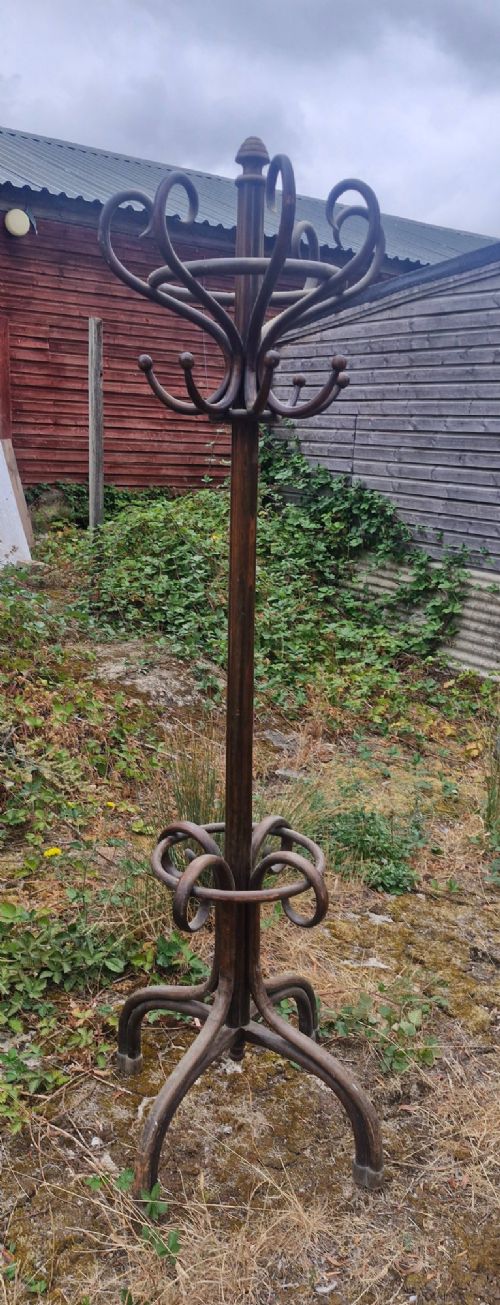
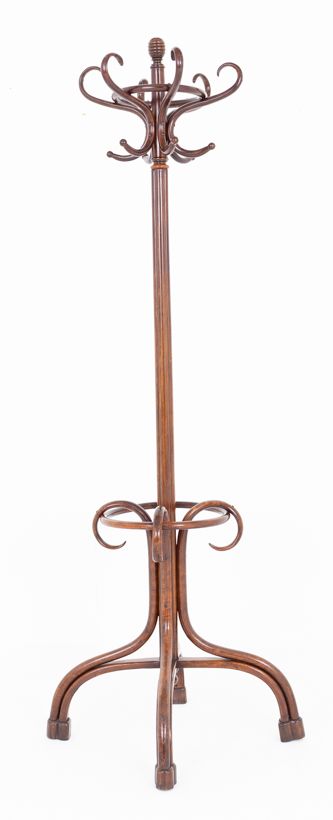
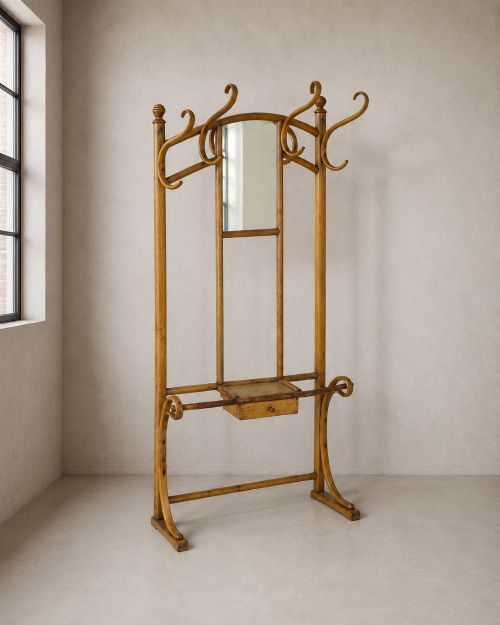
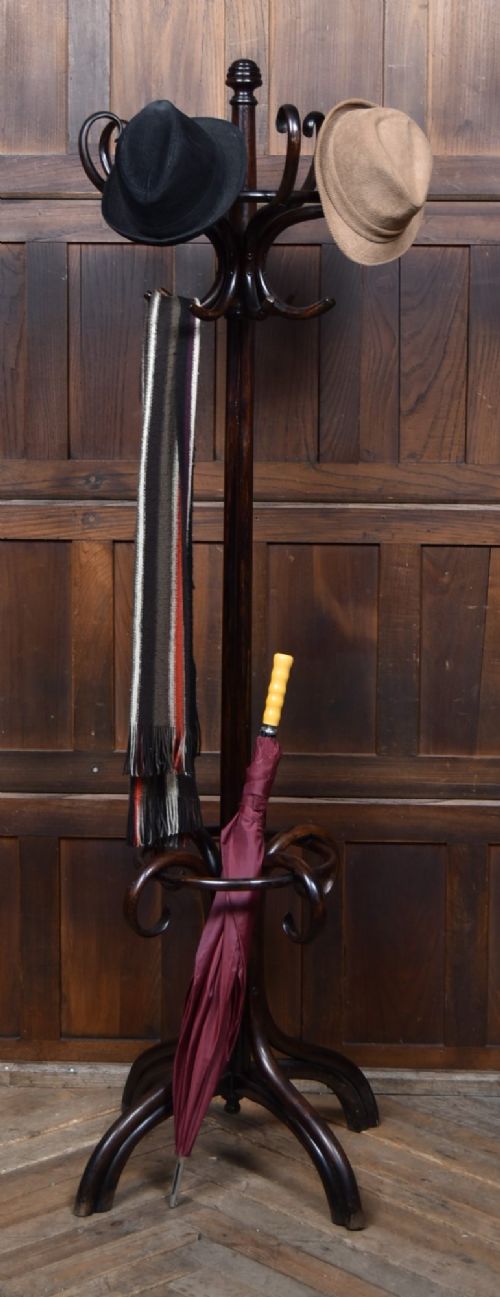
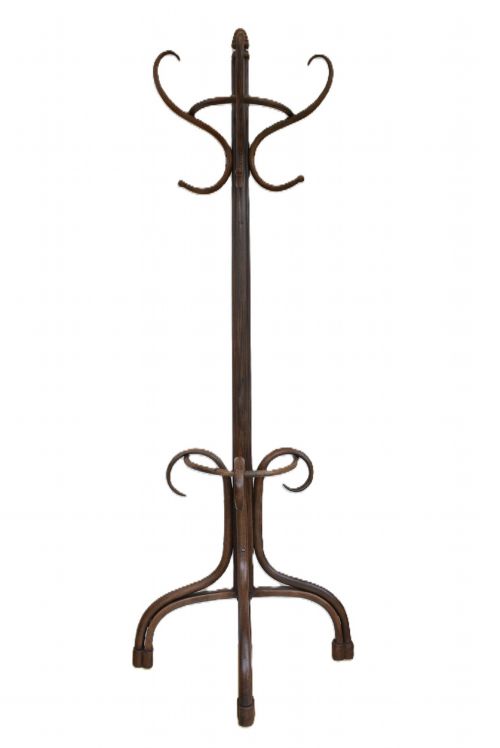
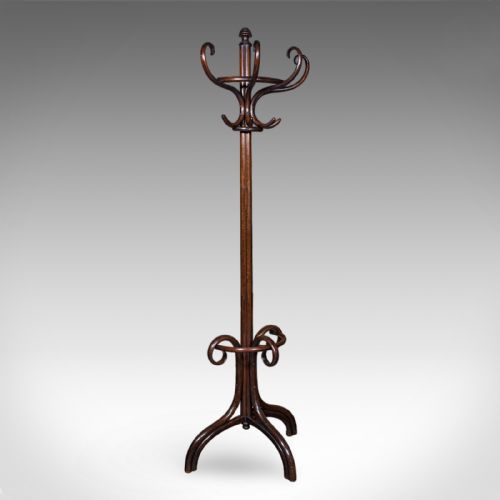
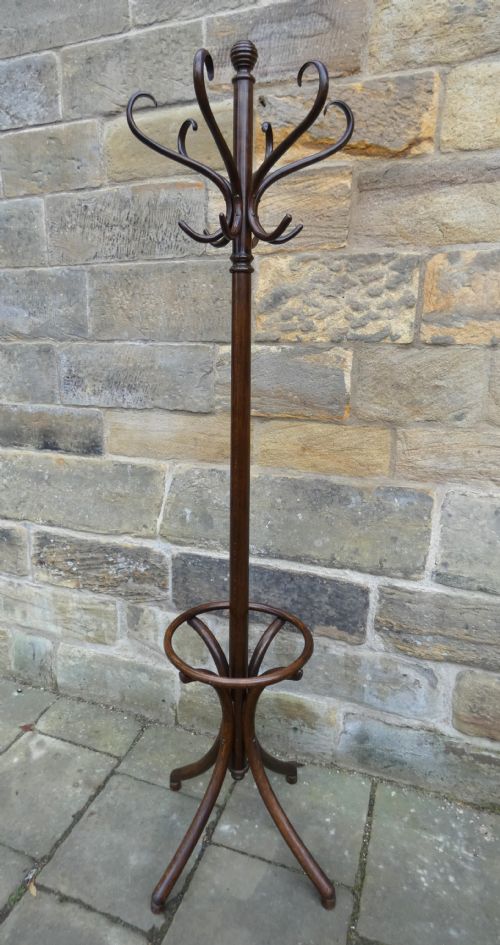
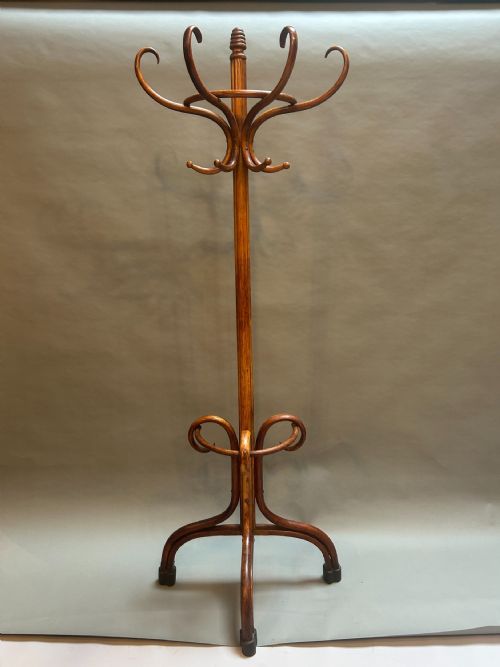
Vintage Bentwood Hall Tree
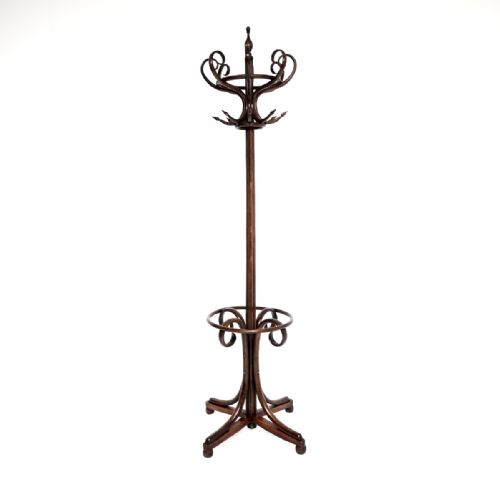
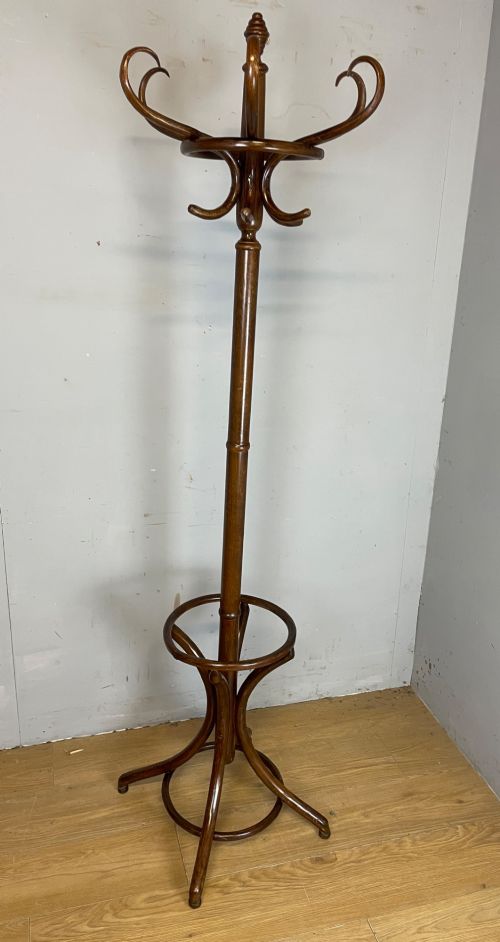
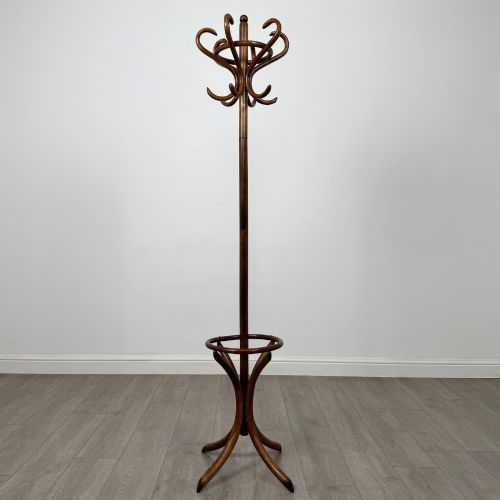
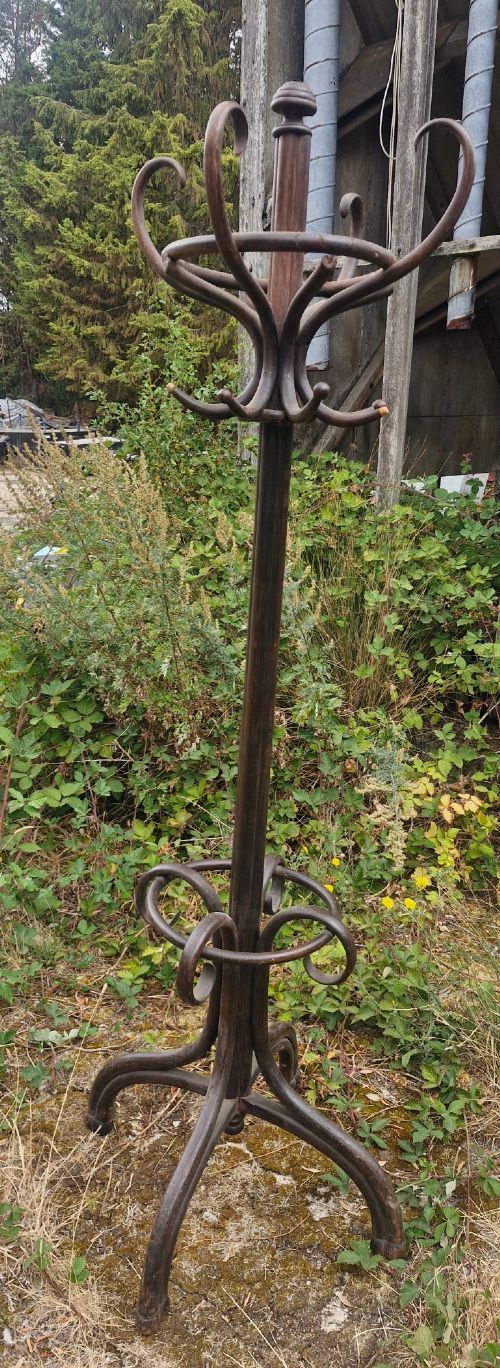
These vintage bentwood hall tree examples offer practical sculpture for an entryway, combining steam-bent curves with everyday utility for coats and hats.
Vintage Bentwood Hall Tree
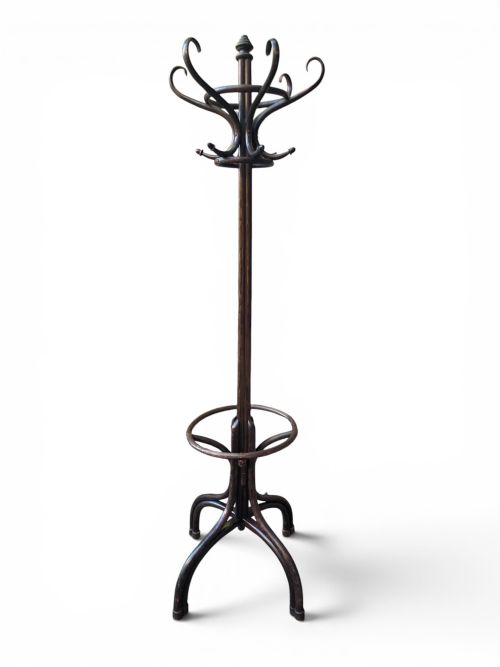
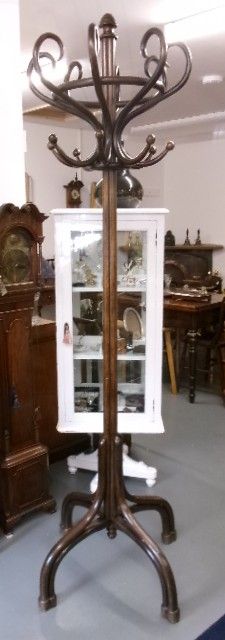
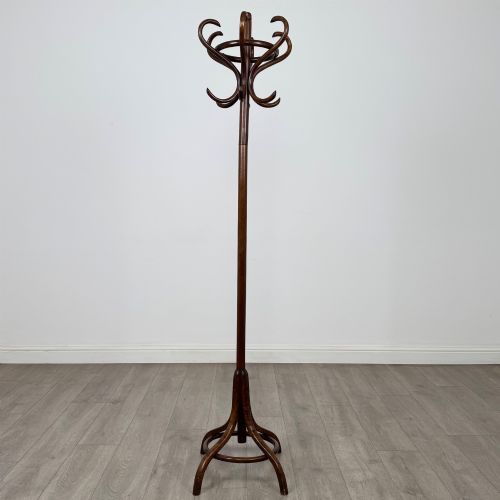
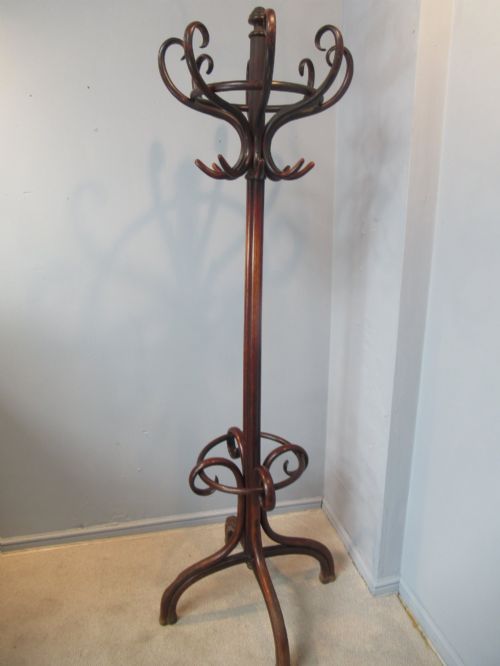
A vintage bentwood hall tree is a vertical piece of hallway furniture designed to hold coats, hats and sticks, appearing in forms such as coat stands, hatstands and half round hall stands. These items emerge from periods spanning the late 19th century through the Edwardian era and into the 1930s, displaying Victorian, Art Nouveau and Thonet styles.
The most common variants on this page include tall revolving stands, demi lune or half round designs meant to sit flush against a wall, and stands with double tops or built-in umbrella rings. Such pieces serve as functional hallway furniture that occupies minimal floor space while providing numerous hanging hooks.
Originating largely from Austrian and European workshops of the 19th and early 20th centuries, these items bring organic curves into domestic spaces. A buyer finds variations ranging from simple upright hat and coat racks to large, heavy quality hall stands with elaborate scrollwork.
Materials and construction methods
Construction relies primarily on beech, beechwood and steamed beechwood, chosen for its capacity to take and hold curves when subjected to moisture and heat. Artisans placed solid lengths of wood into steam chambers until pliable, then bent them manually around metal or wooden forms to create the characteristic loops and scrolled brackets.
Finishes typically involve wood stain, applied to enhance the natural grain of the beech while protecting the surface from daily wear in busy hallways. Pieces are assembled using threaded bolts and screws concealed within the central column and structural joints, allowing the curved components to support substantial weight without splitting.
Listings feature beech and steamed beechwood materials shaped into Victorian and Edwardian coat stands.
Assessing quality in bentwood furniture
Quality in a vintage bentwood hall tree rests on the thickness of the timber, the complexity of the scrollwork, and the stability of the central column under load. Superior examples feature heavier gauge beech, crisp multi-layered curved loops, and well-fitted cast iron or wooden internal bracing that prevents lateral wobble.
The presence of maker labels or stamps, such as those from Thonet or Fischel, elevates a piece, as does a honey coloured stained finish that has aged evenly. Lesser examples show thinner sections of wood, simpler turning on the central shaft, or replacement hooks that disrupt the unified design.
Thonet·Fischel
The Vintage Bentwood Hall Tree Glossary
- Bentwood
- Wood that has been shaped by heating and steaming until pliable. This technique allows makers to create flowing, continuous curves without traditional joinery.
- Demi Lune
- Half-moon or semi-circular in shape. These stands sit flat against a hallway wall to save floor space.
- Thonet Style
- Furniture produced in the manner of the pioneering firm founded by Michael Thonet. It is characterised by lightweight steam-bent wooden components and minimalist structural elegance.
- Hall Tree
- A freestanding piece of furniture placed in an entrance hall for hanging garments and storing walking sticks. It often incorporates mirror panels or umbrella wells.
Vintage Bentwood Hall Tree: Frequently Asked Questions
How do I place a hall tree?
Position the piece in an entrance hall or narrow corridor where wall space accommodates its height. Demi lune designs sit directly against flat walls, while revolving models require clearance on all sides for access.
Ensure the base rests level on the floor so that weight distributed across the upper hooks remains balanced.
What periods do these stands cover?
The pieces span from the late 19th century, including Victorian and 1880s examples, through the Edwardian period and early 20th century up to the 1930s.
Earlier items often display heavier framing and intricate scrollwork, whereas later 1930s versions lean toward simpler geometric profiles.
Are these pieces sturdy enough for heavy coats?
Original beech construction provides remarkable strength when the internal bolts remain tight and secure. Heavy quality models from the 1900s handle multiple winter coats and hats without flexing.
Periodic checking of the central connecting screws maintains stability over decades of daily use.
How do I identify a Thonet piece?
Look for stamped paper labels, burned-in brand marks, or distinctive construction hallmarks associated with the Austrian manufacturer. Thonet pieces often exhibit superior refinement in the steam-bent scroll joints and balanced proportions.
Unlabeled items produced in the same aesthetic are typically catalogued as Thonet style.