


Vintage Barley Twist Seating
Vintage barley twist seating brings sculptural turned woodwork into everyday rooms, offering sturdy oak frames and classic revival character for modern interiors.
Vintage Barley Twist Seating
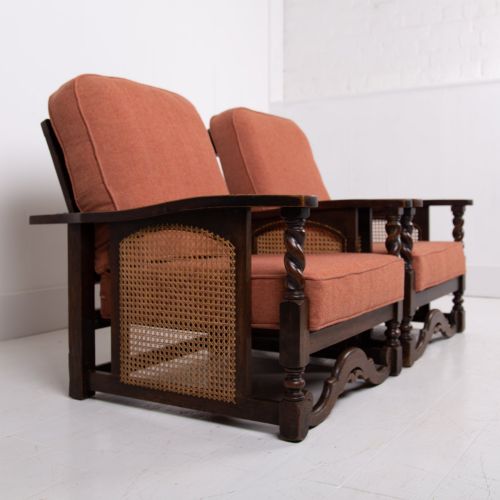
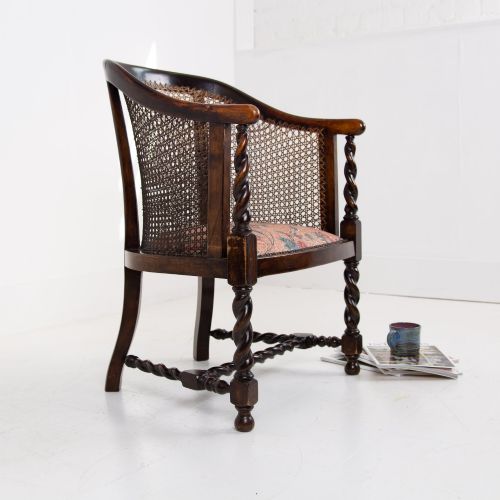
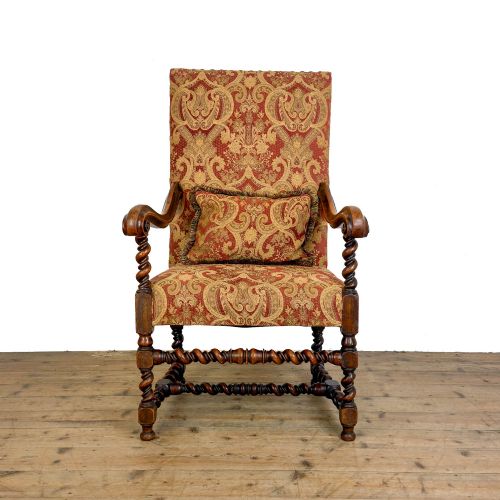
Vintage barley twist seating encompasses dining chairs, armchairs, stools, and lounge chairs shaped by spiral wooden turnings. These pieces draw heavily on Jacobean Revival, Carolean Revival, and Victorian Gothic styles, taking form across the nineteenth and early twentieth centuries.
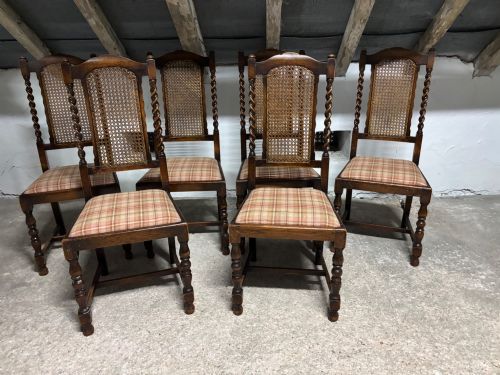
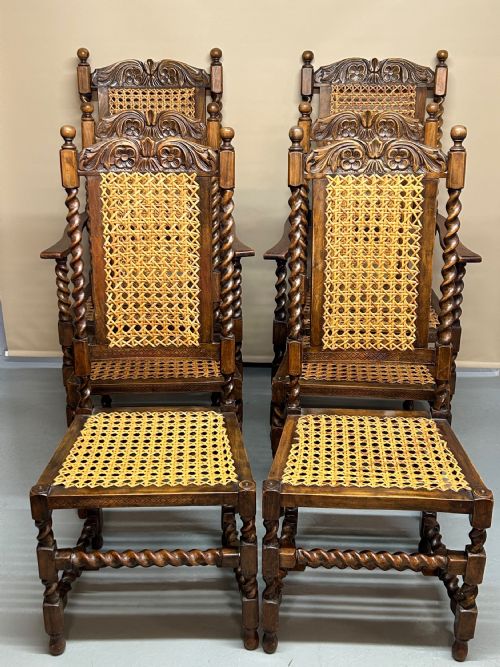
The version most commonly met on this page is the oak dining chair or set of dining chairs dating from around nineteen hundred to nineteen twenty. Such pieces frequently pair turned uprights or legs with cane backs, upholstered seats, or leather pads.
Beyond standard dining forms, buyers encounter specialised seating like library armchairs, dressing table stools, and occasional hall chairs. These variations span materials from walnut and satinwood to solid oak, reflecting diverse revival impulses of the Victorian and Edwardian eras.
Distinctions in quality and execution
The standard of timber selection and the crispness of the turned spiral carving dictate the visual hierarchy of these seats. Deeper relief in carved details and tighter, more uniform timber grain separate finer examples from simpler production.
The integrity of applied canework and the precision of joinery further distinguish superior pieces. Original frame stability and well-executed historical restorations maintain the structural reliability expected in period furniture.
The Vintage Barley Twist Seating Glossary
- Barley twist
- A decorative turning technique resembling a twisted rope or barley stalk, widely used on furniture legs and stretchers. This spiral motif defines the visual identity of these chairs.
- Bergere
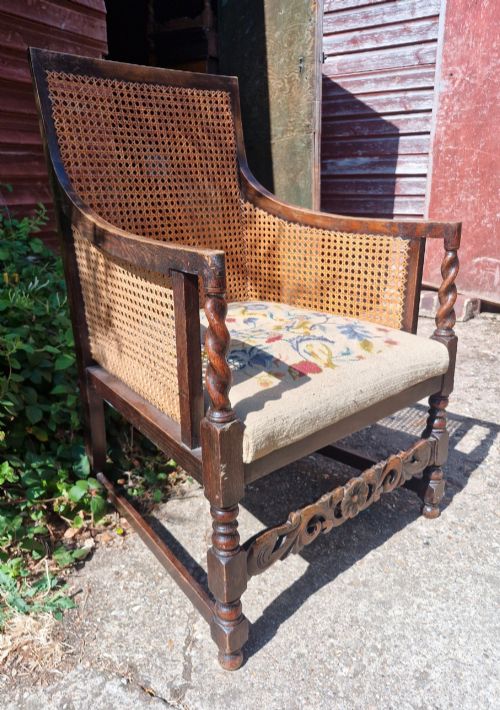
- A closed-frame upholstered armchair with cane or wickerwork sides and back panels. It typically incorporates a loose cushion for the seat.
- Carver armchair
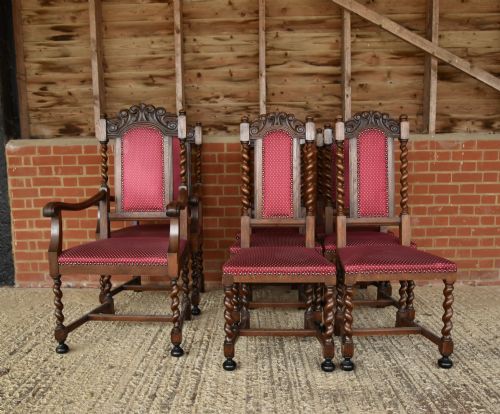
- An armchair designed to match a set of dining chairs, usually featuring arms and a slightly grander scale. These sit at the heads of dining tables.
- Jacobean Revival
- A nineteenth and early twentieth-century style imitating seventeenth-century English furniture design. It favours dark oak, heavy turnings, and carved crest rails.
Vintage Barley Twist Seating: Frequently Asked Questions
How do I care for cane seats?
Cane panels require occasional gentle cleaning with a damp cloth to maintain moisture and prevent brittleness.
Keeping them away from direct heat sources ensures the natural fibres remain flexible over time.
Can I use these chairs daily?
Most solid oak and walnut frames possess robust construction suitable for regular seating use.
Checking joint stability helps confirm whether a particular chair is ready for everyday dining.
What defines Edwardian revival pieces?
Edwardian interpretations of earlier styles often combine lighter proportions with traditional turned woodwork.
These pieces balance period character with the domestic scale popular in the early twentieth century.
Where do corner armchairs fit?
Corner armchairs function as occasional seating designed to fit neatly into room angles or beside desks.
Their distinctive diagonal orientation offers an alternative silhouette to standard dining or lounge chairs.