




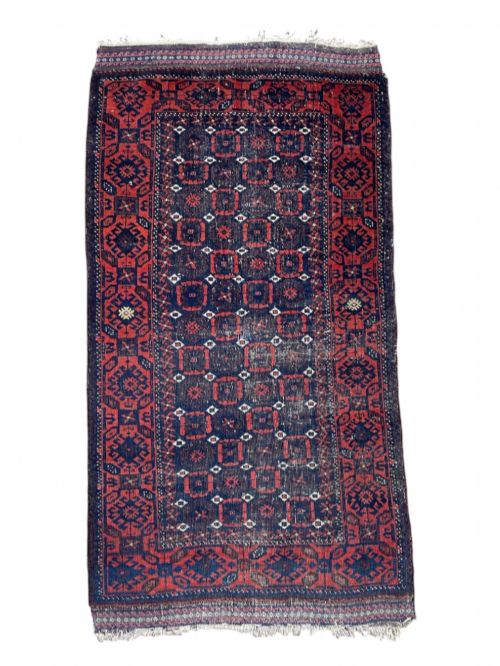


Vintage Baluch Runner Rug
A vintage baluch runner rug brings nomadic tribal artistry into a hallway through rich indigo dyes and geometric prayer designs.
Vintage Baluch Runner Rug
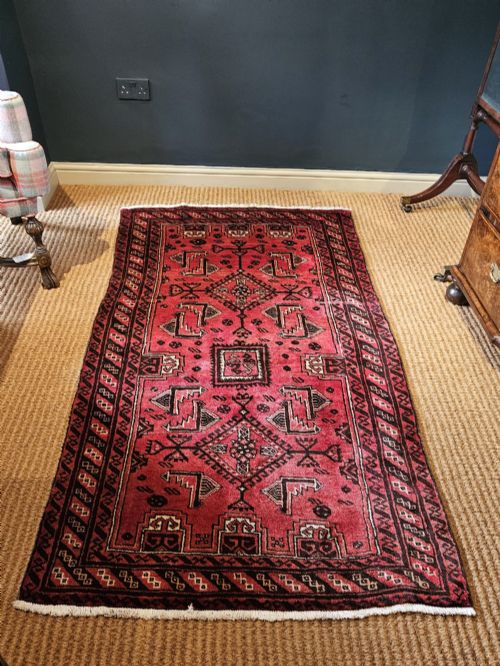
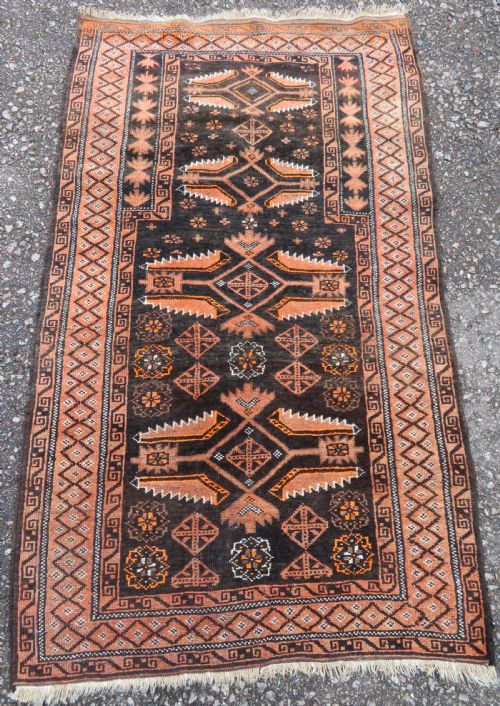
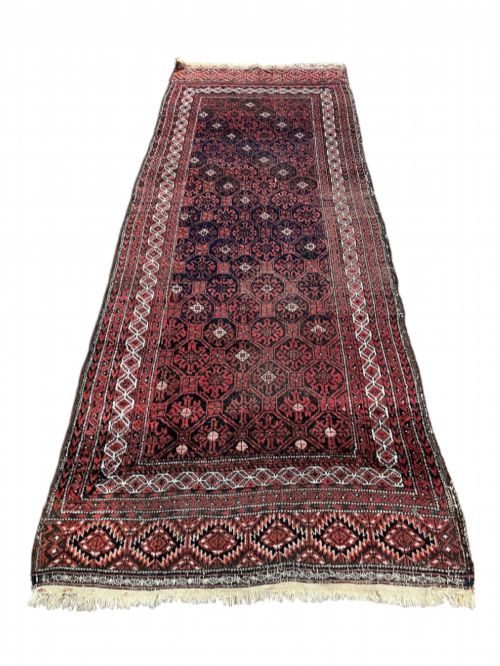
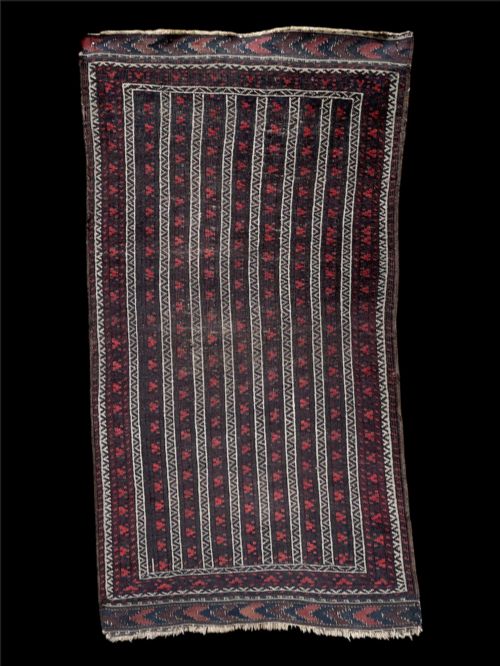
A vintage baluch runner rug is a narrow tribal weaving created by nomadic and village groups inhabiting the borderlands of Persia and Afghanistan. These elongated pieces display characteristic dark palettes, repeat octagons, and prayer mihrabs that reflect centuries of regional weaving traditions.
The examples gathered here span from the nineteenth century into the early decades of the twentieth century. They encompass formats ranging from standard runners to prayer rugs and flatwoven kilims originating from tribal groups such as the Taimani, Timuri, and Mushwani.
Buyers seeking this phrase encounter authentic village-made floor coverings constructed for practical nomadic use rather than commercial export. Their distinct motifs include latch-hook medallions, shrub patterns, and camel-ground fields that distinguish them from city workshops.
Materials and Construction
Weavers constructed these textiles using hand-spun wool for the pile, foundation warp, andweft yarns, occasionally incorporating goat hair or camel hair for structural durability and natural colour variation. The resulting handle is supple yet dense, designed to withstand heavy daily traffic inside tribal tents and mud-brick dwellings.
Colour comes from natural dyes derived from local plants and minerals, yielding deep madders, indigos, and rich browns that age with a characteristic patina. Certain pieces employ mixed techniques, combining knotted pile sections with flatwoven kilim bands across the field or ends.
Listings feature nineteen-century and early twentieth-century examples woven with pure wool, camel hair, and natural dyes by regional tribal groups.
Assessing Craftsmanship and Material Quality
Quality rests on the fineness of the knotting, the handling of the wool, and the clarity of the natural dyes. Tighter foundations and well-balanced proportions separate standard village output from superior tribal examples.
Preservation of the original outer selvedges and end finishes also determines the standing of a piece. Finer weave density allows intricate motifs like the mina khani or shrub design to appear crisp and defined.
The Vintage Baluch Runner Rug Glossary
- Mihrab
- A niche design symbolising a prayer doorway, commonly found pointing towards Mecca on tribal prayer rugs. This architectural motif often dominates the upper field of the textile.
- Kilim
- A flatwoven textile produced without a pile by tightly interweaving warp and weft threads together. These pieces serve as floor coverings or utility covers.
- Gul
- A repeating medallion or floral-like octagonal stamp used extensively in tribal carpet design. Different clans utilised distinct forms of these motifs to signal heritage.
- Selvedge
- The bound side edges of a rug that protect the structure from unravelling. Original corded edges indicate careful preservation.
- Warp
- The stationary vertical threads stretched across a loom upon which the knots are tied. The density of these foundation threads dictates the flexibility of the finished textile.
Vintage Baluch Runner Rug: Frequently Asked Questions
Where were these rugs made?
These textiles originate from nomadic and village weavers across the borderlands of Persia and Afghanistan. Communities such as the Taimani, Timuri, and Mushwani produced them in tribal regions.
The makers utilised locally sourced materials from their flocks, working within distinct regional traditions that spanned generations of nomadic movement.
How do I care for my rug?
Protect the wool pile by vacuuming gently without a rotating brush roll to prevent snagging the hand-spun threads. Keep the textile out of direct sunlight to preserve the stability of natural dyes.
Rotate the piece periodically to ensure even wear across high-traffic hallway areas, and use a breathable underlay to keep the foundation secure.
How do I spot natural dyes?
Natural dyes display subtle tonal shifts, known as abrash, caused by variations in wool dye baths over time. These variations give the surface a gentle, living depth rather than a flat uniformity.
Colours mellow gracefully with age, maintaining rich undertones derived from local plant and root extracts.