

Vintage Balloon Chair
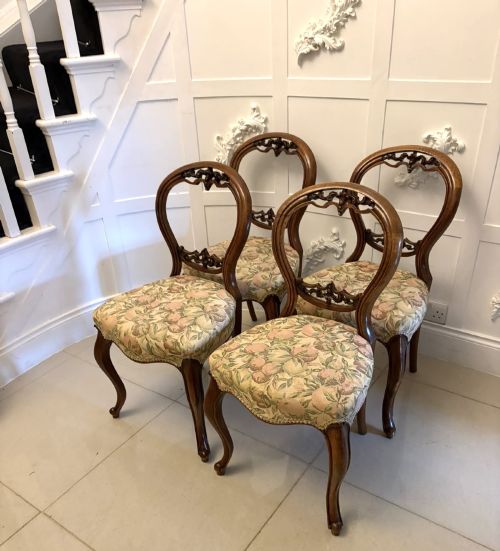
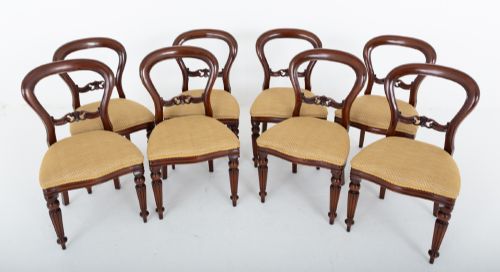
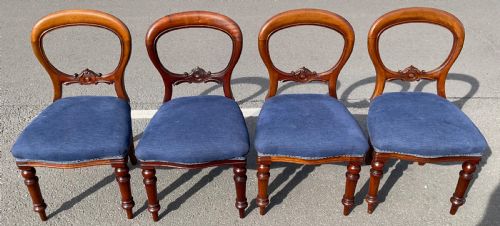
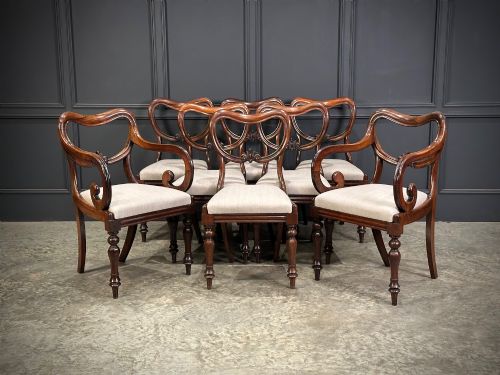
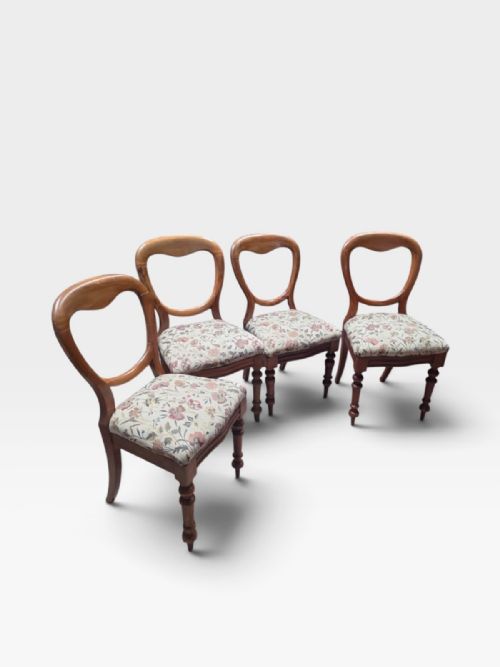
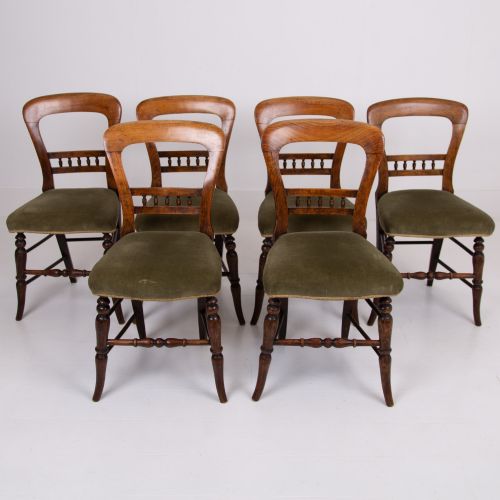
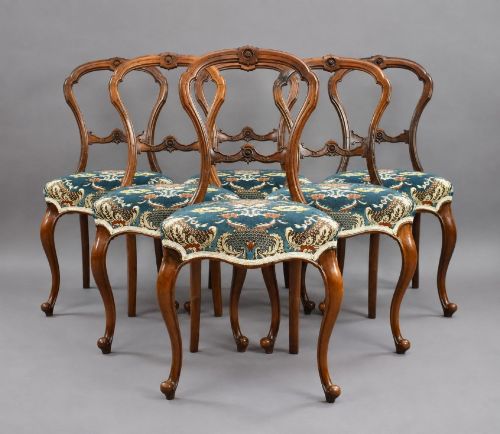
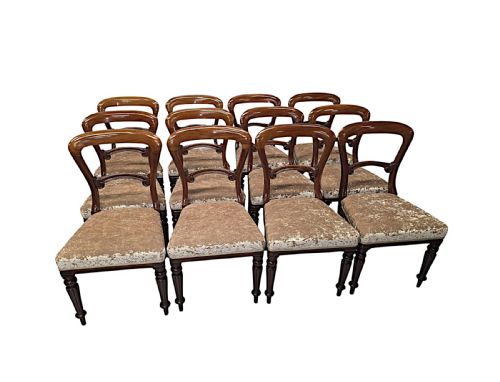
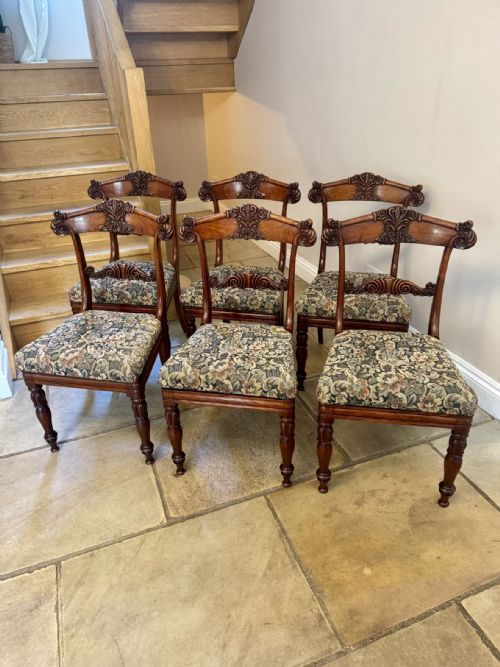
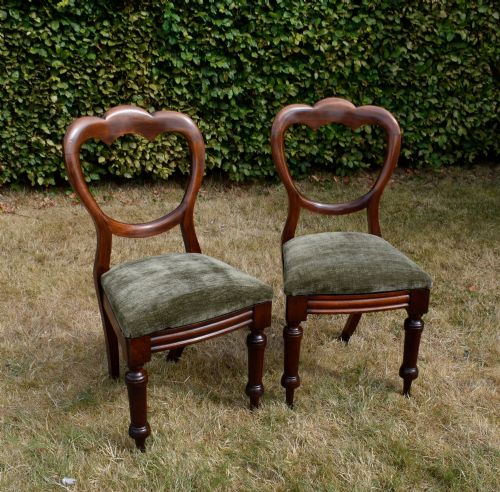
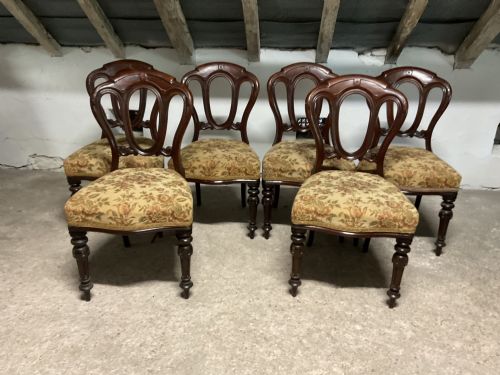
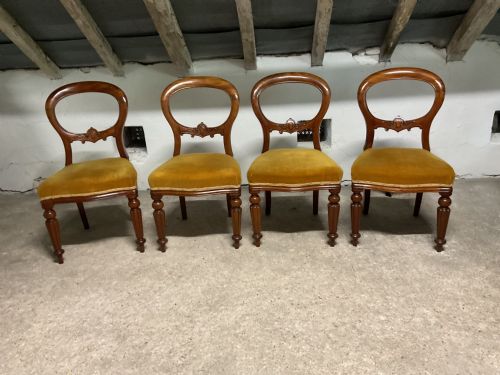
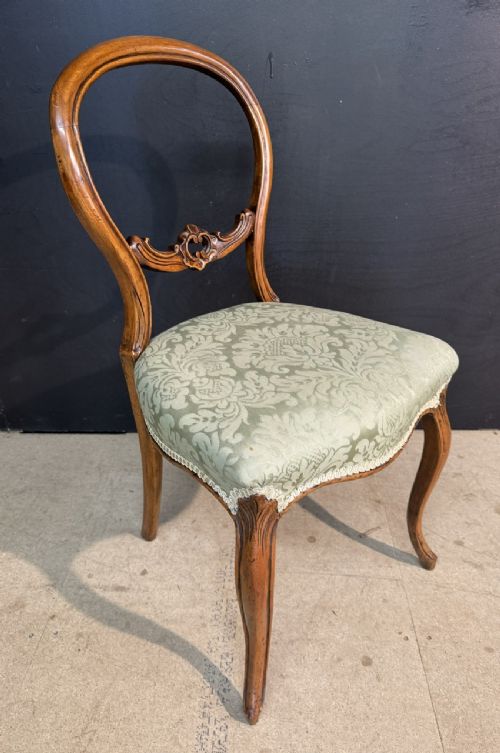
These vintage balloon chair examples combine curved wooden frames with upholstered seats, offering a distinct nineteenth-century silhouette for formal and domestic spaces.
Vintage Balloon Chair
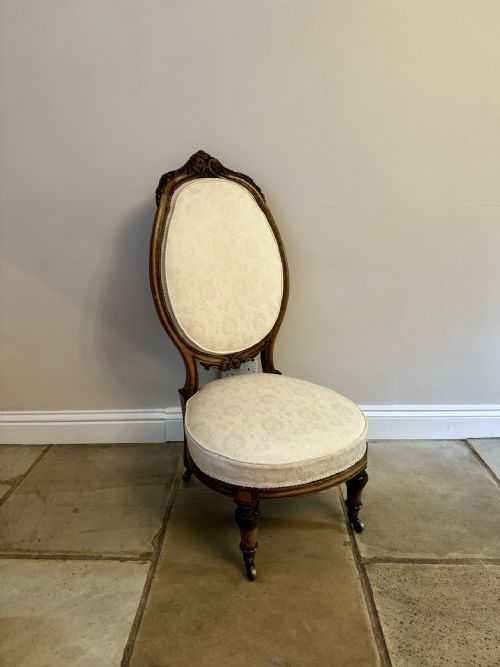
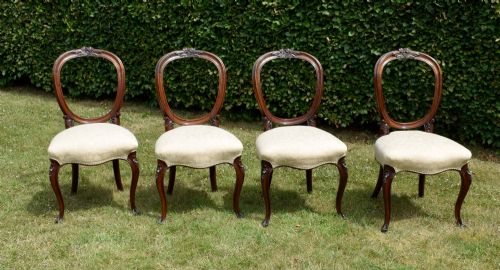
A vintage balloon chair takes its name from the rounded, oval profile of the open backrest, a design that emerges prominently during the Victorian and Regency periods. Buyers searching for a vintage balloon chair typically encounter dining chairs, side chairs, and occasionally ladies or salon chairs formed from timber frames.
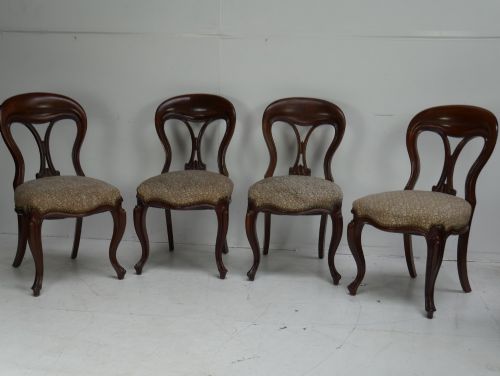
The selections span the nineteenth century and into the early twentieth century, incorporating revival aesthetics such as Rococo and Louis XV influences alongside English country and French chateau styles. Sets of four, six, or more appear alongside pairs and single accent pieces suited for desks or bedrooms.
Materials and Construction
Frames rely primarily on dense hardwoods like mahogany, walnut, and rosewood, shaped through steam bending and carving to create the characteristic curved back rail. Oak and other timbers also form the structural supports for dining and side chair variants.
Upholstery techniques involve traditional textiles including velvet, leather, fabric, and linen, secured over padded seats. Many pieces integrate cabriole legs or turned supports beneath the main wooden structure.
Vintage Balloon Chair Retail Price Guide 2026
Typical asking prices for vintage balloon chair among the pieces listed under this phrase on Sellingantiques today, from the lower quarter to the upper quarter. They describe what is for sale here now, not the wider market.
Periods represented span from Regency and William IV through Victorian production and revival styles.
Evaluating Craftsmanship
Gradations in quality rest upon the crispness of the wood carving, the weight and grain of the timber utilised in the balloon back frame, and the integrity of the joinery. Finer examples display detailed hand-carved ornamentation and superior rosewood or mahogany selection.
The proportion of the curved backrest and the stability of the cabriole legs or structural supports further distinguish standard production pieces from higher-grade workshop outputs.
Gillows
The Vintage Balloon Chair Glossary
- Balloon back
- A chair back shaped like an oval or hot-air balloon, typical of nineteenth-century seating design. This curved frame provides both lumbar support and visual lightness.
- Cabriole leg
- A furniture leg that curves outward at the knee and tapers inward toward the foot, often ending in a pad or scroll. It draws inspiration from animal forms.
- Rosewood
- A heavy, durable timber featuring rich dark grain patterns, frequently utilised in high-status Regency and Victorian seating. It takes a high polish.
- Side chair
- An upright chair without arms, designed for dining or occasional use around a room. These pieces form the majority of larger matching sets.
- Upholstery
- The padded and covered components of a chair seat or back, utilising materials such as velvet, leather, and textile. It transforms a rigid wooden frame into a comfortable seat.
Vintage Balloon Chair: Frequently Asked Questions
What periods do these chairs date from?
The listings span the nineteenth century and early twentieth century, with particular concentration in the Victorian and Regency eras. Pieces often reflect mid-nineteenth-century cabinet-making traditions.
Dates extend from the early 1800s through to revival periods around 1900, showing steady evolution in timber preference and carving styles.
Are these chairs sold in matching sets?
Sets vary in size, ranging from pairs and small groups of four or six up to larger dining sets containing eight, ten, or twelve chairs.
Individual pieces also appear as single salon, desk, or bedroom chairs alongside the larger dining configurations.
What woods are commonly found?
Mahogany, walnut, and rosewood form the predominant framing materials, selected for their strength and rich grain patterns. Oak also appears in certain structural chair frames.
Dark hardwoods dominate the selection, though variations in finish and timber species reflect the changing tastes of different nineteenth-century decades.
How were different chair types used?
Dining chairs provided formal seating around a table, while ladies chairs and salon chairs offered lower, more compact seating for parlours and boudoirs. Desk and vanity chairs served practical working functions.
Porters chairs and hall chairs fulfilled specialised entry-way or domestic roles, utilising enclosed backs or sturdy wooden construction.