


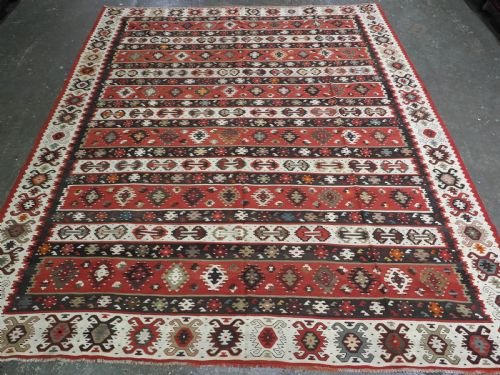


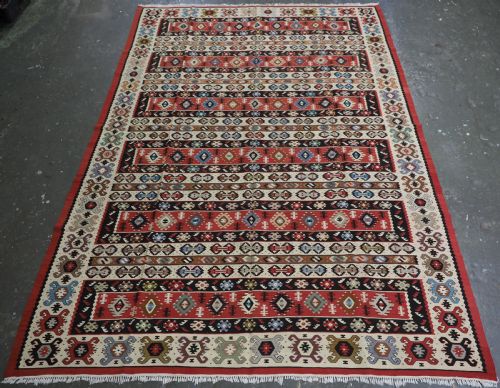


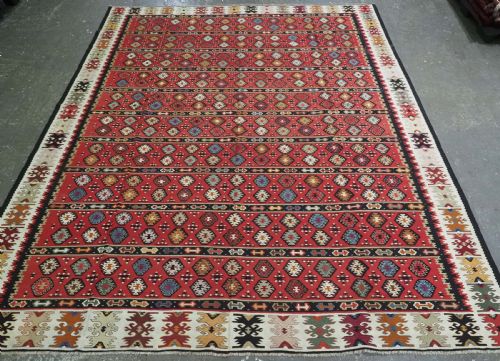


Vintage Balkan Rug
A vintage balkan rug brings distinct folk art patterns and rich wool textures into a room through flatweave floor coverings.
Vintage Balkan Rug
When buyers search for a vintage balkan rug, they encounter flatwoven kilims and pile prayer rugs originating from the late nineteenth century through to the early decades of the twentieth century. These textiles encompass specific regional types including Sarkoy, Pirot, Monastir, and Thracian pieces created within Balkan traditions.
The most common examples on this page are flatwoven kilims dating from around 1920, often displaying banded, repeat, or classic geometric layouts. These floor coverings bridge Ottoman and European design influences through traditional folk motifs.
Makers produced these rugs in large room sizes as well as smaller formats, utilising wool and cotton to form durable textiles intended for domestic use. The designs rely on repeating medallions, flowering trees, and lattice patterns.
How they were made
Weavers constructed these flatweaves and prayer rugs using wool and cotton yarns, interlocking weft threads to build sharp geometric patterns without a pile. This technique produces a firm, reversible textile suited for domestic floors.
Dyes provided the soft reds, pastels, and warm colour palettes seen across the pieces, applied to natural fibres spun by hand or on simple wheels.
Vintage Balkan Rug Retail Price Guide 2026
Typical asking prices for vintage balkan rug among the pieces listed under this phrase on Sellingantiques today, from the lower quarter to the upper quarter. They describe what is for sale here now, not the wider market.
Listings span production dates from 1860 through to 1930, utilising wool and cotton across all recorded items.
What varies in quality
The distinction between tiers rests upon the precision of the weave and the complexity of the design, such as scarce lattice work or finely detailed flowering trees versus simpler repeat patterns. Superior examples display particularly accomplished colour harmony and large room proportions.
Overall structural integrity and the clarity of the traditional motifs distinguish standard utility floor coverings from the more ambitious decorative weaving traditions of the region.
The Vintage Balkan Rug Glossary
- Kilim
- A flatwoven carpet or rug produced without a pile by interlocking coloured wefts over warp threads. These textiles form the majority of regional Balkan weaving.
- Sarkoy
- A specific town and regional attribution associated with distinctive flatwoven kilims featuring traditional banded and medallion designs. These rugs often date from the late nineteenth and early twentieth centuries.
- Pirot
- A well-known weaving centre located in the Balkans celebrated for producing intricately patterned kilims with precise geometric borders. The town name denotes a distinct style of flatweave.
- Prayer rug
- A small format textile featuring a mihrab or niche design, intended for devotional use rather than general floor covering. Monastir examples fit this specific form.
- Banding
- A decorative arrangement of horizontal stripes or bands running across the width of the rug. This layout appears frequently in traditional kilim designs.
Vintage Balkan Rug: Frequently Asked Questions
How do I clean a vintage balkan rug?
Gentle vacuuming without a rotating brush roll removes surface dust from wool and cotton flatweaves safely.
Professional specialist cleaning is recommended for heavier washing to protect the natural dyes and fibres.
Can I use these rugs in high traffic areas?
Flatwoven kilims withstand regular foot traffic well due to their tight, durable weave structure.
Placing a quality underlay beneath the rug prevents slipping and reduces wear on hard floors.
What is the difference between a kilim and a prayer rug?
Kilims are generally larger flatwoven rugs designed for general room floors with repeating or banded patterns.
Prayer rugs are smaller formats that incorporate specific architectural niche motifs intended for personal devotion.
How do I date a piece from this region?
Dating relies on stylistic analysis, material examination, and structural characteristics typical of nineteenth and early twentieth century production.
Comparing repeat medallion layouts and colour palettes against documented periods helps establish an approximate decade.