


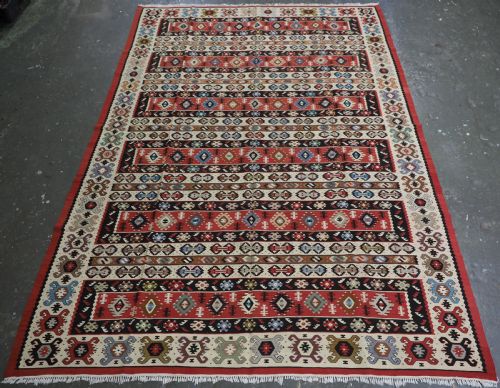


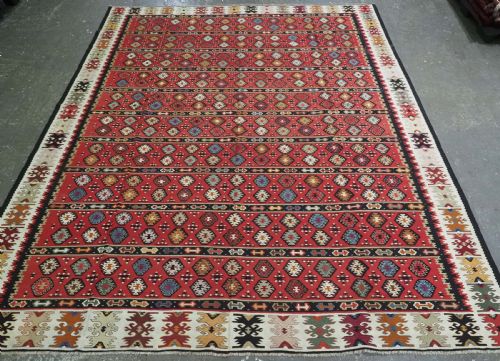
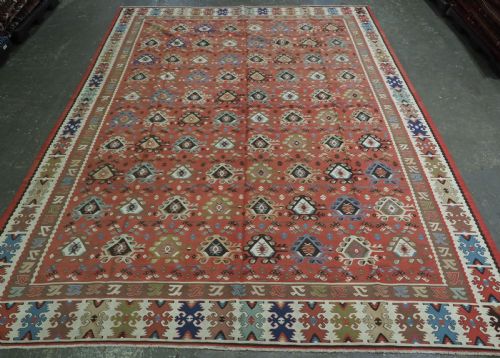


Pirot Carpet 1920s
These pirot carpet 1920s examples bring bold Balkan folk art patterns and rich wool textures into modern interiors.
Pirot Carpet 1920s
When you search for a pirot carpet 1920s, you are looking at traditional flatweave textiles originating from the Balkans. These floor coverings bridge regional folk traditions and decorative arts.
The pieces on this page are flatwoven kilims dating from the 1920 period. They appear in room sizes and smaller formats featuring distinct geometric and floral compositions.
Makers utilised traditional designs such as classic layouts, flowering trees, and repeat medallions. Each rug reflects the distinct visual language of Balkan tribal and folk craft.
How they were made
These textiles are constructed entirely from wool using traditional flatweave techniques. The weave creates a smooth surface without a pile, allowing crisp geometric patterns to emerge clearly on both sides.
Weavers employed traditional dyeing methods to achieve warm soft colours and striking contrasts. The resulting palette relies on natural tones that define Balkan traditional carpets of this era.
Pirot Carpet 1920s Retail Price Guide 2026
Typical asking prices for pirot carpet 1920s among the pieces listed under this phrase on Sellingantiques today, from the lower quarter to the upper quarter. They describe what is for sale here now, not the wider market.
Listings for this phrase exclusively feature wool materials from the 1920 period, categorised under Balkan folk art and traditional styles.
What varies in quality
Quality in these flatweaves rests on the precision of the weave and the complexity of the design layout. Finer banded and lattice patterns require greater technical skill from the weaver than simple repeat motifs.
The vibrancy and retention of the wool colours also distinguish different examples. Pieces that maintain strong, warm tones demonstrate superior dye preparation and material selection.
The Pirot Carpet 1920s Glossary
- Kilim
- A flatwoven carpet or rug produced in the Balkans and the Near East. These textiles lack a pile and function as floor coverings or wall hangings.
- Pirot
- A town known for traditional carpet weaving. Pirot kilims are celebrated for their intricate geometric and pictorial designs.
- Sarkoy
- A regional designation associated with Balkan flatweaves sharing stylistic traits with Pirot production. Sarkoy kilims often feature similar banded or medallion compositions.
- Flatweave
- A textile produced by interweaving warp and weft threads without knotting. This technique yields a thin, durable fabric used traditionally for rugs.
Pirot Carpet 1920s: Frequently Asked Questions
What is a pirot carpet 1920s?
A pirot carpet 1920s is a traditional flatwoven textile originating from the Balkan region during the 1920 period. These pieces showcase regional folk art designs created with wool.
They function primarily as decorative floor coverings. Their flatweave construction makes them versatile for various interior spaces.
How do I use these rugs?
These kilims work well as area rugs in living spaces, studies, or bedrooms. Their flat profile allows them to sit comfortably beneath furniture.
Careful placement away from direct moisture helps preserve the wool fibres. Using an appropriate underlay keeps the textile secure on smooth floors.
Are these rugs made of wool?
The material recorded for these items is wool. This natural fibre provides durability and a distinct texture characteristic of regional flatweaves.
Wool also accepts traditional dyes effectively. This contributes to the warm soft colours found across the surviving examples.