









Wool Pirot Kilim
These wool pirot kilim pieces are flat-woven flat textiles carrying traditional Balkan folk art patterns from the early twentieth century.
Wool Pirot Kilim
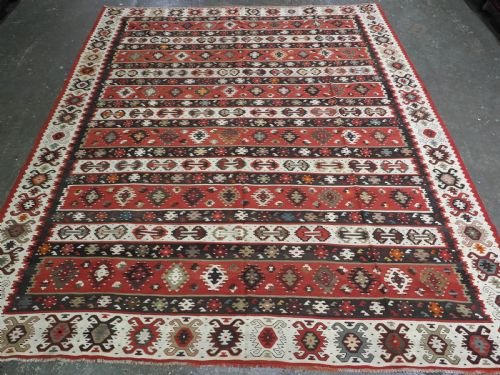
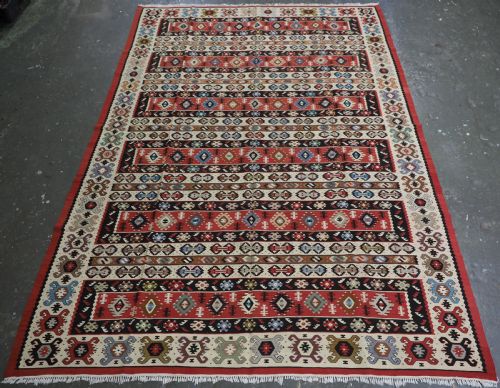
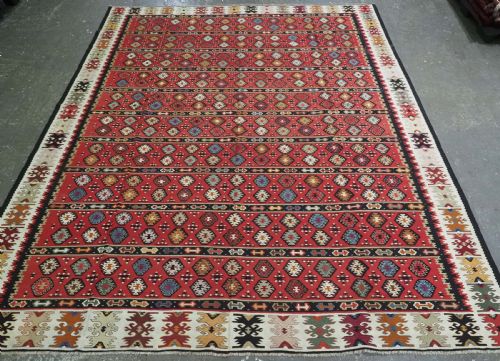
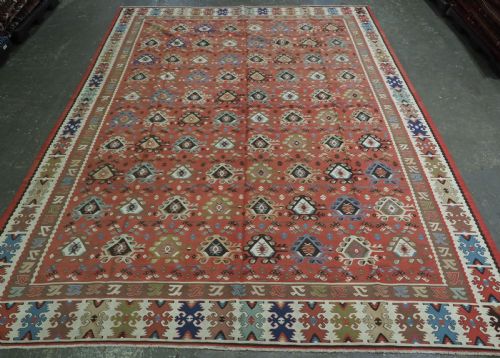
A wool pirot kilim brings flat-woven Balkan folk art directly into domestic spaces as functional floor coverings and rugs. These textiles originate from the Balkan region, incorporating traditional Balkan styles that collectors recognise through characteristic flat weaves.
Most examples encountered here date from the early twentieth century, spanning decades such as nineteen ten, nineteen twenty, and nineteen thirty. These kilim rugs appear in various formats, including large room sizes and specific area rugs featuring repeat designs.
Design vocabulary on these pieces includes classic patterns, flowering trees, banded layouts, and repeat medallions. Each rug displays regional weaving traditions handed down through generations of Balkan artisans.
Materials and construction
The primary material used across these pieces is wool, often combined with cotton for structural stability in the flat-weaving process. This fibre combination creates durable flat-woven textiles without a pile.
Weavers construct these kilims using traditional slit-tapestry techniques common to Balkan traditional and Balkan tribal practices. This method permits sharp geometric colour transitions and intricate repeat designs.
Wool Pirot Kilim Retail Price Guide 2026
Typical asking prices for wool pirot kilim among the pieces listed under this phrase on Sellingantiques today, from the lower quarter to the upper quarter. They describe what is for sale here now, not the wider market.
Listings for wool pirot kilim feature pieces exclusively dated between nineteen ten and nineteen thirty, utilising wool and cotton materials.
Factors of quality
Quality in a wool pirot kilim depends on the intricacy of the design work, such as flowering trees and repeat medallions. Greater detail and scarce lattice patterns elevate the visual impact of the textile.
The depth and preservation of colour also distinguish finer pieces, with warm soft tones and balanced palettes enhancing the overall appearance. Structural preservation and weave tightness further separate standard examples from superior ones.
The Wool Pirot Kilim Glossary
- Kilim
- A flat-woven carpet or rug produced without a pile in the Balkan and Ottoman traditions. These textiles serve primarily as floor coverings or decorative wall hangings.
- Pirot
- A regional style associated with traditional weaving methods from the Balkan area. Pirot kilims are celebrated for their precise geometric and pictorial motifs.
- Sharkoy
- An alternative spelling variant often linked in trade titles with Pirot kilims from the Balkan region. These pieces share similar flat-woven construction and design repertoires.
- Banded design
- A decorative layout characterised by horizontal stripes or bands running across the width of the rug. This pattern structure frequently incorporates repeating geometric motifs.
- Flat-weave
- A textile construction technique executed on a loom without knotting pile yarn into the warp. The resulting fabric is thin, reversible, and durable.
Wool Pirot Kilim: Frequently Asked Questions
What is a wool pirot kilim?
A wool pirot kilim is a flat-woven textile originating from the Balkan region, created using traditional folk art patterns. These rugs feature wool construction and distinctive motifs like flowering trees and banded designs.
Most examples date from the early twentieth century and function primarily as decorative area rugs or large room-size floor coverings.
How do I care for a kilim rug?
These flat-woven textiles require gentle maintenance, typically involving careful vacuuming without a rotating brush bar. Professional cleaning is recommended for wool and cotton rugs to preserve the fibres and dyes.
Keeping the kilim away from direct, prolonged sunlight helps protect the natural wool colours from fading over time.
Where were these rugs made?
These rugs were produced in the Balkan region, reflecting traditional Balkan folk art and tribal weaving practices. The pieces often carry design influences spanning local Balkan and Ottoman traditions.
Weavers utilised local materials like wool and cotton to construct these durable flat-woven floor coverings.
How can I tell different designs apart?
Design variations include classic layouts, flowering trees, scarce lattices, and banded or repeat medallion patterns. Each pattern style employs specific geometric or pictorial arrangements typical of early twentieth-century weaving.
Comparing the border arrangements and central motifs helps identify whether a piece follows a standard repeat or a scarcer pictorial design.