

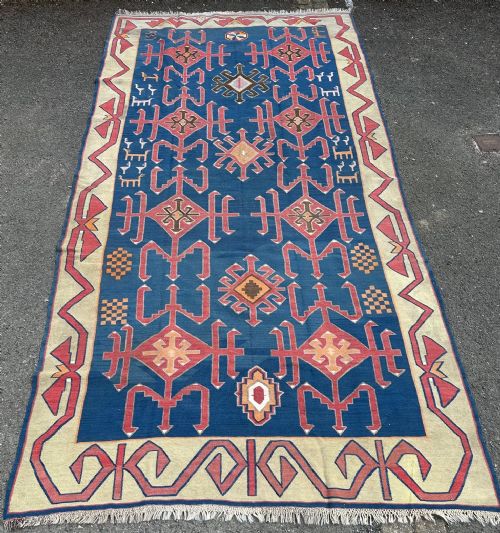


Traditional Geometric Kilim
Traditional geometric kilim pieces bring tribal flatweave carpets, runners, and cushions into rooms through centuries of regional weaving traditions.
Traditional Geometric Kilim
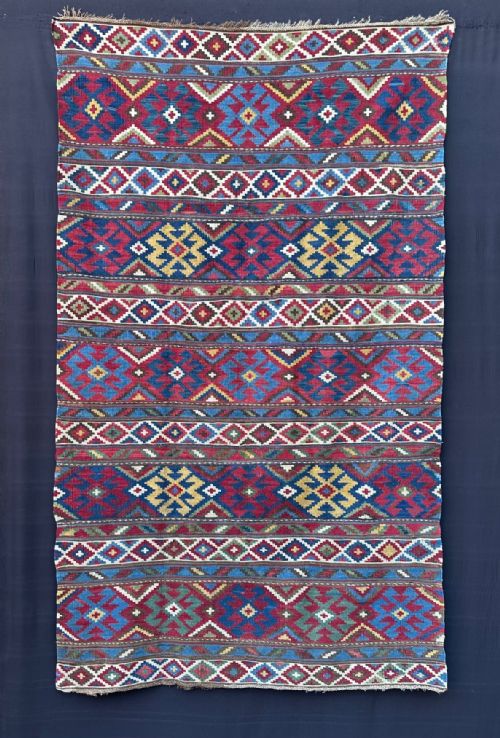
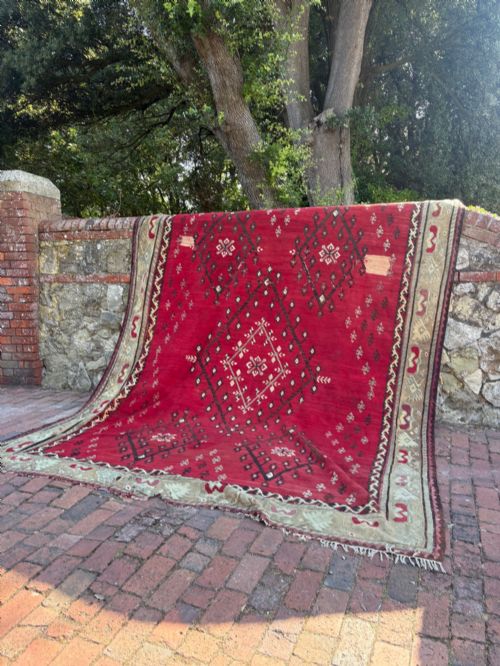
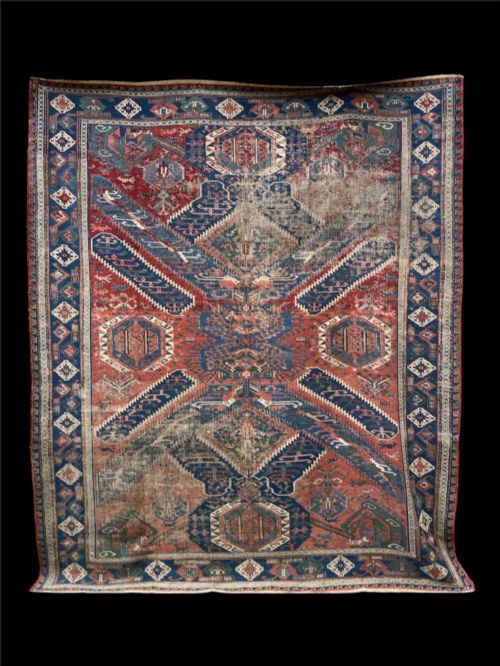
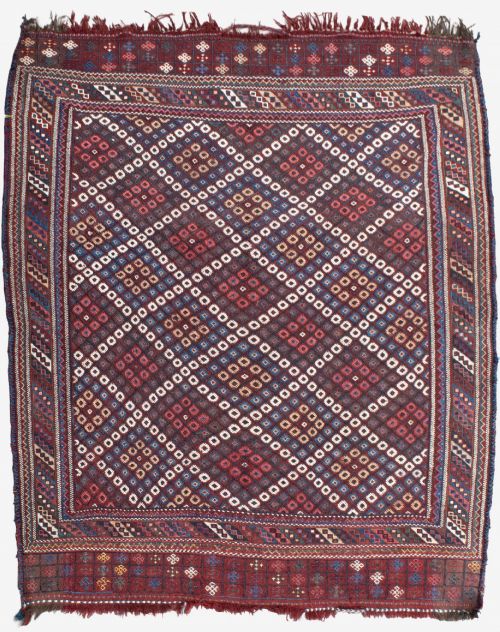
A traditional geometric kilim is a flatweave textile originating from regions such as Anatolia, the Caucasus, Persia, and Central Asia. These items include large room-size carpets, narrow runners, bag faces, cushions, and wall-hanging panels.
The objects on this page span from the mid-nineteenth century through to the early twentieth century, showing distinct tribal designs created by nomadic and village weavers. Buyers often encounter Anatolian and Caucasian formats alongside Uzbek and Persian pieces.
Forms vary from large flatweave carpets measuring over three metres down to smaller scatter rugs and cushions made from repurposed woven fragments. Each piece relies on flat-woven structures without a pile, giving the textiles a characteristic crispness of line.
What varies in quality in traditional geometric kilim pieces
Quality in a traditional geometric kilim rests upon the tightness of the weave and the precision of the tribal motifs. Finer weaves show greater structural integrity and allow complex angular patterns to remain sharp and legible across the field.
The choice and stability of natural dyes influence the visual depth of the textile over time. Softer fading and harmonious colour saturation elevate certain regional examples above simpler, coarser village productions.
Listings feature flatweave textiles incorporating materials such as hand-spun wool, cotton, and natural dyes across Anatolian, Caucasian, and Central Asian styles.
The Traditional Geometric Kilim Glossary
- Kilim
- A flat-woven carpet or rug produced without a pile across various regions of the Near East and Central Asia. These textiles are formed by tightly interweaving warp and weft threads.
- Warp
- The vertical threads stretched onto a loom before weaving begins. Weft threads pass horizontally over and under these foundational cords.
- Weft
- The horizontal threads passed through the warp to build the pattern and colour fields. In kilim weaving, different coloured wefts turn back at colour boundaries to create slits or interlocking joins.
- Sumak
- A supplementary weft wrapping technique that creates a braided texture on the surface of the textile. This method provides extra durability and a raised appearance compared to standard flatweaves.
- Cicim
- An embroidered surface technique applied to a flatweave foundation using patterned supplementary wefts. This method adds raised geometric ornamentation to tribal panels and rugs.
- Sofreh
- A type of tribal spread or cloth used during meals or food preparation. These textiles often feature strong geometric layouts related to kilim traditions.
Traditional Geometric Kilim: Frequently Asked Questions
What is a traditional geometric kilim?
A traditional geometric kilim is a pileless woven textile created by tribal and village communities using hand-spun wool and natural dyes. These items function as floor coverings, wall hangings, and decorative furnishings.
Unlike knotted carpets, kilims rely on flat-woven structures that display sharp angular patterns, diamond medallions, and chevron layouts characteristic of specific regional weaving groups.
How do I care for an antique kilim?
Protect antique flatweaves by placing a quality rug underlay beneath them to prevent slipping and reduce friction against hard floors. Vacuum the textile gently using low suction without a rotating brush bar.
Keep older wool and cotton flatweaves out of direct sunlight to prevent natural dyes from fading unevenly. Professional specialist cleaning is recommended for washing.
Where were these kilims made?
These flatweaves come from historical weaving regions including Anatolia, the Caucasus, Persia, and Central Asia. Specific areas such as Shirvan, Daghestan, Ushak, and various Uzbek regions developed distinct local patterns.
Nomadic groups and settled village communities each contributed unique structural techniques and colour palettes to their regional kilim production.
Why are some kilims woven in parts?
Many traditional regional carpets and runners were produced on narrow village looms in two or more separate strips. Weavers then stitched these longitudinal sections together to achieve a larger room size.
This construction method reflects the practical limitations of traditional portable looms used by nomadic and village weavers.