







Vintage Balkan Kilim
These vintage balkan kilim textiles bring rich folk patterns and historic warmth directly to floors and walls.
Vintage Balkan Kilim
A vintage balkan kilim represents flat-woven carpet traditions rooted in Southeastern Europe and the broader Ottoman sphere. Buyers searching for this phrase encounter flatweaves that double as functional floor coverings and striking wall hangings.
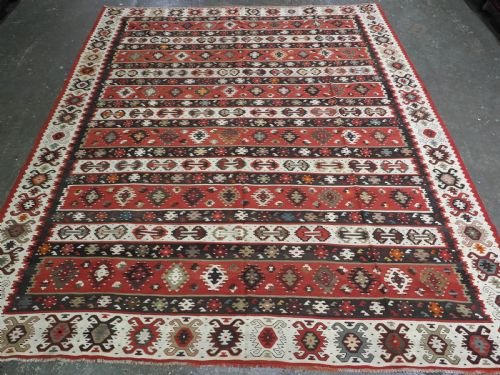
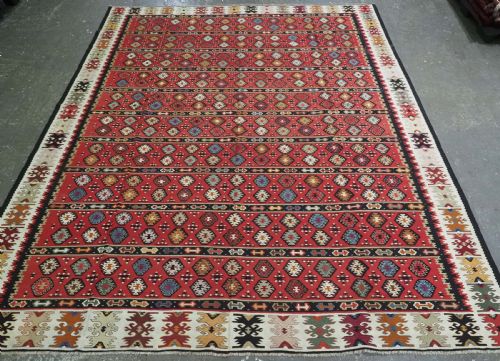
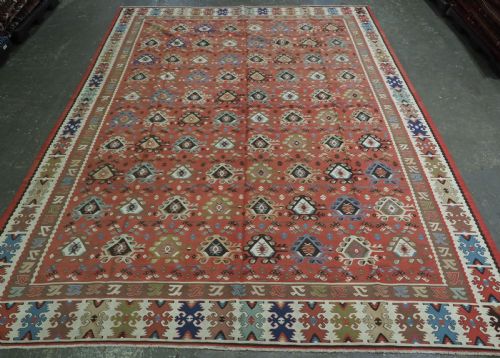
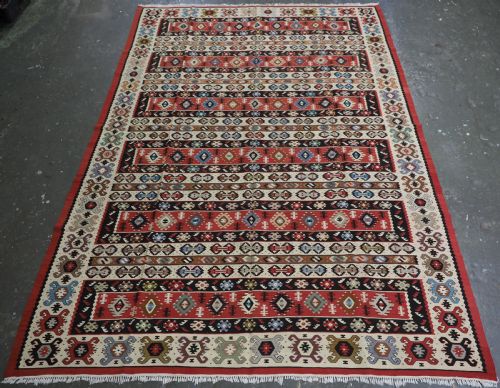
The pieces listed here span periods from the mid-nineteenth century through the early twentieth century. Most examples date from the nineteen-twenties, showing classic banded, repeat, and flowering tree designs characteristic of weaving centres like Pirot and Sarkoy.
Formats range from standard area rugs to large room-size carpets suitable for anchoring major living spaces. Collectors meet traditional regional motifs executed in wool and cotton across diverse tribal and folk expressions.
Materials and construction methods
Weavers relied principally on wool and cotton to construct these flatweaves. Wool provided the durable, resilient foundation for the patterned surface, while cotton often appeared in structural elements or supplementary details.
The flat-weaving technique involves interlocking weft threads tightly over vertical warp threads to build crisp geometric and floral patterns without a pile. This slit-weave method produces sharp colour boundaries and a reversible textile.
Current listings feature pieces dated between eighteen-sixty and nineteen-thirty, constructed primarily from wool and cotton.
Distinguishing quality across examples
Quality rests heavily on the crispness of the woven design and the sophistication of the colour palette. Pieces exhibiting soft pastel tones, warm reds, or complex lattice repeats command attention for their visual balance.
Structural integrity and the fineness of the weave also divide the range. Tightly beaten wefts and well-preserved borders indicate superior craftsmanship from regional workshops and domestic weavers alike.
The Vintage Balkan Kilim Glossary
- Kilim
- A flat-woven carpet or rug produced without a pile by tightly interlocking coloured weft threads over warps. This method creates geometric designs visible on both sides of the textile.
- Pirot
- A famous weaving town known for producing distinctive flatweaves with intricate motifs. Pirot pieces often display balanced borders and traditional folk symbols.
- Sarkoy
- A regional designation associated with flatweaves featuring banded or repeat patterns. Sarkoy pieces frequently incorporate soft secondary colours and large-scale layouts.
- Warp
- The stationary vertical threads stretched on a loom that form the structural foundation of the textile. Wefts are woven horizontally through these threads.
- Weft
- The transverse threads passed through the warps to create the visible pattern and colour fields. In these flatweaves, the weft completely obscures the warp.
Vintage Balkan Kilim: Frequently Asked Questions
Where were vintage balkan kilim pieces made?
These flatweaves originated across Southeastern Europe and regions influenced by Ottoman culture. Specific stylistic traits link them to traditional centres such as Pirot and Sarkoy.
Weavers utilised local materials and regional design vocabularies passed down through generations. Each piece reflects the specific aesthetic of its geographic origin.
How do I care for a vintage balkan kilim?
Regular gentle vacuuming without a rotating brush roll helps remove embedded dust and grit. Professional textile cleaning is recommended when deeper maintenance becomes necessary.
Keeping the flatweave out of direct sunlight prevents natural dyes from fading over time. Using a quality rug pad underneath provides cushioning and prevents slipping.
Can these flatweaves be used on floors?
These textiles function effectively as floor coverings in areas with moderate foot traffic. Their flat-woven structure lies smoothly under furniture and doors.
Placing a breathable rug pad beneath the textile protects the weave from friction against hard flooring. Many owners also mount larger examples on walls as decorative art pieces.
What designs appear on these textiles?
Common motifs include banded stripes, repeating medallions, and stylised flowering trees. Geometric patterns reflect traditional folk art principles handed down among regional weavers.
Layouts range from all-over repeating fields to large central arrangements framed by decorative borders. Soft pastel tones and warm reds dominate the established colour palettes.