


Vintage Art Deco Desk
A vintage art deco desk brings strong geometric lines and rich timber grains into a workspace, offering a distinct sense of interwar architectural design.
Vintage Art Deco Desk
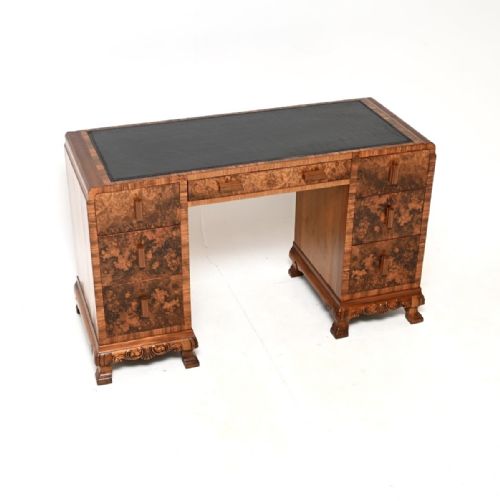
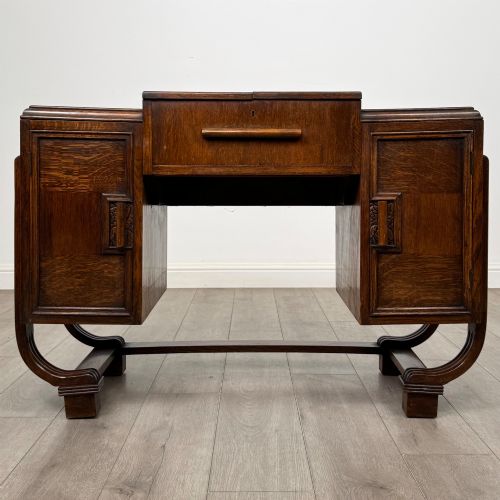
A vintage art deco desk usually presents a substantial pedestal or writing bureau form from the 1920s or 1930s, often paired with a leather or glass top insert. These pieces serve as functional workstations while showcasing the distinctive symmetrical forms and streamlined profiles characteristic of the period.
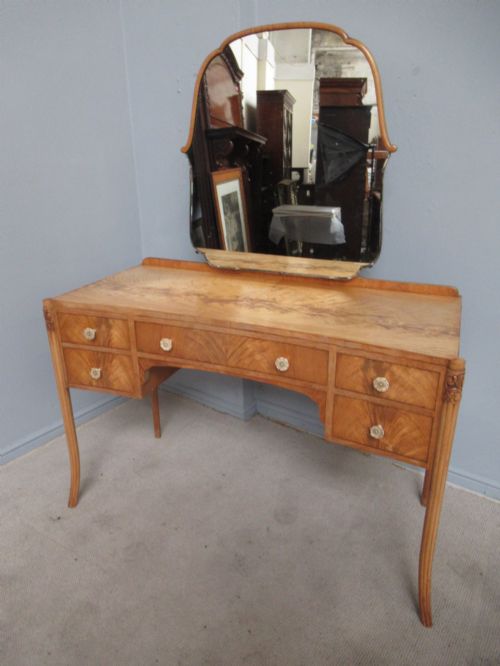
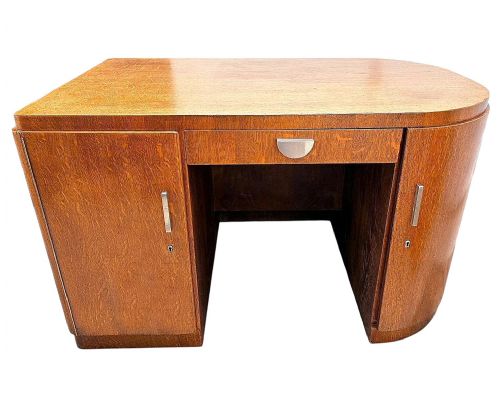
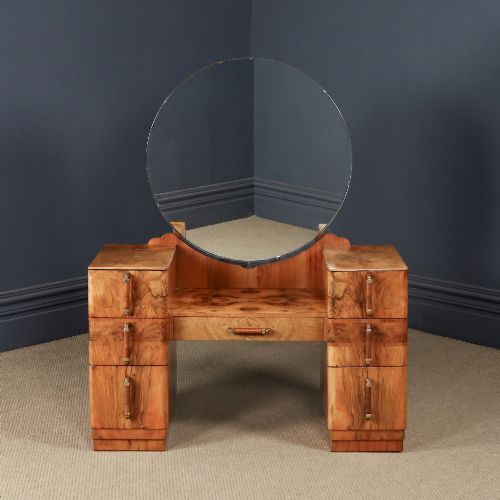
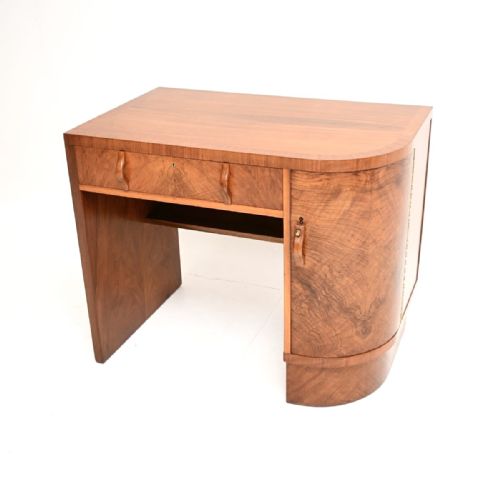
The most common versions on this page are constructed from rich hardwoods like walnut, burr walnut, and oak, occasionally incorporating D-end configurations or pedestal drawers. Alongside standard writing desks, buyers also encounter dressing tables and writing tables sharing the same architectural vocabulary.
Origins span English, French, and broader European workshops, with occasional designs leaning into Amsterdam School influences or heavier modernist styles. The scale ranges from compact domestic writing bureaux to large double-sided executive office desks.
Materials and Construction
Construction relies heavily on solid timber frames overlaid with figured veneers such as walnut, rosewood, and bird's-eye maple to create striking grain patterns across flat surfaces. These wooden bodies are frequently accented with contrasting inlays, brass handles, or chromium-plated metal detailing.
Working surfaces often incorporate inset leather panels tooled with gilt borders, or polished glass plates resting directly on the timber base. Structural integrity comes from traditional joinery combined with the robust cabinetry standards typical of interwar furniture production.
The listings on this site span the 1920s, 1930s, and Edwardian eras, utilising materials like walnut, oak, brass, and glass.
Evaluating Craftsmanship
Quality rests primarily on the selection and matching of wood veneers, where symmetrical grain alignment across drawers and modesty panels demonstrates superior cabinet-making. Superior examples maintain crisp geometric edges and balanced proportions without relying on excessive ornamentation.
The integration of secondary materials, such as heavy gauge brass hardware, undamaged leather writing surfaces, and substantial structural carcasses, separates standard production pieces from finer studio or designer commissions.
Eileen Grey·Laszlo Hoenig·Bruno Zach·Fratelli Toso·Heal s
The Vintage Art Deco Desk Glossary
- Pedestal Desk
- A freestanding writing table supported by two banks of drawers reaching down to the floor. This layout provides ample storage alongside a central kneehole.
- Burr Walnut
- Timber taken from a tree growth carrying distorted grain patterns that produce intricate, swirling decorative surface textures. Cabinet-makers slice this wood into thin veneers for display on drawer fronts.
- D-End
- A desk or table configuration where one or both ends are rounded in the shape of the capital letter D. This outline softens the rectangular geometry typical of the period.
- Amsterdam School
- An architectural and design style originating in the Netherlands characterised by rounded brickwork, expressive forms, and traditional craft materials. Pieces from this movement often incorporate dynamic ornamentation into practical furniture.
- Guilloché
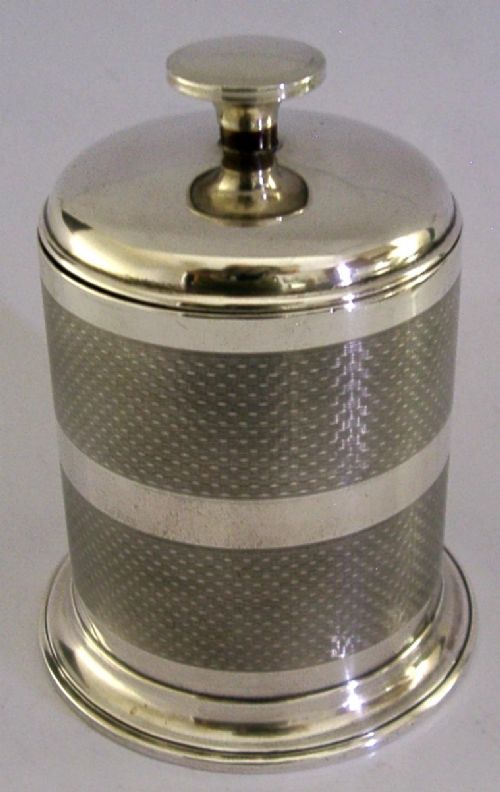
- A decorative technique where a precise repeating pattern is mechanically engraved into a metal surface beneath translucent enamel. It frequently appears on small desk accessories and vanity items.
Vintage Art Deco Desk: Frequently Asked Questions
What woods were used?
Makers utilised a variety of timbers including walnut, oak, satin birch, and rosewood. These woods were often selected for their prominent grain patterns.
Finer surfaces frequently featured burr veneers or maple accents to create visual contrast.
How do I date a desk?
Dating relies on combining stylistic evidence with construction techniques and materials typical of the 1920s and 1930s. Interwar pieces often display machine age influences or geometric motifs.
Hardware styles, timber treatments, and secondary materials also offer reliable clues to the decade of manufacture.
Are these desks suitable for modern workspaces?
Most antique writing desks provide sufficient surface area for contemporary writing tasks and compact electronics. Their sturdy pedestal construction offers practical storage capacity.
Care should be taken with delicate veneer and leather surfaces when placing modern equipment.
What is an Amsterdam School desk?
An Amsterdam School desk incorporates expressive Dutch architectural influences from the interwar period. These pieces emphasise organic curves and traditional joinery.
They stand apart from standard geometric designs through their sculptural approach to timber.