



Vintage Architectural Canvas
These vintage architectural canvas works capture buildings and cityscapes in oil paint, offering a tangible piece of historical urban scenery for your walls.
Vintage Architectural Canvas
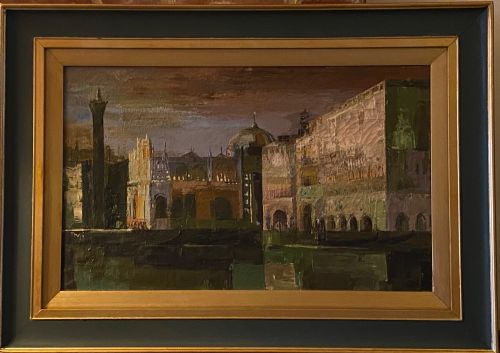
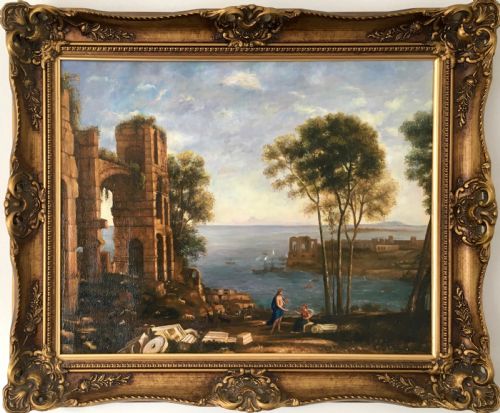
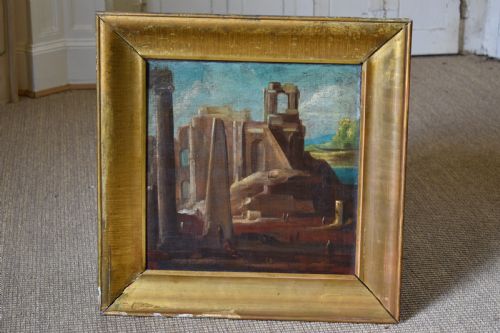
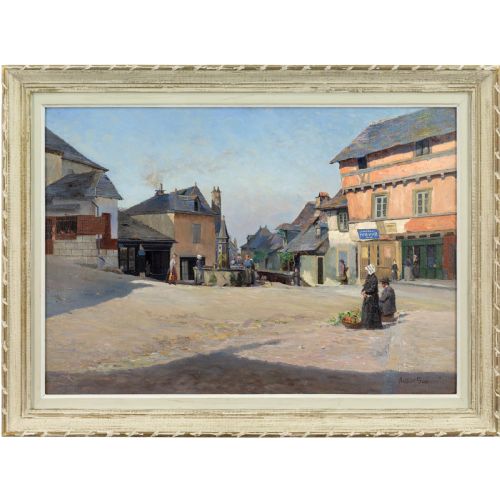
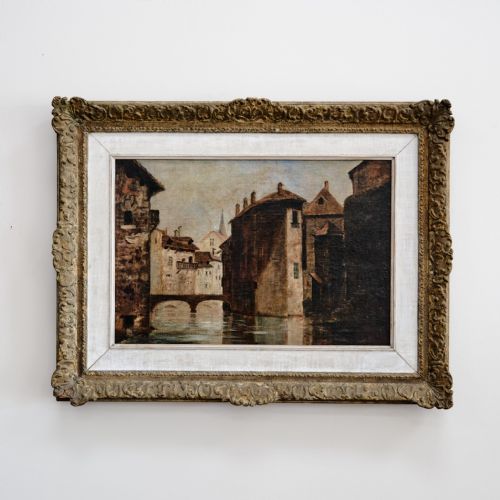
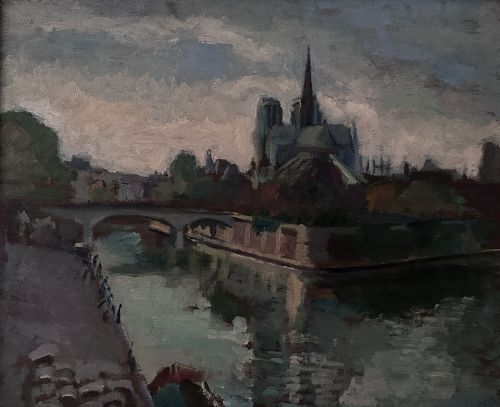
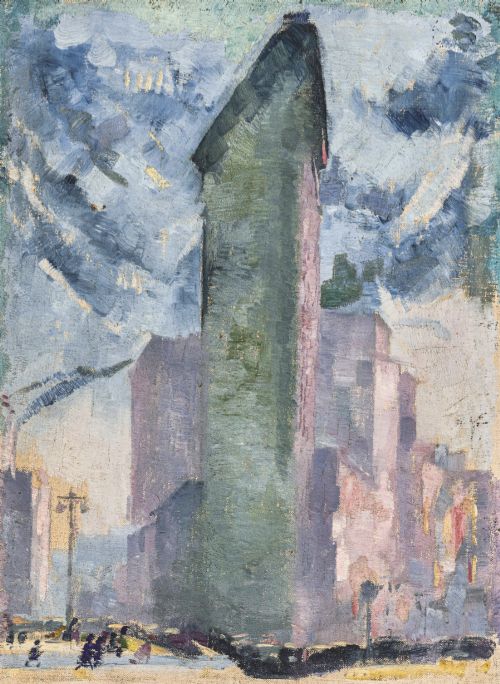
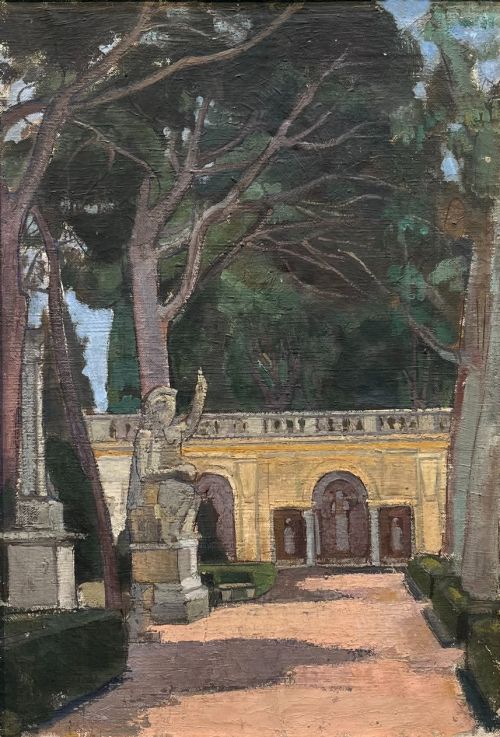
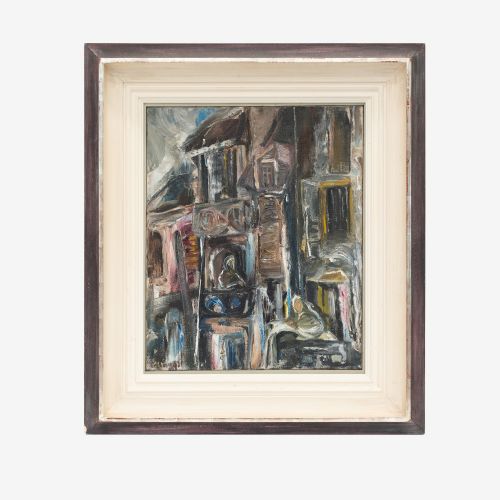
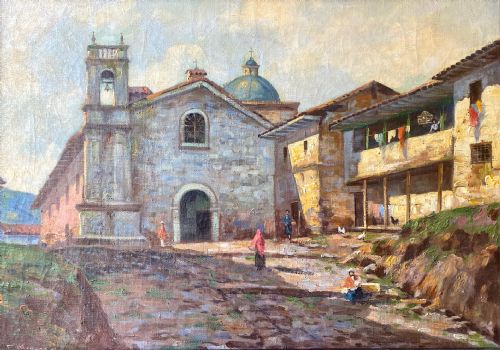
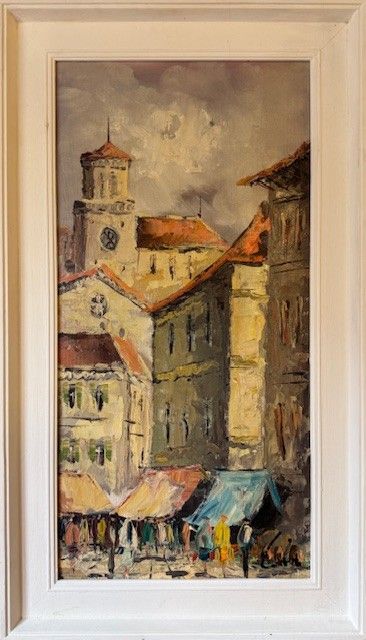
When you search for vintage architectural canvas, you encounter painted depictions of buildings, cathedrals, streets, and cityscapes rendered in oil. These works range from nineteenth-century grand tour scenes to mid-century modernist interpretations of European and international landmarks.
Most pieces date from the nineteenth century through the mid-twentieth century, encompassing periods like Impressionism, Post-Impressionism, and Mid-Century Expressionism.
How they were made
These works utilise oil paint applied to canvas, frequently supported by wooden stretcher frames and sometimes accented with gesso or gilt wood surrounds. Artists built up their compositions using traditional brushwork, and in some mid-century examples, thick impasto techniques.
The physical structure typically involves woven canvas stretched across a wooden framework, providing a durable surface that holds oil pigments securely over decades. Framing materials range from simple wooden battens to ornate gilded mouldings depending on the period.
Several canvases depict bustling French markets and quiet Venetian bridges, allowing you to visit Europe without packing a bag.
What varies in quality
Quality in these oil paintings rests upon the dexterity of the brushwork, the handling of light and shadow within the architectural perspective, and the expressive capture of the urban atmosphere. Stronger examples display confident compositional balance and a distinct stylistic voice, whether impressionist or modernist.
The condition of the canvas and the stability of the oil paint layer also distinguish individual pieces. Superior works maintain vibrant pigment integrity and secure adhesion to the original fabric support without disruptive historic intervention.
Arthur Gué·Alfred Wolmark·Lilian Colbourn·Ron Folland·Caroline Burnett·Hein Hoppmann·Armand Guillaumin·Job de Vogel·Pieter Cornelis Steenhouwer·Emanuele Cappello·John Cawthorn·Franz Reder-Broili·Allan Douglass Mainds
The Vintage Architectural Canvas Glossary
- Canvas
- A heavy woven fabric utilised as a support surface for oil paintings. It is typically stretched tightly over a wooden frame before painting.
- Impasto
- A technique where oil paint is laid thickly on a canvas, leaving brush or palette knife marks standing visibly above the plane. This adds tangible texture to architectural elements like stone facades.
- Post-Impressionism
- An art style developing from impressionism that rejects its limitations, focusing instead on symbolic motifs and heavier structural brushwork. Works from this movement often emphasise distinct geometric forms in buildings.
- Grand Tour
- A traditional trip of Europe undertaken by upper-class Europeans during the nineteenth century, which inspired numerous topographical paintings of classical monuments and cathedrals.
- Gesso
- A white paint mixture consisting of a binder mixed with chalk, gypsum, or pigment, used traditionally to prepare wooden panels or canvas frames.
Vintage Architectural Canvas: Frequently Asked Questions
What is vintage architectural canvas?
It refers to oil paintings on fabric depicting buildings, streets, and city views from earlier centuries. These artworks capture historic urban environments through various artistic movements.
They serve primarily as decorative wall art, bringing historical perspective and artistic depth into domestic or office interiors.
How do I hang a canvas painting?
Canvas paintings require secure wall fixings suited to the weight of the wooden stretcher frame and any surrounding wooden or gilt frame. Ensure you use appropriate picture hooks fastened firmly into wall studs or masonry.
Keep them away from direct sunlight and excessive humidity to protect the oil paint and canvas support over time.
How do I identify the period?
Dating relies on stylistic clues such as Impressionist or Mid-Century Modern brush techniques, subject matter, and the construction of the canvas backing. Nineteenth-century pieces often feature traditional grand tour subjects, while mid-century works showcase abstract cityscapes.
Signatures, artist dates, and framing styles also help establish the chronological origin of each painting.
How were these paintings displayed originally?
Many of these works were housed in residential drawing rooms, offices, or institutional buildings within decorative wooden or gilt frames. Some specific formats like folding screens functioned as movable architectural partitions within a room.
They were designed to catch ambient light and provide views of familiar European cities or local landmarks.