




Vintage Continental Oil Painting
A vintage continental oil painting brings European atmosphere into a room, offering the texture of oil on canvas or board from various centuries.
Vintage Continental Oil Painting
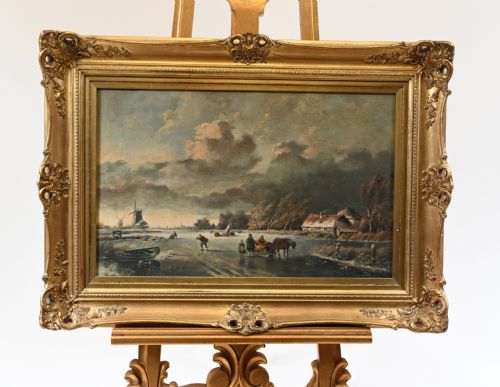
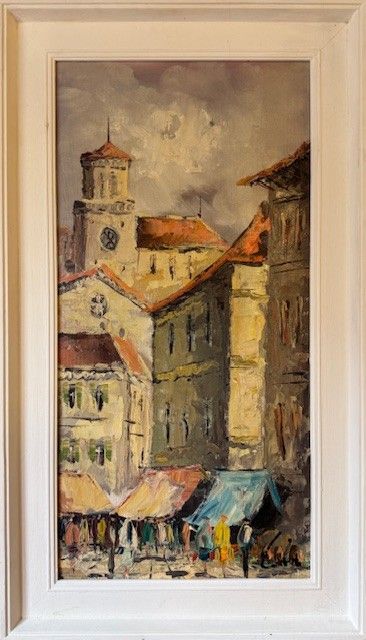
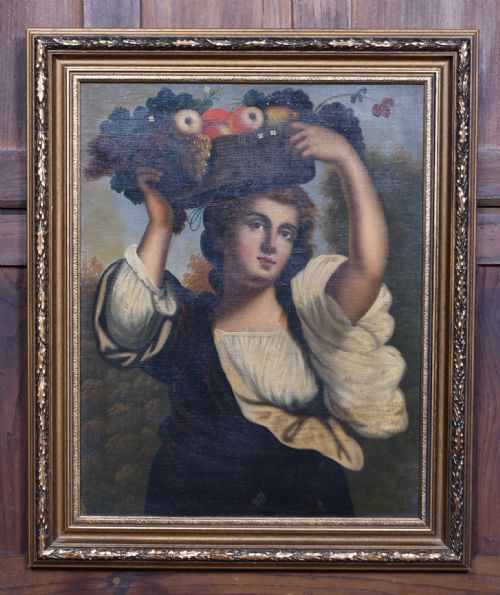
A vintage continental oil painting represents works originating from European schools, spanning portraiture, landscape, and still life subjects. Buyers exploring this phrase encounter canvases and boards depicting townscapes, markets, and frozen landscapes.
The selection ranges from seventeenth-century religious subjects to mid-twentieth-century impressionist city views. Nineteenth-century realism and European school pieces form a prominent part of what appears on this page.
Artists capture scenes from Italy, France, and the Netherlands using oil paint on supports such as canvas, wood, board, and tin. Framed paintings and panels dominate the forms available to collectors.
How they were made
Artists applied oil paint to prepared surfaces including canvas, wood panels, board, and tin plates. Brushwork ranges from smooth academic realism to thick impasto applied with a palette knife.
Frames often incorporate carved and gilded wood, known as giltwood, to complement the painted imagery. Works frequently bear signatures from listed European painters or remain attributed to broader continental schools.
Games inside a seventeenth-century church interior make an unexpected painted cameo.
What varies in quality
Quality depends upon the deftness of the brushwork and the artist's command of light, shadow, and perspective. Finer examples display confident draughtsmanship in figures and architectural details.
The condition of the paint surface and the originality of the mounting frame influence the overall character of the piece. Works by identified painters command distinct interest compared to anonymous school pieces.
William Raymond Dommersen·Armand Guillaumin·Karel Frans Philippeau·Ludwig Hermann·Christiaan Pieter Snyders
The Vintage Continental Oil Painting Glossary
- Oil paint
- A slow-drying paint made by combining pigment particles with a drying oil, most commonly linseed oil. This medium allows artists to blend tones smoothly and build rich impasto layers.
- Impasto
- Paint applied thickly to a canvas or board, standing out in relief from the surface. This technique leaves visible brush or palette knife marks that catch the light.
- Giltwood
- Wood that has been coated with a thin layer of gold leaf or gilt powder. It is frequently found on the ornate frames housing continental paintings.
- European school
- A term used to categorise artworks produced in mainland Europe where the exact nationality or specific academy of the artist remains unrecorded. It helps group diverse regional styles together.
- Genre painting
- The pictorial representation of scenes from everyday life, typically depicting people in markets, streets, or domestic interiors.
Vintage Continental Oil Painting: Frequently Asked Questions
What subjects appear in these paintings?
Paintings depict diverse European subjects including Italian harbours, French market squares, Dutch landscapes, and still life arrangements of flowers.
Figures in landscapes and architectural townscapes also form a significant portion of the available artwork.
Which materials support the paint?
Artists used traditional supports such as stretched canvas, wooden boards, wood panels, and tin plates.
Oil paint serves as the primary medium across all these varied physical surfaces.
How do I identify the period?
Periods are identified through stylistic conventions, costume details in portraits, and framing styles associated with the nineteenth and twentieth centuries.
Signatures, dates inscribed on the reverse, or archival attribution records also help establish the era.
Where were these artists trained?
Makers trained within various continental European traditions, including the Italian and Dutch schools.
Many worked across France and other European regions, capturing local quaysides and village scenes.
How should I hang an oil painting?
Secure wall fixings suited to the weight of the framed canvas or board are essential for safe display.
Position paintings away from direct sunlight and strong heat sources to protect the oil paint and wood.