
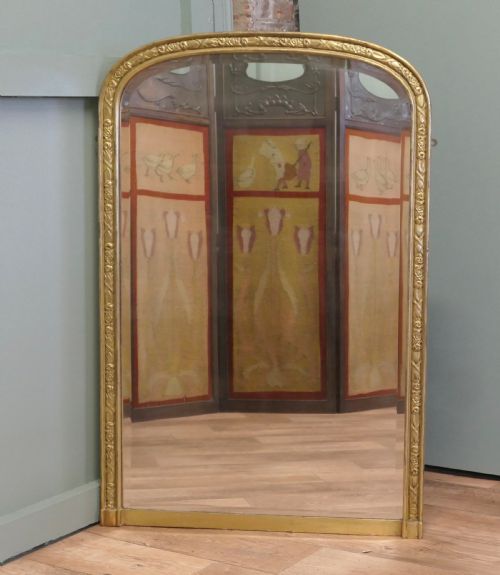
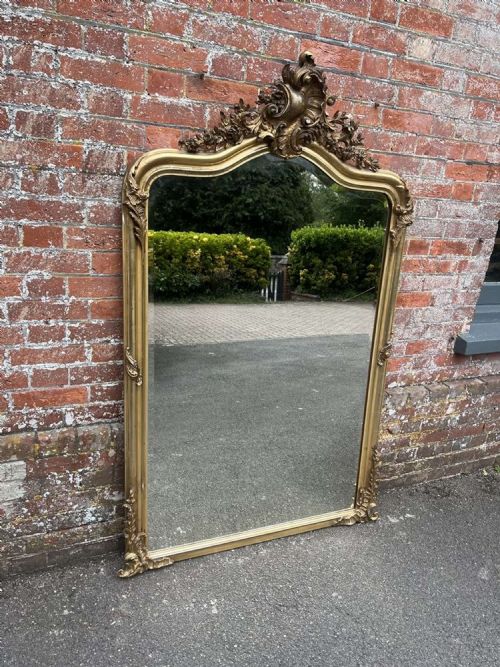
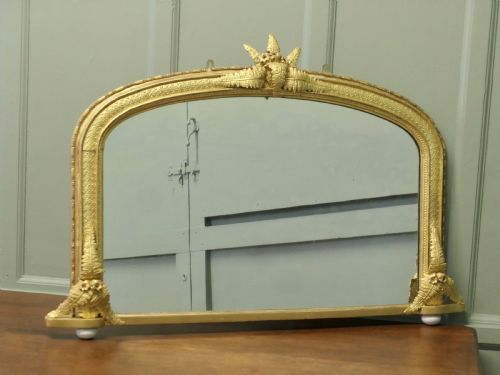
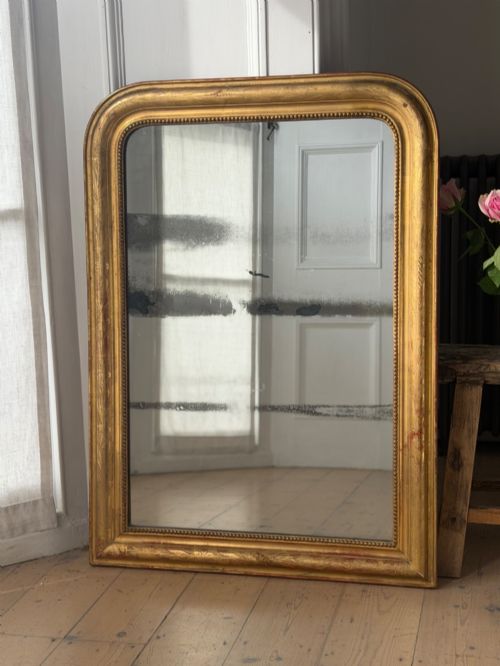


Vintage Arch Top Mirror
A vintage arch top mirror brings architectural curves and generous reflection to a room, drawing the eye upwards with its distinct arched silhouette.
Vintage Arch Top Mirror
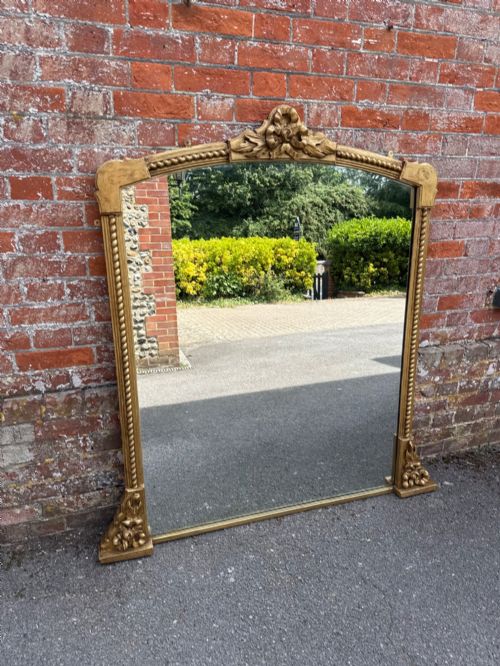
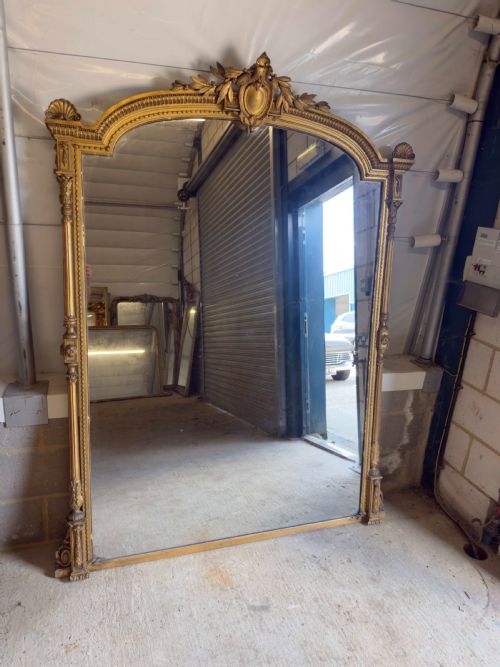
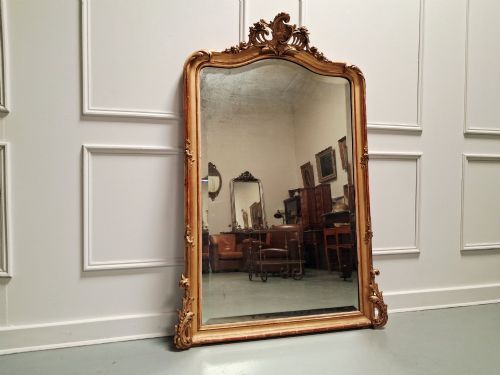
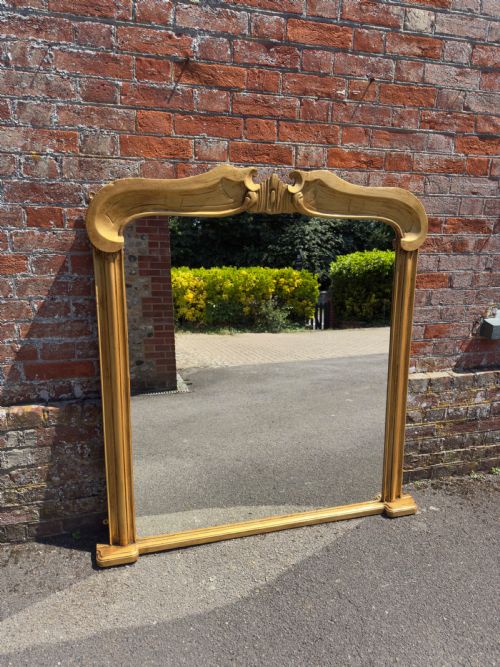
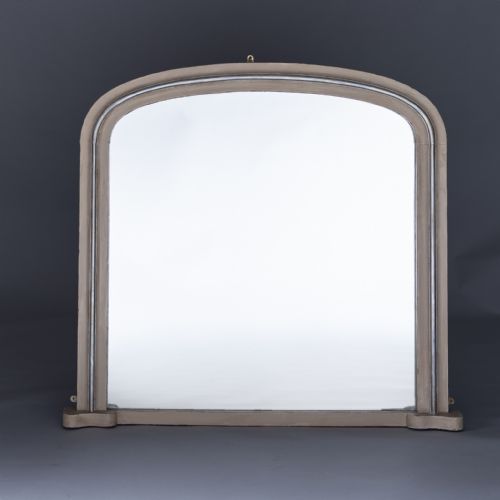
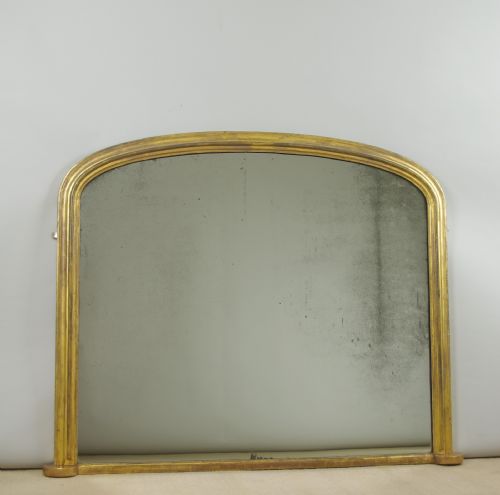
A vintage arch top mirror combines curved upper lines with substantial proportions, most commonly appearing as overmantle mirrors designed to sit above a fireplace. These pieces emerge predominantly from the nineteenth century, spanning English and French workshops.
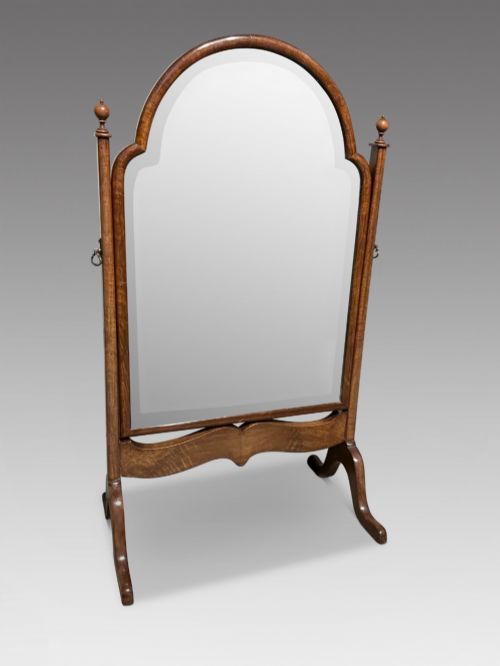
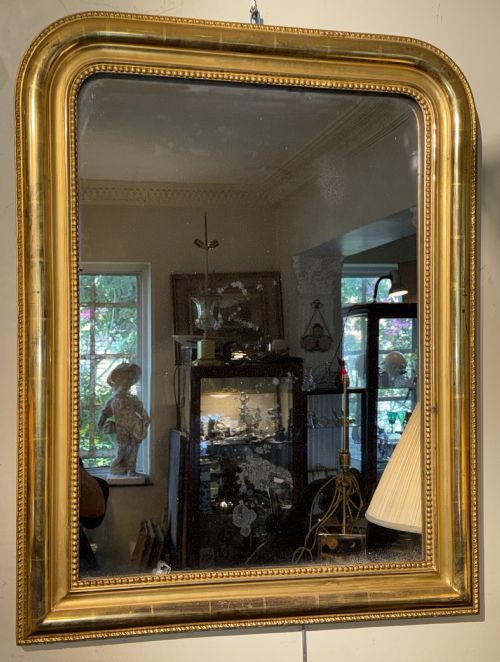
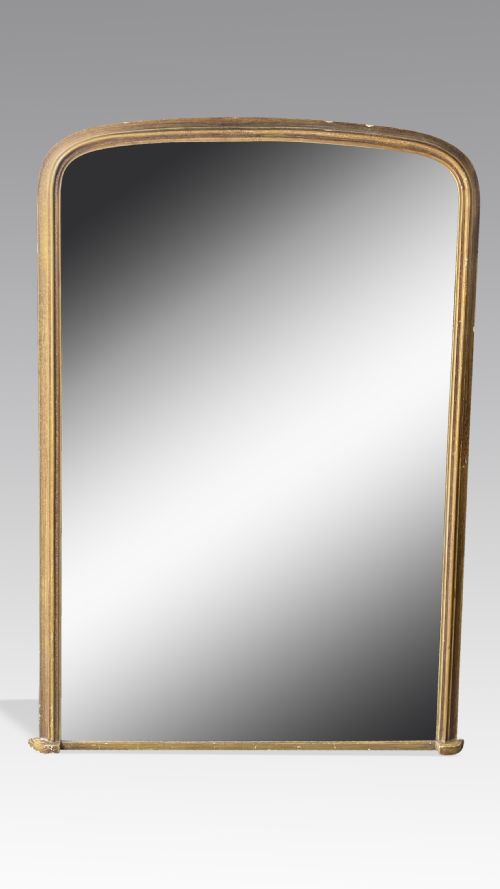
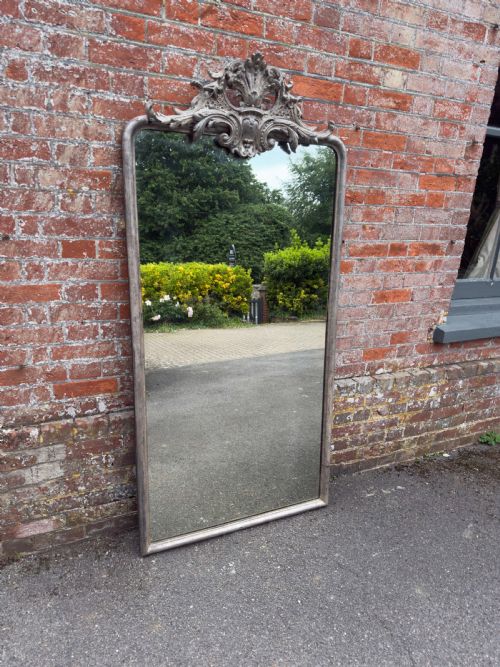
Beyond large overmantles, the selection includes tall wall-mounted Louis Philippe designs, pier mirrors, and occasional table or cheval mirrors framed in wood. The overarching form relies on the characteristic curved crest to soften the geometry of interior walls.
Materials and construction methods
Frames are constructed from carved wood, frequently layered with gesso to build up crisp decorative mouldings and relief ornament before finishing. Gilding with gold leaf or silver leaf applies a bright metallic sheen to the timber substrate.
Alternative finishes include painted surfaces, parcel-silvering, and exposed walnut or mahogany grains. The glass plates within these frames sometimes show age through mercury silvering or foxing spots across the reflective surface.
Several mirrors retain the original mercury glass, reflecting rooms through a delicate haze of foxed spots.
Factors that define quality
Quality rests upon the depth and precision of the carved wood and gesso detailing, where crisp relief work distinguishes superior frames from simpler moulding. The integrity of the original gilding or painted finish similarly dictates the visual impact of the piece.
Proportion and scale play a vital role, particularly in grand overmantle formats where balanced curves and heavy timber construction denote higher standards of period craftsmanship.
The Vintage Arch Top Mirror Glossary
- Overmantle mirror
- A large mirror specifically proportioned to hang on the wall above a mantelpiece or fireplace. These items often span considerable widths to anchor the hearth area.
- Gesso
- A plaster-like mixture applied to wood frames and carved or moulded into intricate decorative details. It forms the smooth base layer for subsequent gilding.
- Louis Philippe
- A mid-nineteenth-century French style characterised by restrained classical proportions and gentle arched tops. These pieces favour simple elegance over heavy ornamentation.
- Foxed glass
- Mirror glass exhibiting small dark spots or discoloration caused by the degradation of the reflective backing over decades. This patina indicates genuine antique age.
- Cheval mirror
- A freestanding full-length mirror hung in a frame that allows it to tilt back and forth on vertical pivots. They are typically supported by four splayed legs.
Vintage Arch Top Mirror: Frequently Asked Questions
Where should an arch top mirror be hung?
These mirrors traditionally anchor the space directly above a fireplace mantel, where their curved silhouette draws the eye upward and balances the hearth below. They also function effectively on large expanse walls in reception rooms to bounce natural light around the interior.
When positioning a heavy piece, ensure the wall fixings are secured directly into structural studs or masonry to support the substantial weight of the timber and glass.
How do I identify a French Louis Philippe mirror?
Louis Philippe mirrors typically feature a subdued arched top combined with clean, unpretentious framing that avoids excessive carving. They often possess rounded upper corners and a tall, dignified presence suited to domestic spaces.
Examine the construction of the timber backing and the silvering of the glass plate to confirm nineteenth-century origins.
What causes foxing on antique mirror glass?
Foxing occurs when moisture penetrates the protective backing of the mirror over many decades, causing the reflective silver or mercury layer to oxidise. This creates characteristic dark spots and cloudy patches across the glass.
Many collectors value foxing as a definitive sign of authenticity that proves the mirror retains its original historic glass plate rather than a modern replacement.
Can these mirrors be placed on a console table?
While many large examples are designed primarily for wall hanging as overmantles, smaller formats and table mirrors sit comfortably atop console tables or sideboards. Ensure the proportions of the table match the width of the mirror frame to maintain visual balance.
If resting a heavy mirror on a surface rather than fixing it to the wall, use appropriate brackets to prevent tipping.