
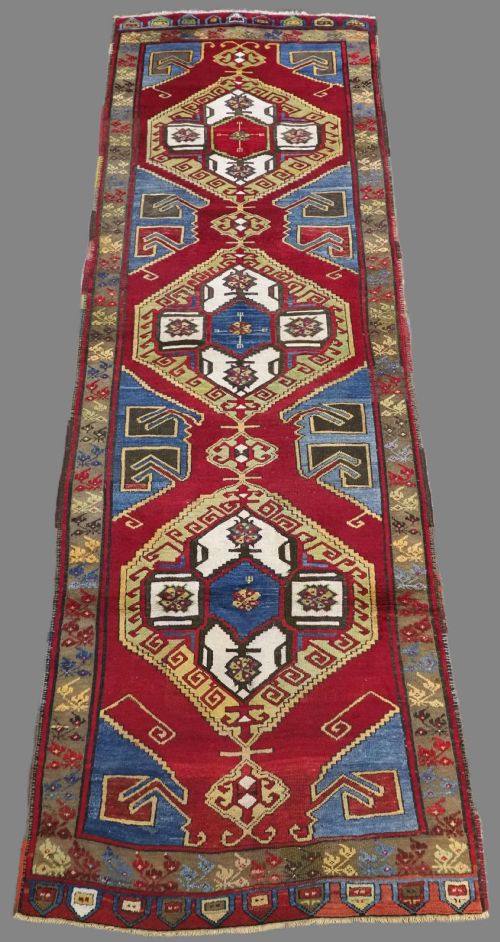


Vintage Anatolian Runner Carpet
A vintage anatolian runner carpet brings long, narrow warmth to a hallway, woven through centuries of regional tradition.
Vintage Anatolian Runner Carpet
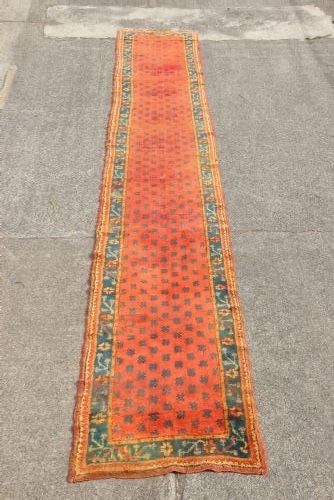
A vintage anatolian runner carpet is a long, narrow textile traditionally woven in villages and towns across Anatolia. These pieces serve narrow spaces like corridors, staircases and long galleries, bringing historic pattern into domestic interiors.
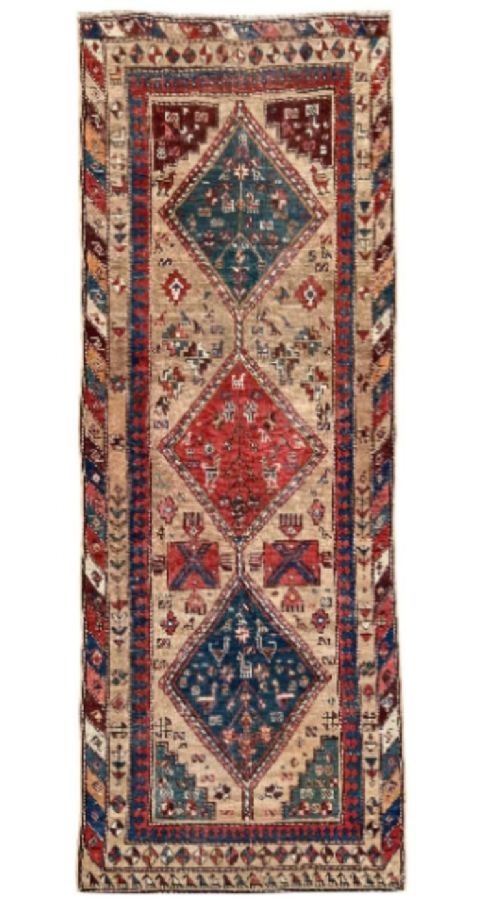
The selections span from the mid-nineteenth century through the early twentieth century, encompassing tribal village weaves and town workshop productions. You will encounter formats ranging from geometric tribal runners to court-influenced Oushak and Ushak carpets.
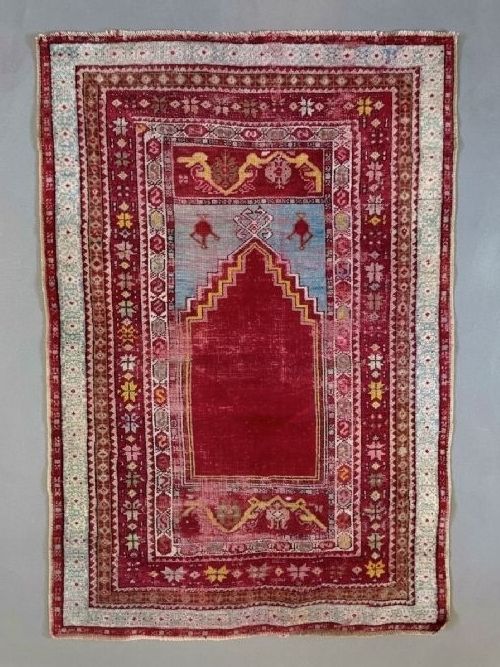
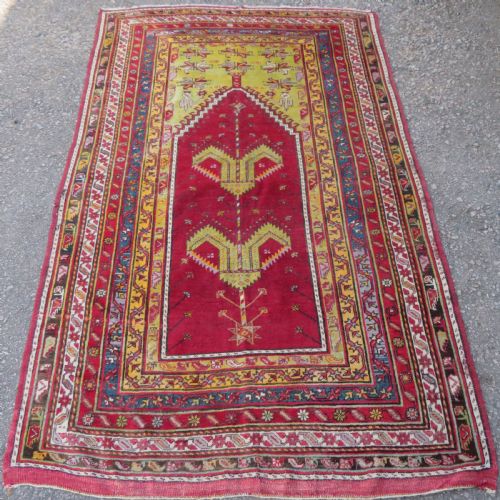
Regional styles bear the names of their making places, such as Konya, Kirsehir, Milas and Ladik. Each district contributed distinct medallion layouts, prayer mihrabs and border arrangements to the weaving tradition.
How they were made
Weavers utilised natural materials, primarily hand-spun wool and cotton, alongside angora wool and occasional mercerised cotton or art silk in later pieces. These yarns were dyed with plant and insect extracts before being tied by hand onto cotton or wool foundation warps.
The construction relies on symmetrical or asymmetrical knots secured by horizontal weft threads, creating a dense pile that withstands foot traffic. Flatwoven kilim versions omit the pile entirely, relying on interlocking weft techniques for a lighter, reversible fabric.
Some runners are woven in two separate sections and joined down the middle, just to fit a wide nomadic loom.
What varies in quality
Knot density and structural tightness dictate the longevity and definition of the design across these long formats. Finer knotting permits intricate curves and precise floral motifs, whereas looser tribal weaves yield bolder, more abstract geometry.
The integrity of the wool, the depth of the dye absorption and the consistency of the straight edges distinguish workshop pieces from everyday village output. A well-balanced palette and an even wear pattern reflect the skill of the original weaver.
Oushak weaving centre·Kirsehir workshop tradition·Konya weaving district·Milas village producers·Ladik prayer rug weavers
The Vintage Anatolian Runner Carpet Glossary
- Mihrab
- The arched niche design found on prayer rugs, pointing toward Mecca during Islamic worship. This motif is frequently centred in Anatolian and Kirsehir examples.
- Kilim
- A flatwoven textile produced without a pile by tightly interweaving warp and weft threads. These function as lighter rugs or foundational layers.
- Warp
- The vertical foundation threads stretched lengthwise on the loom before weaving begins. The exposed ends often terminate in decorative fringes.
- Weft
- The horizontal threads passed across the warp to lock the knots or flatweave in place. Packing the weft tightly ensures structural stability.
- Oushak
- A renowned weaving tradition originating from the town of Usak, characterised by soft wool, muted dye palettes and grand scale floral designs.
Vintage Anatolian Runner Carpet: Frequently Asked Questions
Where should I place a runner?
These long carpets suit narrow corridors, hallways and bedside spaces where standard rectangular rugs do not fit. Their elongated proportions draw the eye down a passage while protecting wooden flooring.
Ensure you measure the clear floor space carefully, leaving a uniform border of exposed floorboards around the edges of the textile.
How do I clean an old wool rug?
Regular gentle vacuuming without a rotating brush roll keeps dust from settling deep into the wool pile. Address spills immediately by blotting with a dry cloth rather than rubbing the fibres.
Professional specialist cleaning is recommended for deep maintenance to protect historic dyes and hand-spun materials.
Are these runners made with natural dyes?
Many nineteenth and early twentieth-century examples employ natural dyestuffs sourced from plants, roots and insects. These materials yield rich, saturated tones that mellow gracefully over decades of light exposure.
Later pieces from the twentieth century may incorporate early synthetic dyes, which exhibit distinct brightness and varied ageing characteristics.
How do I distinguish regional styles?
Regional attribution relies on identifying specific border motifs, colour palettes and medallion structures characteristic of towns like Konya, Milas or Kirsehir. Village pieces often display simpler geometric tribal markers.
Comparing the handling of the wool and the construction of the foundation edges helps separate western Anatolian workshops from eastern Kurdish weaves.