




Vintage Amethyst Statement Ring
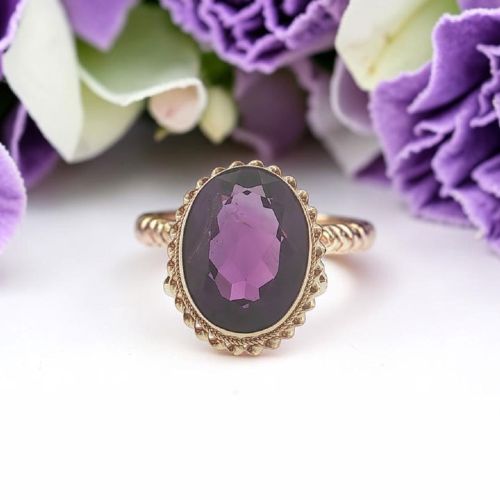
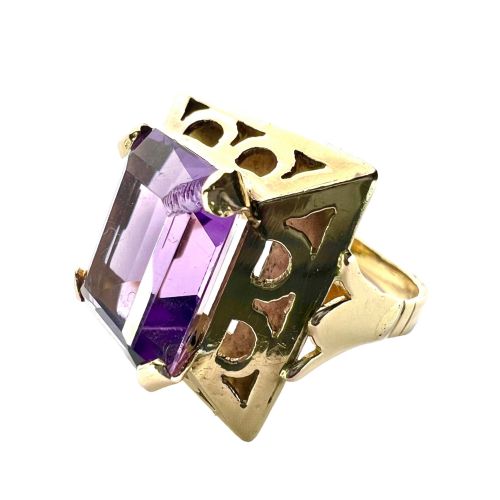
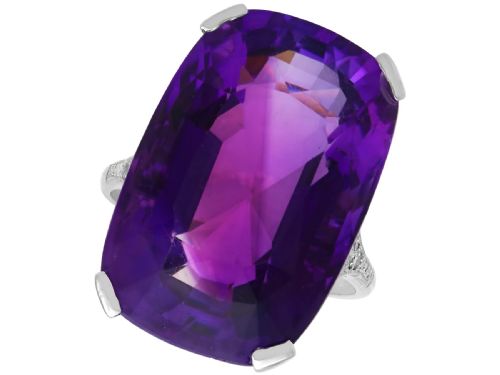
A vintage amethyst statement ring brings a bold purple presence to the hand, combining generous stone weight with enduring precious metal settings.
Vintage Amethyst Statement Ring
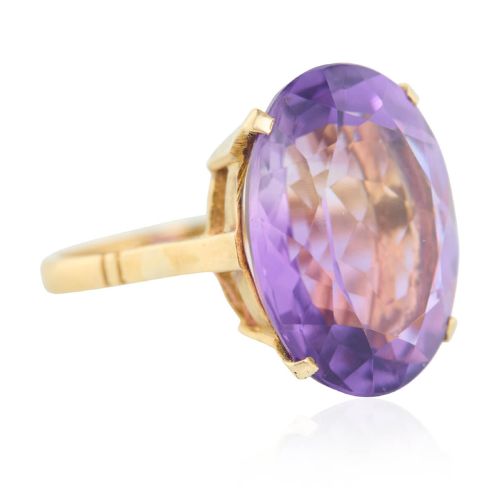
A vintage amethyst statement ring stands out through substantial scale and vivid purple colour, often taking the form of a cocktail or dress ring designed to draw the eye.
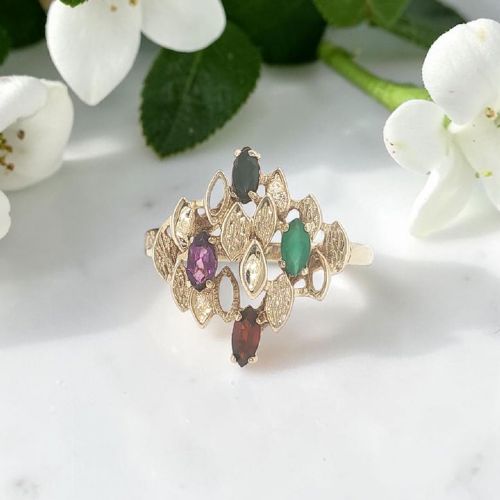
The selection ranges from Victorian and Edwardian cluster designs to Art Deco geometric mountings and mid-century modern interpretations.
Buyers encounter various configurations, including large emerald-cut and cushion-cut single stones accompanied by diamond accents or pearls.
How they were made
Goldsmiths utilised nine carat and fourteen carat yellow gold, rose gold, eighteen carat white gold, and platinum to house large gemstones securely.
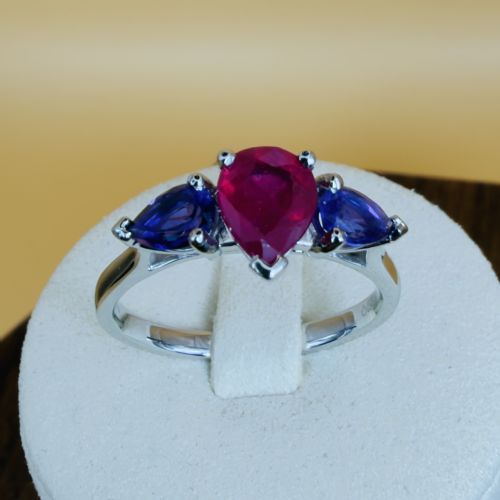
Craftsmen set sizable amethysts alongside diamonds, rubies, emeralds, sapphires, and pearls using traditional claw and halo configurations.
Listings span from Victorian and Edwardian eras through Art Deco, mid-century modern, and later periods, utilising platinum alongside yellow and white gold.
What varies in quality
The depth of the purple hue and the clarity of the central stone dictate visual impact, alongside the proportion between the gemstone and its mounting.
The choice of precious metal, from sterling silver to platinum and high-carat gold, influences the substance and weight of each piece.
The Vintage Amethyst Statement Ring Glossary
- Cocktail Ring
- A large, showy ring worn for evening social occasions, typically featuring a prominent central gemstone. These designs gained popularity during the twentieth century.
- Cluster Ring
- A ring style where a central stone is surrounded by a tight arrangement of smaller gems, such as diamonds or pearls. This arrangement maximises surface brilliance.
- Solitaire Ring
- A ring mounting designed to showcase a single gemstone without competing side stones. Amethyst solitaires often highlight exceptional carat weight.
- Halo Ring
- A setting where a central gem is encircled by a ring of smaller accent stones, enhancing the visual spread of the piece. Edwardian examples often employ seed pearls.
- Paste
- Hand-cut glass used as a gemstone substitute in historical jewellery. Fine paste pieces demonstrate considerable craftsmanship.
Vintage Amethyst Statement Ring: Frequently Asked Questions
How do I style a large amethyst ring?
Wear the piece on its own to let the generous stone draw full attention without competing jewellery on the same hand. Pair the purple tones simply with neutral clothing.
Consider the scale of the mounting when choosing daytime versus evening wear, as high-profile cocktail settings suit social occasions best.
What is a cocktail ring?
A cocktail ring is a large statement piece designed to be noticed during evening gatherings. These rings feature oversized stones and bold precious metal settings.
The tradition stems from mid-century social habits where large dress rings signified personal style and confidence.
How do I tell Art Deco from Victorian?
Art Deco rings present geometric lines, symmetrical platinum or white gold settings, and sharp angles. Victorian pieces lean towards romantic cluster designs in yellow or rose gold.
Examining the underlying metalwork and stone cuts reveals the specific era of manufacture.
Are these rings suitable for daily wear?
Quartz is durable enough for regular use, but exceptionally large stones require care to avoid knocks against hard surfaces. Consider removing the ring during heavy physical tasks.
Secure settings in gold or platinum protect the main gemstone over decades of regular enjoyment.