


Purple Gemstone Dress Ring
A purple gemstone dress ring brings together rich violet stones and precious metals across periods ranging from Georgian to Mid-Century.
Purple Gemstone Dress Ring
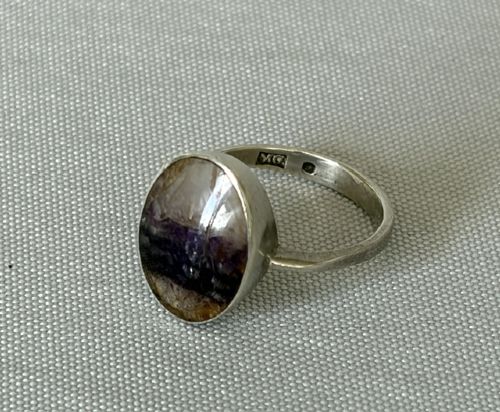
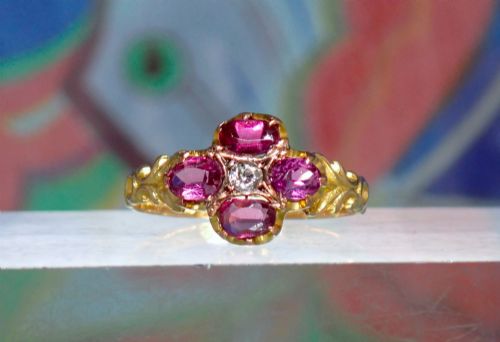
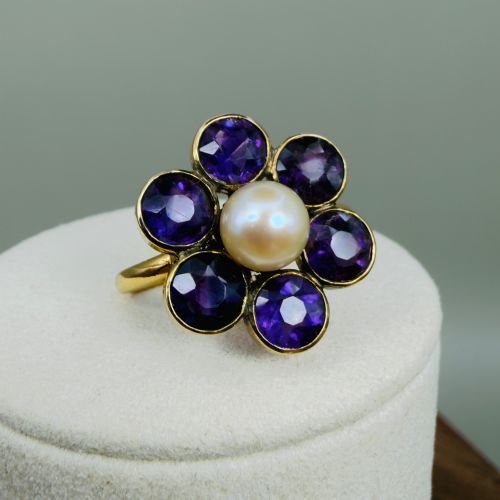
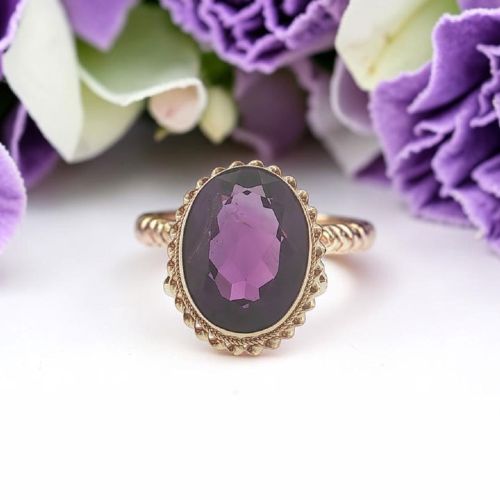
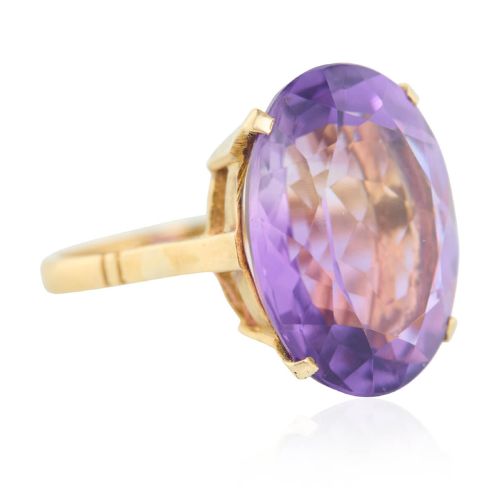
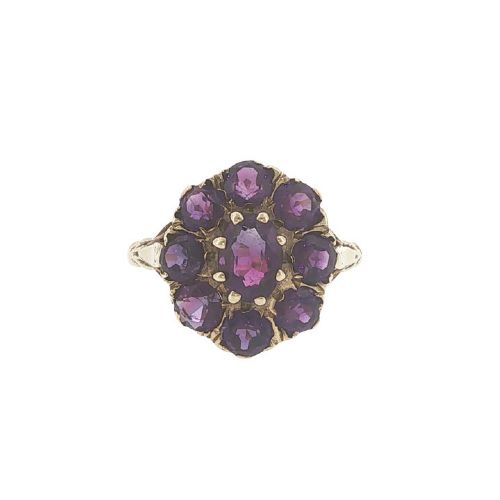
A purple gemstone dress ring is primarily built around amethysts, sapphires, garnets, and spinels set into yellow gold, rose gold, white gold, platinum, or silver. These pieces range from delicate Victorian cluster settings to substantial mid-century cocktail rings.
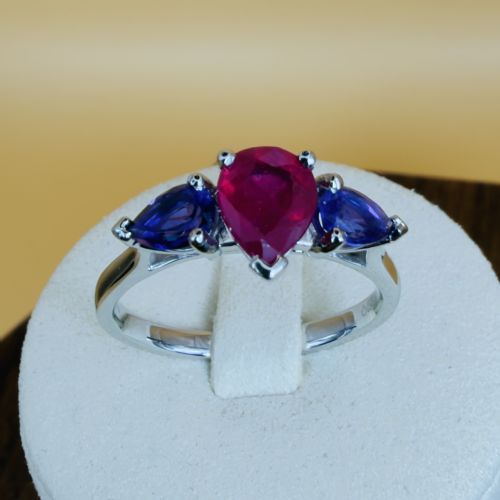
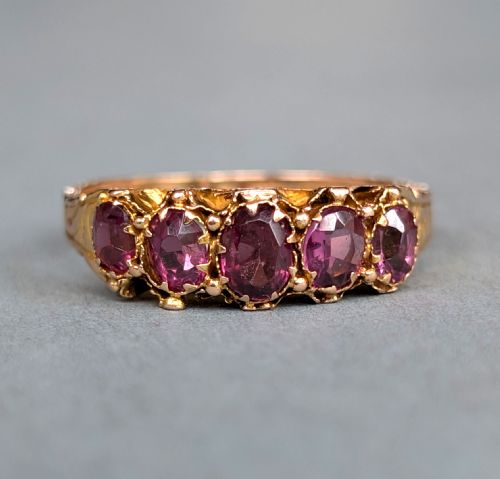
The selection on this page covers multiple periods including Georgian, Victorian, Edwardian, Art Deco, and the 1950s through to the 1970s. You will encounter single stone solitaires, multi-stone cluster arrangements, and five-stone configurations.
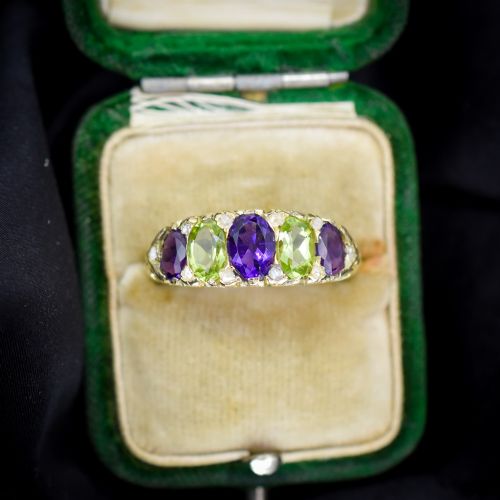
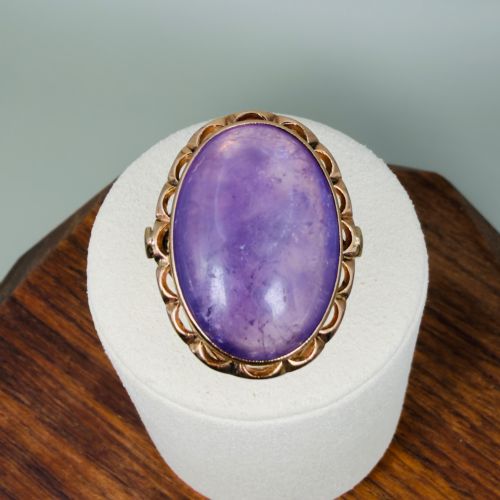
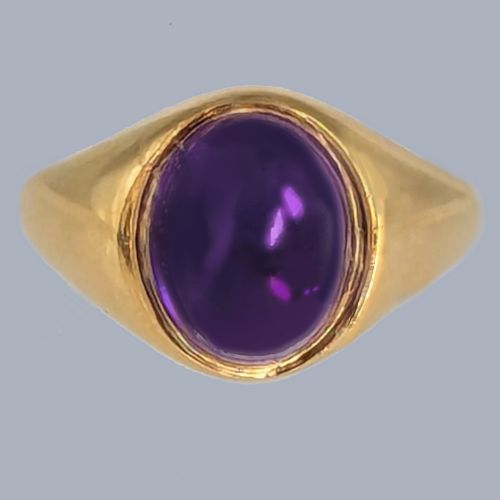
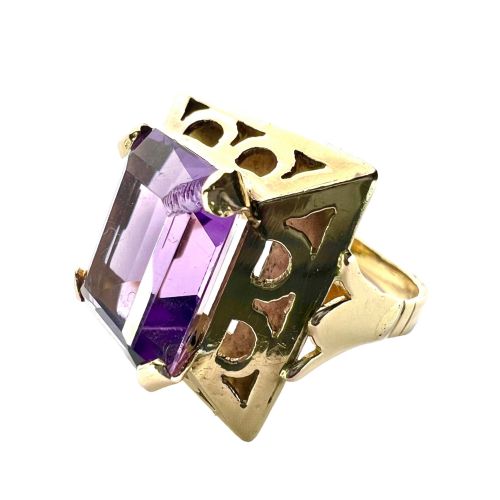
Cocktail rings and traditional dress rings dominate the forms seen here, often incorporating surrounding diamonds, pearls, or peridots to frame the central purple stone. The variety extends from minimalist bands to dramatic, oversized cabochons and emerald-cut stones.
Materials and construction
Goldsmiths utilised varying purities of gold, notably 9ct, 14ct, 15ct, and 18ct, alongside platinum and silver to mount the stones. Settings range from traditional claw mounts to secure bezel and halo arrangements.
Stones are cut in numerous profiles, including emerald cut, cushion cut, pear cut, heart cut, and smooth cabochon forms. Surrounding small diamonds or seed pearls are frequently grain-set or collet-set to enhance the central purple gem.
Several rings exceed twenty carats, offering a substantial flash of violet on the finger.
Variations in quality
Quality in a purple gemstone dress ring rests on the depth of colour and clarity in the central stone, alongside the weight and purity of the metal used in the shank and setting. Heavier, solid gold or platinum mounts generally indicate higher grade production.
The precision of the stone cutting and the security of the surrounding gem settings, such as closely matched diamond halos, distinguish finer workshop output from simpler commercial pieces.
The Purple Gemstone Dress Ring Glossary
- Cabochon
- A gemstone shaped and polished with a smooth, rounded surface rather than faceted. This style is often seen on larger lavender jade and amethyst rings from the mid-century period.
- Cluster ring
- A ring design featuring a central stone encircled by a group of smaller gems, typically diamonds or pearls. This arrangement maximises visual presence on the hand.
- Solitaire
- A ring set with a single gemstone, allowing the colour and cut of the main stone to remain the sole focus. Emerald-cut and cushion-cut solitaires appear frequently in the listings.
- Suffragette
- jewellery associated with the women's suffrage movement, traditionally utilising a combination of green, white, and violet stones such as peridot, pearl, and amethyst. These pieces date primarily from the late Victorian and Edwardian eras.
Purple Gemstone Dress Ring: Frequently Asked Questions
What periods do these purple gemstone rings come from?
The pieces span multiple eras, starting from the Georgian and Victorian periods, moving through Edwardian and Art Deco designs, and continuing into mid-century and later vintage decades.
Each era brings distinct metal choices and mounting styles, ranging from low-profile Victorian clusters to large cocktail rings from the 1950s and 1970s.
Which gemstones are used in these rings?
Amethyst is the most prominent purple stone, appearing in shades from pale lavender to deep violet, often in large carat weights. Other purple stones include garnets, sapphires, and tourmalines.
Many designs combine these primary purple stones with accent diamonds, pearls, or green peridots.
Are these rings suitable for everyday wear?
Many of these rings function well for regular daily use, particularly those set in durable 18ct gold or platinum with secure bezel or low claw settings.
Pieces featuring softer stones or delicate antique pearl accents require more mindful wear to preserve the setting.
How can I tell an older ring from a mid-century piece?
Older Victorian and Edwardian rings often feature hand-worked detailing, low-carat yellow or rose gold, and seed pearl accents. Mid-century rings frequently showcase larger emerald-cut or cushion-cut stones in heavier, streamlined mountings.
Hallmarks and stamps inside the shank also provide official markers for assay office locations and specific decades.