



Vintage Alabaster Female Figurine
A vintage alabaster female figurine brings carved neoclassical grace and art deco movement into a room.
Vintage Alabaster Female Figurine
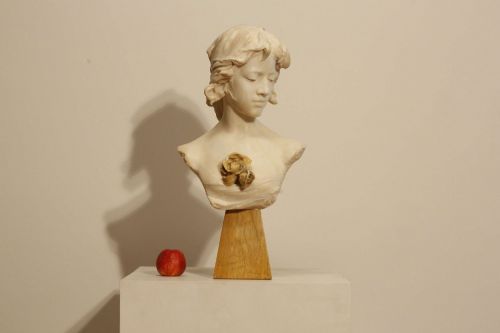
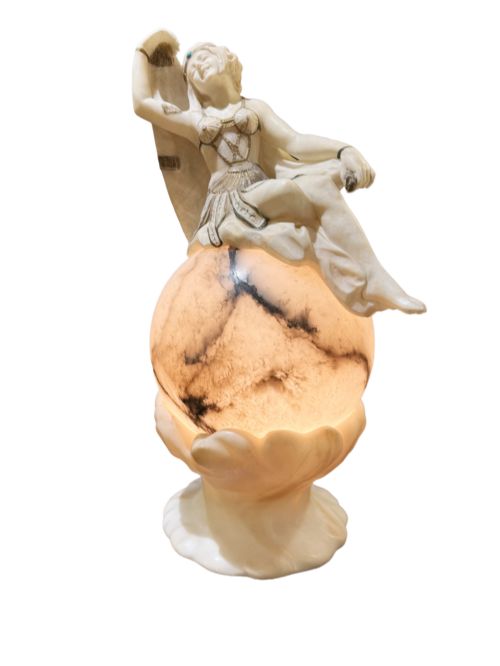
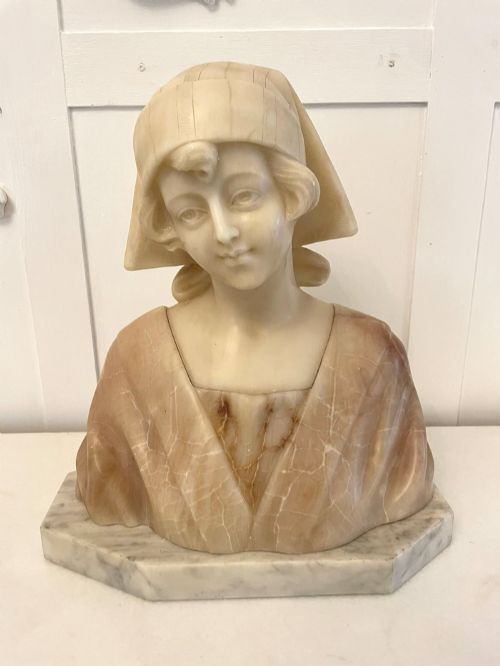
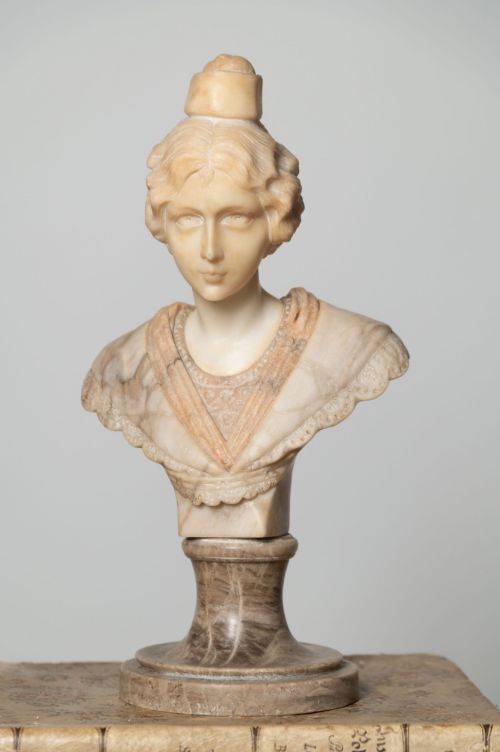
Every vintage alabaster female figurine on this page captures the female form in carved stone, spanning periods from the nineteenth century through the nineteen-thirties. You will encounter classical busts alongside dynamic dancers poised on spheres and reclining nudes.
The aesthetic shifts from Victorian and French classical weight to the stylised geometry of the art deco era. These pieces function as freestanding sculptures, table lamps, and figures mounted on contrasting bases.
Origins stretch across European workshops, with Italian and French pieces appearing frequently. They offer a tangible connection to nineteenth-century romanticism and early twentieth-century modernism.
How they were made
The primary medium is alabaster, often paired with marble or supported by metal and spelter elements. Sculptors carved the translucent stone by hand to capture the softness of skin and drapery.
Makers utilised the natural veining of the stone to give depth and texture to hair, clothing, and the contours of the body. Bases frequently incorporate contrasting materials to anchor the lighter stone figures.
Vintage Alabaster Female Figurine Retail Price Guide 2026
Typical asking prices for vintage alabaster female figurine among the pieces listed under this phrase on Sellingantiques today, from the lower quarter to the upper quarter. They describe what is for sale here now, not the wider market.
Several dancers manage to balance their entire sculpted weight upon a single polished sphere.
What varies in quality
The presence of a signature or attribution elevates a piece, as seen in works associated with named sculptors. The choice of base and the integration of mixed media also distinguish standard production from exceptional work.
Pugi·Greuze
The Vintage Alabaster Female Figurine Glossary
- Alabaster
- A soft, fine-grained stone prized for its translucent quality that allows light to penetrate the surface. It requires gentle handling due to its delicate nature.
- Spelter
- A zinc alloy frequently used as a substitute for bronze in decorative figures and bases. It often received a bronze-like finish.
- Neoclassical
- A style inspired by the classical art and culture of ancient Greece and Rome. It emphasises proportion, restraint, and classical drapery.
- Bust
- A sculpted representation of a person from the chest up. This format focuses attention on the facial expression and hairstyle.
Vintage Alabaster Female Figurine: Frequently Asked Questions
Are these figures solid stone?
Most pieces combine carved alabaster or marble for the main figure with secondary materials like metal for bases.
Inspect the mounting to understand how the stone secures to its plinth.
How do I date a piece?
Look to the stylistic markers, such as Victorian realism versus art deco geometry.
Signatures, mounting styles, and the treatment of the hair and drapery also provide clues to the period.
Where should I display a sculpture?
Place the figure on a sturdy mantelpiece, desk, or dedicated pedestal away from direct sunlight.
Positioning the piece near a light source can highlight the translucent properties of the alabaster.