



Village Scene Wall Art
Village scene wall art brings historic rural life into domestic spaces through painted depictions of harbours, streets, and quiet countryside communities.
Village Scene Wall Art
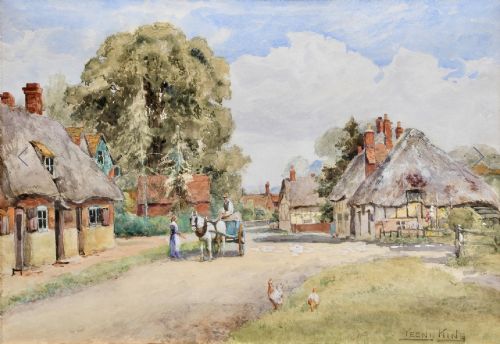
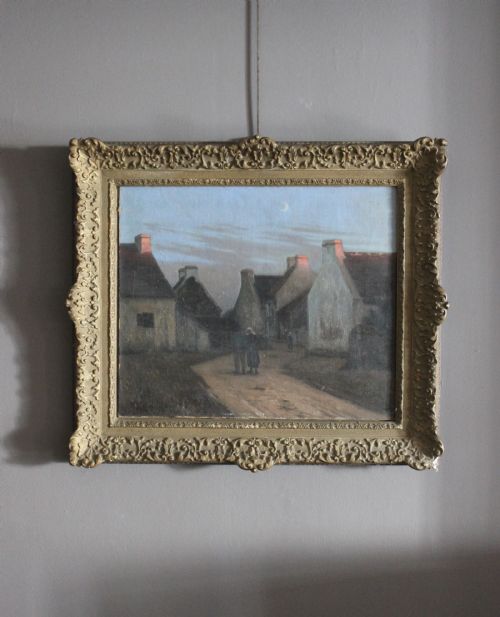
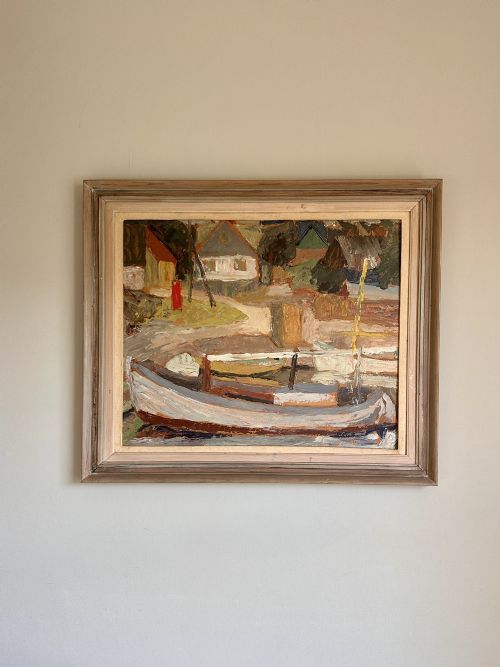
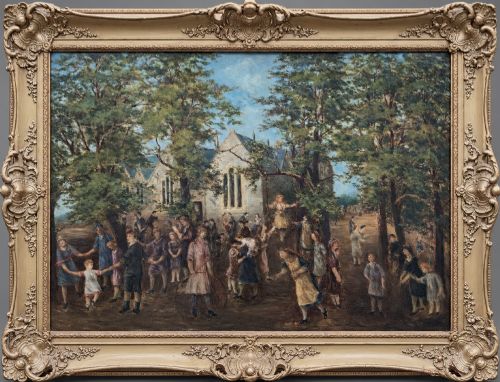
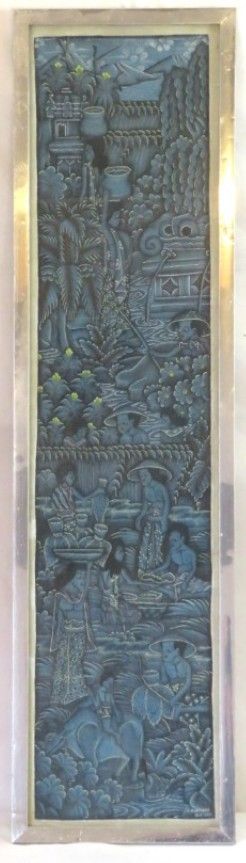
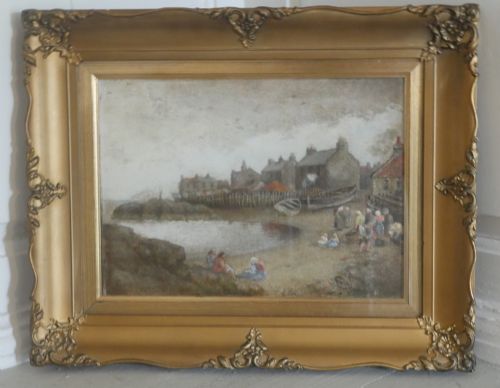
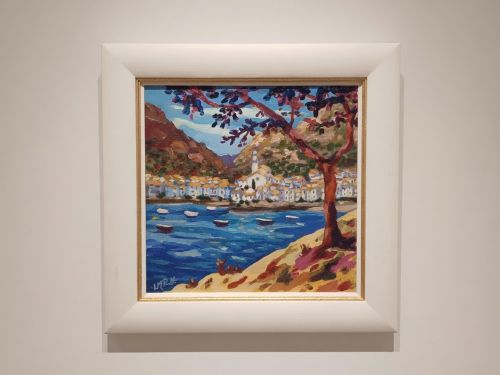
Village scene wall art encompasses paintings and works on paper created across multiple decades, capturing rural communities, coastal settlements, and local gatherings. The works on this page lean heavily towards oil paintings on canvas and watercolours, dating from the nineteenth century through the mid-twentieth century.
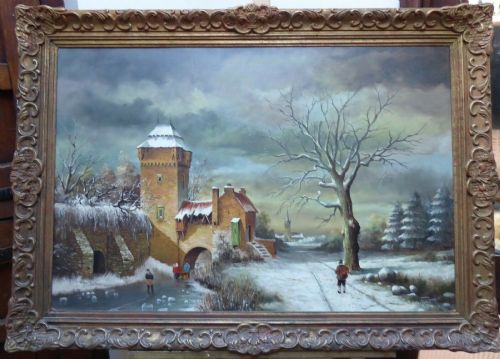
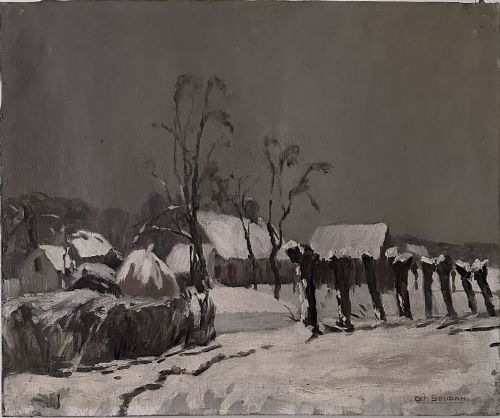
Subjects range from snow-laden winter landscapes and bustling harbour towns to quiet country lanes populated by horses, carts, and villagers. Pieces emerge from various stylistic traditions, including Impressionism, Post-Impressionism, Folk Art, and nineteenth-century realism.
Buyers encounter British regional views alongside continental European and international landscapes, reflecting how diverse artists interpreted local community life. Framed artwork forms the dominant format, preserving the visual record of historic rural settlements.
Materials and Construction
Artists painted primarily with oil on canvas or applied watercolour and gouache onto paper and fabric. These traditional mediums allowed creators to build rich textures for skies, buildings, and figures.
Support materials varied from stretched canvas and wooden boards to heavy paper and fine fabric. Many surviving pieces retain their period frames, occasionally enhanced with gold leaf accents that complement the tonal palette of the artwork.
Village Scene Wall Art Retail Price Guide 2026
Typical asking prices for village scene wall art among the pieces listed under this phrase on Sellingantiques today, from the lower quarter to the upper quarter. They describe what is for sale here now, not the wider market.
Subjects encompass winter snow scenes, coastal fishing ports, and domestic village gatherings from British and European schools.
Assessing Quality
Quality rests upon the artist's handling of light, atmospheric depth, and composition within the rural setting. Stronger pieces display confident brushwork and a coherent sense of space that draws the viewer into the street or harbour.
The integration of human figures and architecture distinguishes accomplished works from simpler decorative renderings. Superior examples capture a distinct mood or specific regional character rather than relying on generic formulas.
Pieter Cornelis Steenhouwer·Edward Mills·Lucy Pratt·David Teniers II·M. C. Hider·George Gregory·Helena Maguire·Percy Brooke·David Woodlock·William Lee Hankey·B W Leader·John Ritchie·Georgina Lara·A. Michaelis·Carleton Grant·Joseph Thors·William Greaves·Martin Lamotte·Stephanie Cooper
The Village Scene Wall Art Glossary
- Oil Paint
- A slow-drying medium composed of pigments suspended in a drying oil, usually linseed. It allows for rich colour blending and thick impasto textures.
- Watercolour
- A paint consisting of pigment suspended in a water-soluble vehicle, typically applied to paper to achieve translucent washes of colour.
- Impressionism
- A nineteenth-century art movement characterised by relatively small, thin yet visible brush strokes and an emphasis on accurate depiction of light.
- Gouache
- An opaque water-based paint that includes a white pigment filler, resulting in a heavier, solid surface compared to standard watercolour.
- Genre Painting
- Depictions of aspects of everyday life by framing ordinary people in contemporary settings, often featuring villagers at work or social gatherings.
Village Scene Wall Art: Frequently Asked Questions
How do I date a village scene painting?
Dating relies heavily on stylistic clues, clothing styles of figures within the composition, and framing materials. Signatures and stretcher construction offer further physical evidence for specific decades.
Comparing the handling of paint and the subject matter to known periods like the Edwardian era or the mid-century helps narrow the timeline.
What is the difference between oil and watercolour village art?
Oil paintings utilise heavy pigments on canvas or board, providing texture, depth, and rich colour layering. Watercolours employ translucent washes on paper, yielding a lighter, more delicate visual feel.
Both mediums captured rural scenes, but oils suited larger gallery display while watercolours often recorded direct field studies.
Where were these village scenes typically painted?
Artists worked across British coastal harbours, European farming communities, and international settlements, recording local architecture and daily routines. Locations range from Sussex fishing villages to Dutch rural landscapes and overseas views.
Many works document specific named places, while others capture anonymous rural idylls typical of their region.
How should I display antique village artwork?
These pieces suit traditional and eclectic interiors, particularly when hung on neutral walls that allow the historic tones to stand out. Direct sunlight should be avoided to protect both watercolours on paper and oil pigments.
Keeping paintings away from damp areas ensures the canvas and frame remain stable over time.