



Antique Village Street Scene
These antique village street scene works capture rural life across Britain and beyond, offering a quiet window into past communities.
Antique Village Street Scene
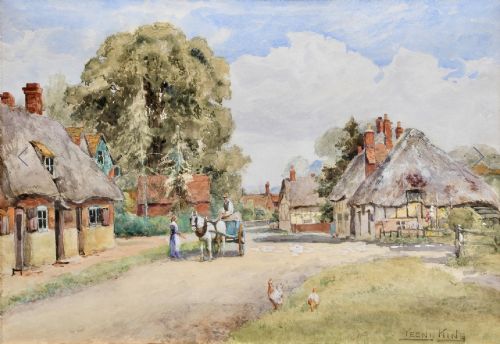
When you search for an antique village street scene, you are looking at paintings and works on paper that depict rural thoroughfares, stone cottages, and country inns. These pieces serve as historical records of vanished or altered localities, capturing the architectural character and daily rhythms of earlier settlements.
The versions most likely to meet you on this page span the nineteenth century through the mid twentieth century. They encompass British impressionism, Victorian works, and folk art interpretations, ranging from precise topographical watercolours to atmospheric oils on canvas.
Materials and techniques
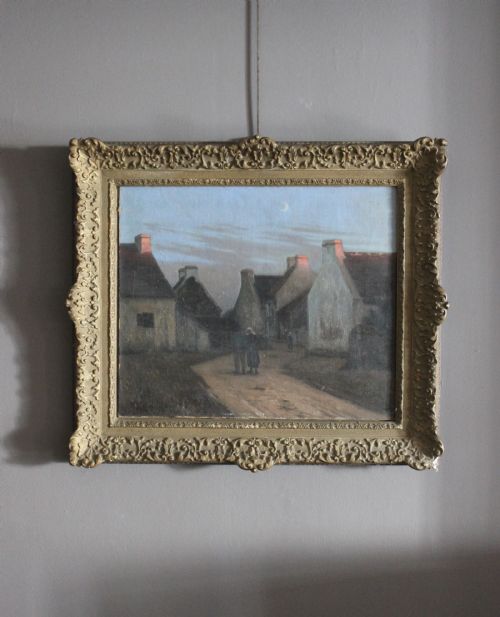
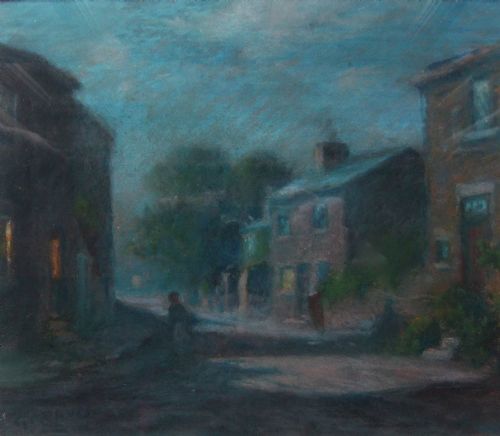
Artists captured these subjects using watercolours on paper, pastels, and oil paint applied to canvas or wood panels. Watercolours allowed for delicate washes depicting stonework and atmospheric light, while oils on canvas provided richer textures and deeper tonal ranges for evening or rural settings.
Many of these works are housed in period frames, frequently utilising giltwood and glass to protect the surface. The physical construction combines traditional stretcher frames for canvas with secure paper mountings for pastels and watercolours.
Antique Village Street Scene Retail Price Guide 2026
Typical asking prices for village street scene among the pieces listed under this phrase on Sellingantiques today, from the lower quarter to the upper quarter. They describe what is for sale here now, not the wider market.
Listings feature works from the nineteenth century, Edwardian era, and the nineteen-twenties, thirties, and sixties.
Distinctions in quality
The distinction between standard works and finer examples lies in the artist's command of perspective, light, and architectural detail. Superior pieces convey depth and atmospheric presence within the stonework and village houses rather than relying on formulaic compositions.
Handling of medium also separates the output, as seen in the deft control of watercolour washes or the confident brushwork of oil paintings. Provenance and attribution to recorded artists further elevate the standing of particular works.
William Greaves·John Smith Atherton·Robert Hollands Walker·V. Zirakian·Alfred Leyman·Christiaan Pieter Snyders·Victor Valery
The Antique Village Street Scene Glossary
- Watercolour
- A painting method where fine pigment is suspended in water-based solution on paper. It allows for translucent washes that suit detailed depictions of stone houses.
- Oil on Canvas
- Pigment mixed with drying oil applied to a stretched woven fabric support. This medium offers durability and rich colour saturation.
- Pastel Drawing
- A dry medium consisting of powdered pigment and a binder pressed into stick form. It creates soft, textured surfaces often requiring glass protection.
- Giltwood
- Wood carved and treated with a thin layer of gold leaf. It is commonly found on traditional frames enclosing nineteenth century fine art.
- Folk Art
- Artistic work created within a traditional culture by self-taught makers. These pieces often feature direct observation and unacademic perspectives.
Antique Village Street Scene: Frequently Asked Questions
What periods do these paintings cover?
The works span from the nineteenth century through Edwardian times up to the mid twentieth century. They reflect shifting artistic movements including realism and impressionism.
Dates often relate to the active period of the artist or the specific year the rural scene was recorded on canvas or paper.
How were these village scenes used?
These artworks were created as decorative fine pieces for domestic interiors, capturing familiar local landmarks or travels across the country. They served to bring the character of rural life into town homes.
Many functioned as topographical records commissioned or painted to preserve the appearance of specific coaching inns and country lanes.
How do I live with works on paper?
Works executed in watercolour or pastel require protection behind glass to shield the delicate pigments from atmospheric moisture and dust. They should be hung away from direct sunlight to prevent fading.
Maintaining stable indoor temperatures ensures the paper and framing materials do not warp or degrade over time.
How do I identify folk art examples?
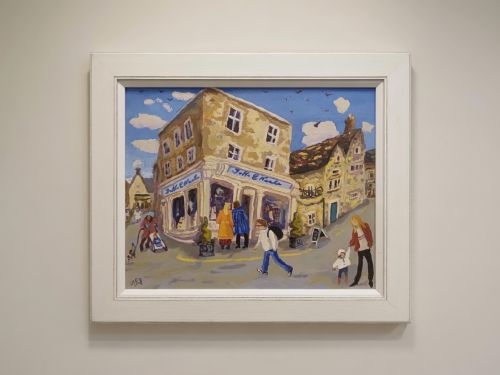
Folk art street scenes display a distinct lack of strict academic perspective, favouring direct, expressive rendering of rural buildings and figures. They often exhibit a charming simplicity in their use of form and line.
These pieces derive their character from independent observation rather than adherence to formal artistic conventions of the period.