


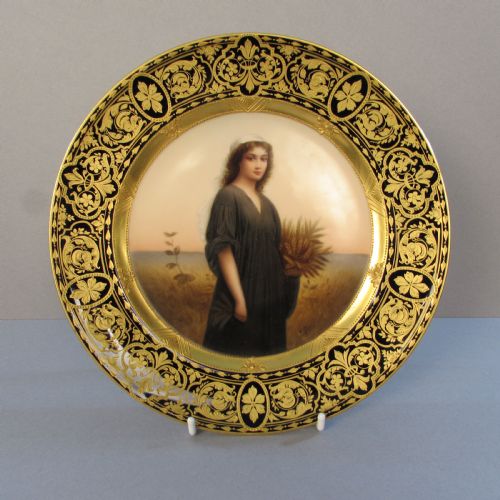

Vienna Porcelain Decorative Plate
A vienna porcelain decorative plate brings hand-painted mythological and historical scenes into the room through rich gilding and cobalt glaze.
Vienna Porcelain Decorative Plate
A vienna porcelain decorative plate typically takes the form of a large charger, cabinet plate, or pierced plate intended for display rather than dining. These pieces showcase elaborate figurative painting depicting classical subjects, literary scenes, and historical narratives across their central fields.
The selections on this page belong primarily to the nineteenth century, including specific dates such as 1850 and 1890, alongside later twentieth century examples from 1920. Collectors encounter styles spanning neoclassical, neoclassical revival, grand regency, vienna historicism, and royal vienna style.
Makers and artists noted in the evidence include signed works by painters such as S. Stanley, Sibl, and Wagner. Pieces vary in scale from standard cabinet plates up to impressive large chargers measuring forty to sixty centimetres in diameter.
Materials and production methods
These items are constructed from hard-paste porcelain, serving as a bright white canvas for detailed polychrome enamel painting. Artisans applied cobalt glaze to create deep blue borders and backgrounds that contrast sharply with the central figural compositions.
Gold leaf and gilding, including gold gilt, were meticulously applied by hand to frame the painted scenes and embellish the rims. Piercing techniques appear on specific cabinet plates, cutting intricate openwork patterns through the porcelain border.
Listings feature periods spanning the nineteenth century, 1850, 1890, and 1920, utilising porcelain, enamel, gold leaf, and cobalt glaze.
Distinguishing quality in these plates
Quality rests significantly upon the skill of the porcelain painter, evident in the anatomical precision of figures, the subtlety of facial expressions, and the execution of complex narratives like King Tristan's Death or Venus in the Forge of Vulcan. Signed works by documented artists command particular attention for their artistic execution.
The richness and preservation of the gilding and cobalt glaze determine the visual impact of a piece. Elaborate hand-applied gold tooling and flawless enamel work separate standard production from exceptional cabinet plates and large decorative chargers.
The Vienna Porcelain Decorative Plate Glossary
- Cabinet plate
- A porcelain plate produced primarily for display in a cabinet or on a wall rather than for functional use at table. These items usually feature intricate hand-painted imagery and generous gilding.
- Charger
- A large decorative plate, often measuring forty centimetres in diameter or greater. They serve as dramatic centrepieces for visual display.
- Cobalt glaze
- A rich blue metallic oxide applied under or over the glaze to provide deep colour saturation. It frequently forms the striking background against which gold gilding stands out.
- Gilding
- The application of gold leaf or powdered gold to the surface of porcelain. This technique highlights rims, borders, and decorative motifs.
- Pierced porcelain
- A decorative technique where portions of the rim are cut out before firing to create openwork patterns. This adds lightness and intricate detail to heavy cabinet plates.
- Historicism
- An artistic movement drawing inspiration from historical styles and historical art forms. It influences nineteenth-century vienna porcelain through revivals of classical and neoclassical aesthetics.
Vienna Porcelain Decorative Plate: Frequently Asked Questions
What are vienna porcelain decorative plates?
These items are ornamental ceramic plates and chargers produced in the vienna style, featuring detailed hand-painted scenes from mythology, literature, and history.
They were designed specifically for display in cabinets or on walls rather than for serving food.
How were these plates used historically?
Owners displayed these decorative chargers and cabinet plates in drawing rooms and reception spaces to signal cultural refinement and taste.
Their intricate artwork and rich gold gilding made them conversation pieces for guests to admire.
How do I display a cabinet plate safely?
Cabinet plates can be mounted on walls using secure, padded plate hangers or placed upright on sturdy display stands inside enclosed cabinets.
Keep them away from direct sunlight to protect the vibrant enamel paints and gold leaf from fading over time.
How can I tell nineteenth century pieces apart?
Nineteenth century examples often display specific stylistic markers like vienna historicism, neoclassical revival, or grand regency motifs alongside hand-painted signatures.
Examining the depth of the cobalt glaze and the complexity of the gold gilt helps distinguish different periods of production.