

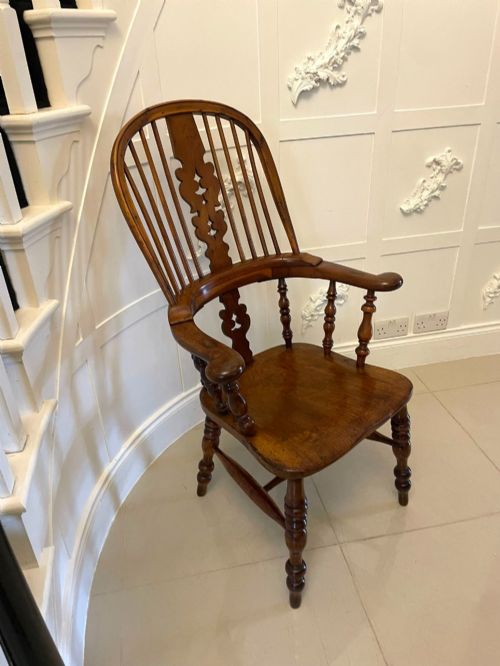
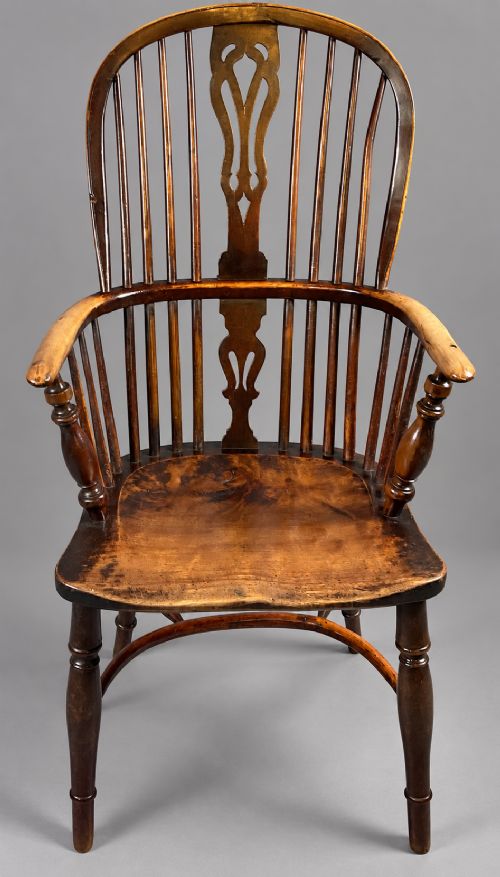
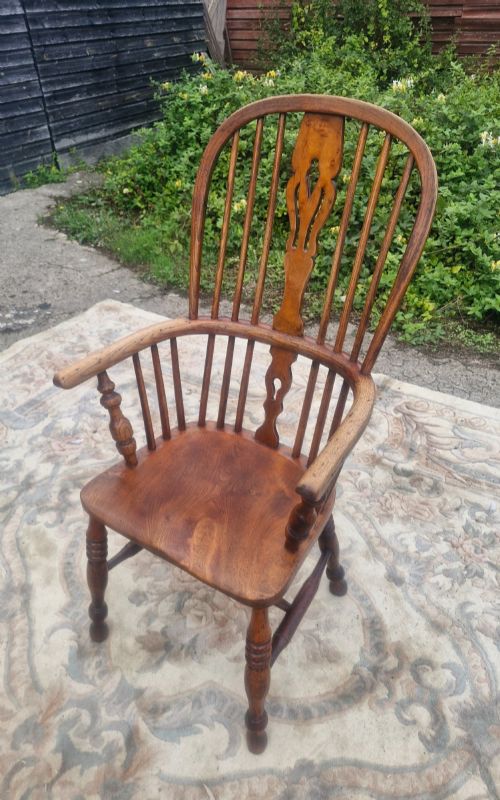
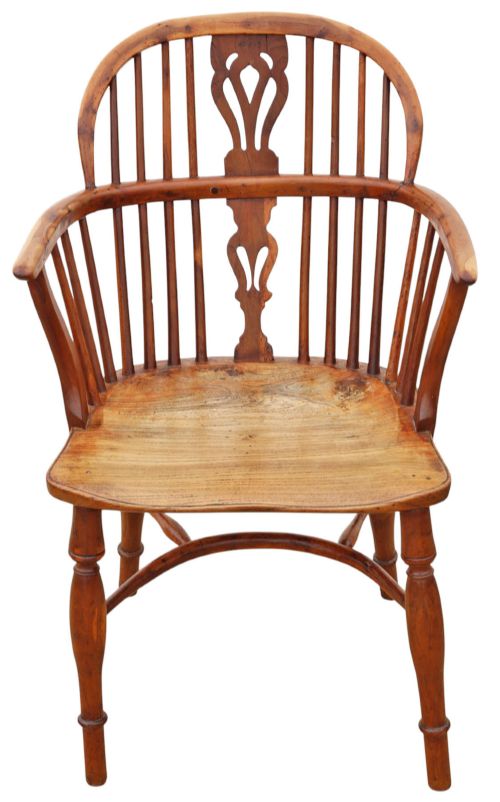
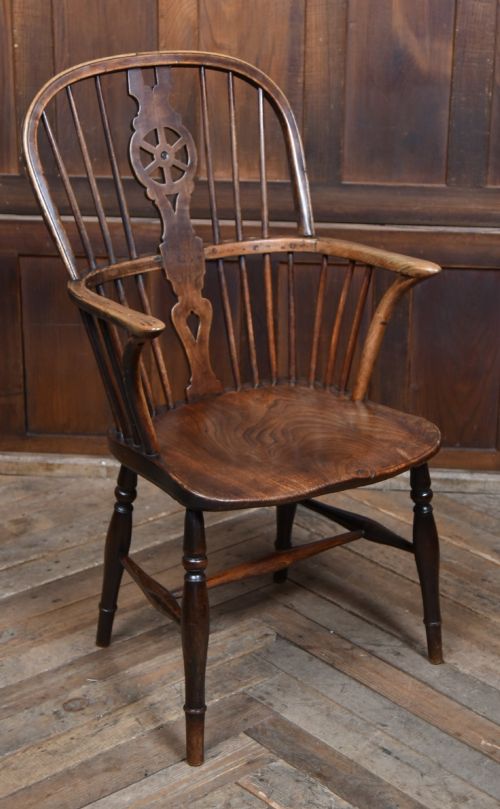
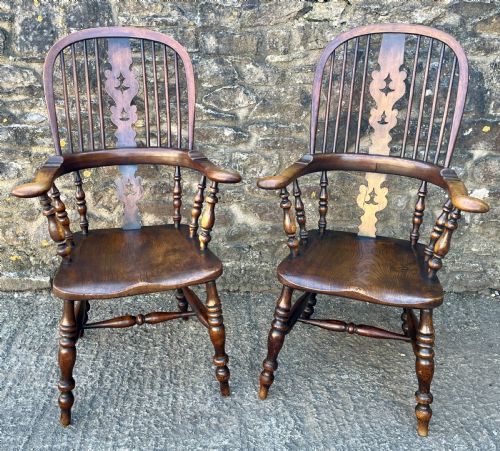


Victorian Yew Windsor Armchair
A victorian yew windsor armchair brings tactile warmth and regional craftsmanship into a room through deeply figured timber and traditional joined construction.

Victorian Yew Windsor Armchair
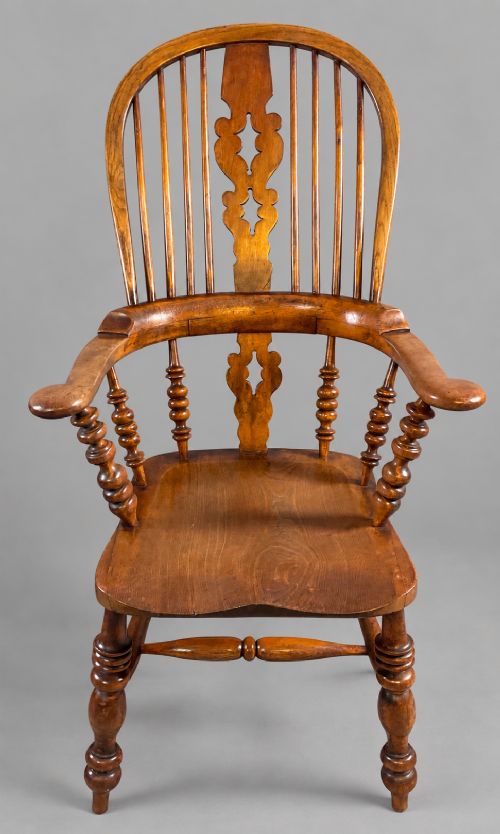
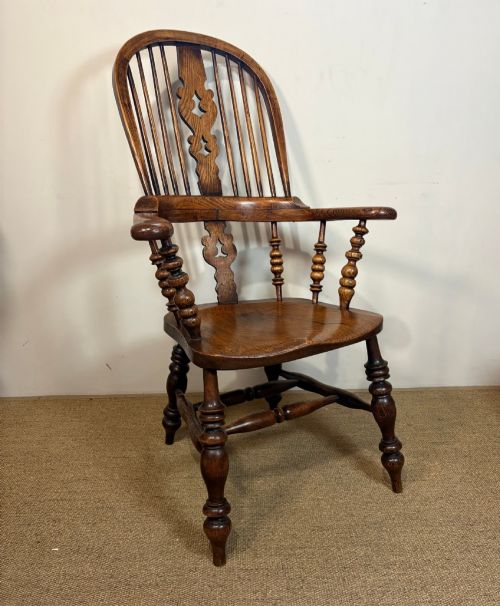
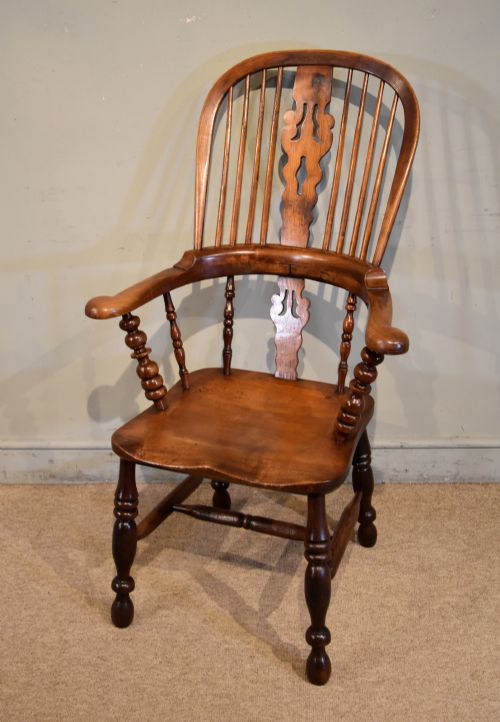
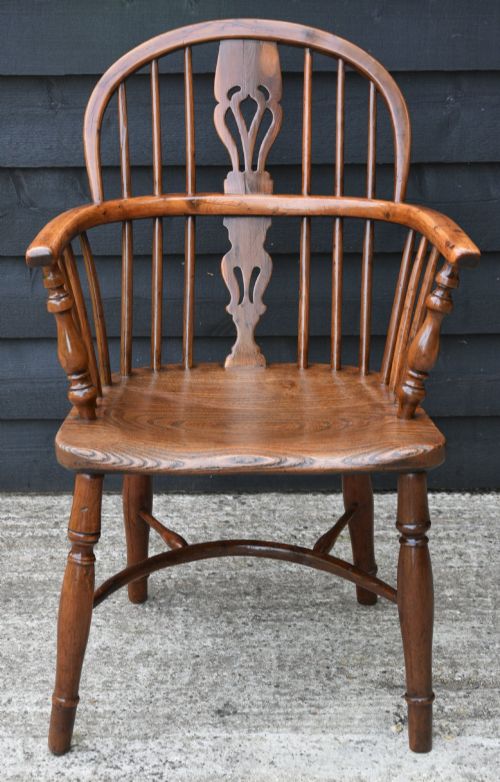
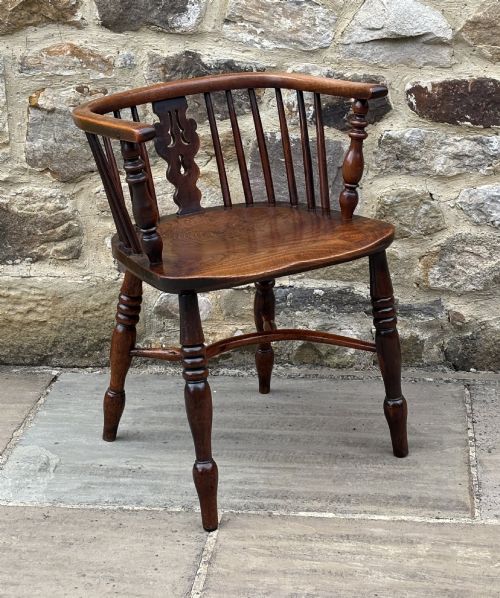
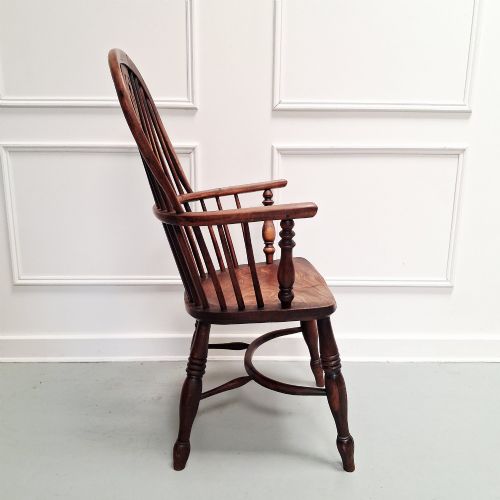
A victorian yew windsor armchair is a traditional wooden seating form combining a sturdy solid seat with spindle-turned components and a characterful arched back. These pieces emerge from nineteenth-century English country workshops and vernacular regional traditions.
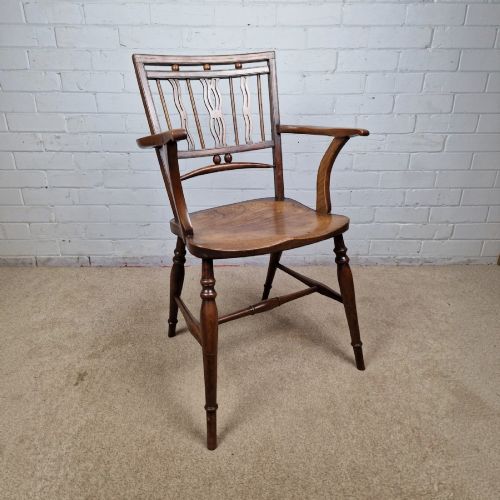
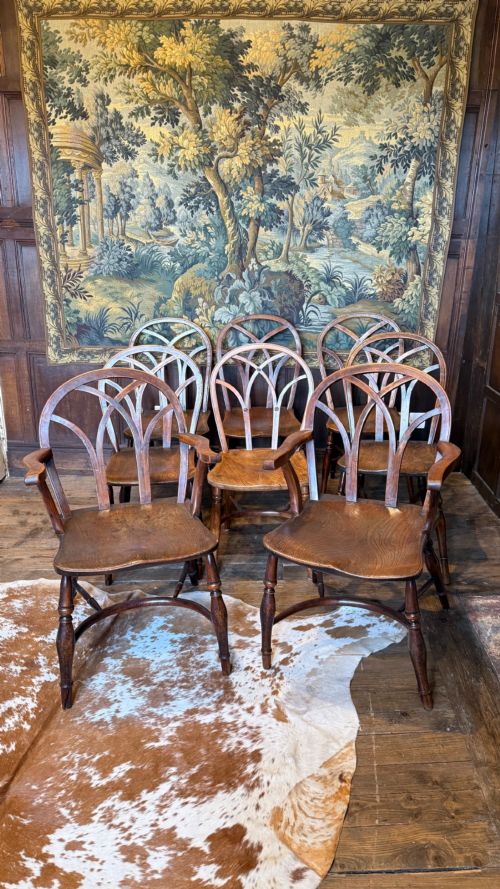
Buyers encounter high-back, low-back, wheel-back, and broad-arm variations across this selection. The most common form pairs a figured yew wood upper structure with a substantial elm seat.
How They Were Made
Craftsmen shaped these chairs using mixed woods, pairing yew for its rich grain with elm for seats and beech or ash for turned spindles and legs. Component parts were turned on pole lathes and shaped with drawknives before being joined using wedged tenons.
The construction relies on wedged through-tenons and socketed legs fitted directly into thick saddle seats. This method allowed the rigid wooden structure to withstand decades of daily use without losing structural integrity.
Victorian Yew Windsor Armchair Retail Price Guide 2026
Typical asking prices for victorian yew windsor armchair among the pieces listed under this phrase on Sellingantiques today, from the lower quarter to the upper quarter. They describe what is for sale here now, not the wider market.
What Varies in Quality
Quality rests in the intensity of the yew grain and the sculptural comfort of the bentwood hoop. Superior examples display expressive figuring in the yew alongside generous proportions and balanced turning.
The integration of the armbow and the thickness of the elm seat define the physical presence of the chair. Workshops demonstrated greater skill when steam-bending continuous arm rails and selecting highly figured timber stocks.
J Spencer
The Victorian Yew Windsor Armchair Glossary
- Yew
- A dense, highly figured softwood alternative prized for rich figuring and warm colour.
- Elm
- A tough, interlocking timber traditionally selected for Windsor chair seats to prevent splitting.
- Crinoline stretcher
- A curved under-framing hoop linking the legs of a Windsor chair to provide structural rigidity.
- Broad arm
- A widened, paddle-like wooden arm rest designed for writing or comfort.
- Wheel-back
- A Windsor chair back featuring a pierced splat carved in the shape of a spoked wheel.
Victorian Yew Windsor Armchair: Frequently Asked Questions
What is a windsor armchair?
A Windsor armchair is a traditional wooden seat constructed by fixing turned spindles and a back directly into a thick, solid carved wooden seat rather than a conventional frame.
These pieces developed through English regional vernacular traditions during the eighteenth and nineteenth centuries, evolving distinct local variations in different counties.
How do I identify a yew wood chair?
Yew wood displays a distinctive warm golden-brown tone marked by dark knots, dense growth rings, and high contrast figuring across the grain.
Makers favoured this timber for its decorative impact on the upper backs and spindles of formal country armchairs.
Where were these chairs made?
Regional workshops across rural England produced these armchairs, utilising locally sourced hardwoods from woodlands and estates.
Different counties developed characteristic back shapes, turning profiles, and wood combinations that distinguish regional outputs.
How do I care for antique wood?
Maintain antique timber by keeping it away from direct heat sources and sudden humidity shifts that can cause shrinkage cracks.
Apply traditional wax polish occasionally to nourish the surface and preserve the historic patina built up over generations.