


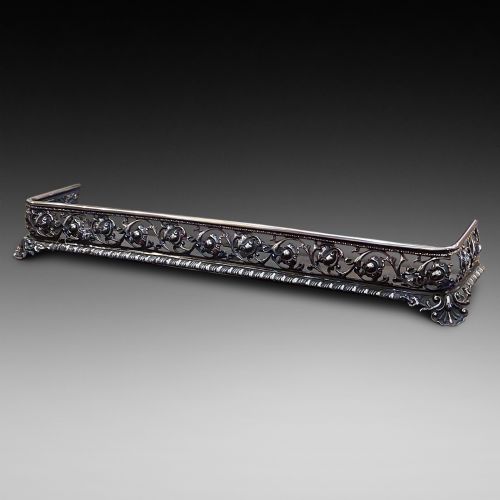


Victorian Wrought Iron Guard
These Victorian wrought iron guard pieces protect rooms from stray embers while bringing substantial nineteenth-century metalwork into the hearth.
Victorian Wrought Iron Guard
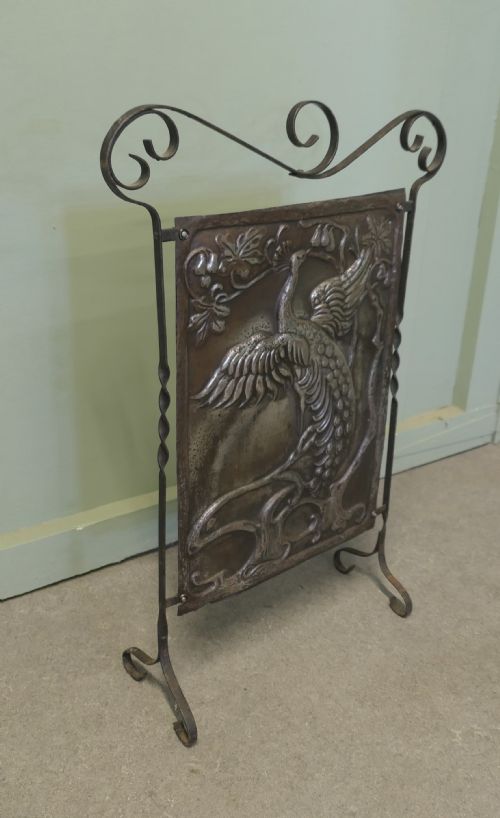
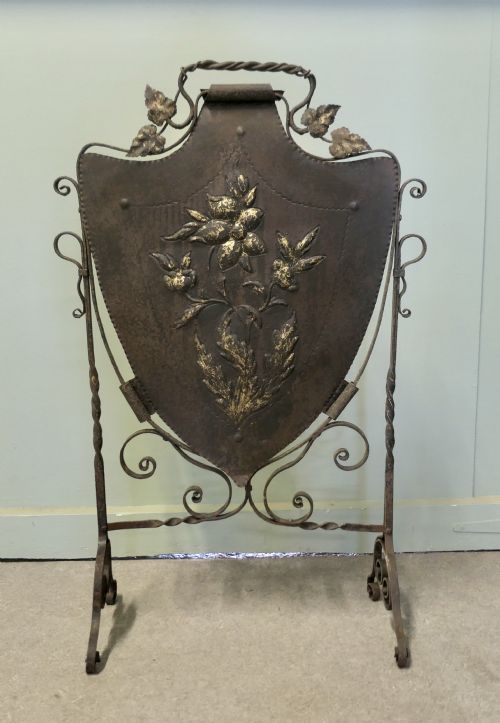
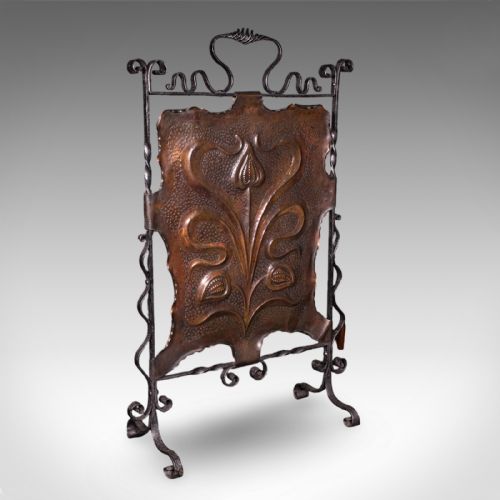
A victorian wrought iron guard typically takes the form of a fire screen, nursery fender, or spark guard designed to stand before an active fireplace. The listings here centre on nineteenth-century examples, spanning the Victorian and Edwardian periods with distinct Arts and Crafts, Gothic Revival, and Art Nouveau influences.
Buyers will encounter various configurations ranging from heavy iron frames with intricate scrollwork to low nursery fenders and folding fireguards. Materials stretch beyond iron to include steel, copper, wire mesh, and occasionally stained glass or leather.
These items originate primarily from domestic settings, including large country houses, where functional hearth safety met decorative metalwork. The forms vary from simple protective barriers to elaborate reflector panels and companion set combinations.
How they were made
Makers shaped wrought iron and steel through hot forging, hammering, and joining individual metal bars to create rigid yet open frameworks. Many pieces incorporate wire mesh panels or sheet copper inserts riveted or fixed directly to the iron structure.
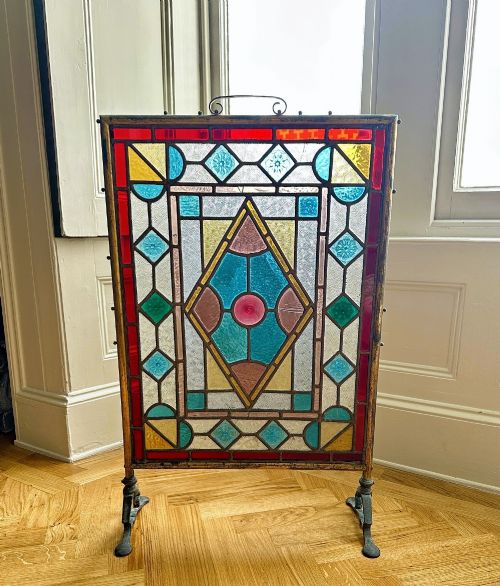
Decorative elements draw upon period styles, utilising applied brass, gilt, glass, or stained glass panels set within metal frames. Heavier constructions employ cast iron alongside wrought elements to provide stability at the base of large fire screens and club fenders.
Materials recorded across the inventory include wrought iron, copper, steel, wire mesh, cast iron, gilt, and glass.
What varies in quality
The standard of a victorian wrought iron guard rests on the heft of the metalwork and the precision of the hand-forged joints. Superior pieces display thoughtful integration of decorative details, such as hand-beaten copper panels or stained glass, rather than purely utilitarian assembly.
Material combination also distinguishes the range, with heavier steel and iron frameworks commanding attention alongside bespoke additions like mahogany tops or leather upholstery on club fenders. Surface finishes show variation, from polished iron to patinated copper and aged steel.
The Victorian Wrought Iron Guard Glossary
- Wrought iron
- A tough, malleable form of iron that can be heated and hammered into decorative shapes. It forms the primary structure for many nineteenth-century hearth guards.
- Nursery fender
- A low protective barrier placed around a fireplace to keep children at a safe distance. These often include mesh guards and sometimes integrated clothes rails.
- Club fender
- A low hearth seat featuring upholstered corners supported by a metal frame. They frequently combine steel, iron, and leather or oak.
- Spark guard
- A fine mesh or iron screen designed specifically to catch flying embers from an open fire. They appear as folding panels or fixed standing frames.
- Fire screen
- A decorative panel placed before an unused fireplace in warmer months. Nineteenth-century versions utilise iron stands supporting copper, glass, or fabric panels.
Victorian Wrought Iron Guard: Frequently Asked Questions
What is a nursery fender?
A nursery fender is an enclosed metal barrier designed to surround the hearth area entirely. It prevents young children from coming into direct contact with hot grates and open flames.
These pieces typically feature fine wire mesh or sturdy iron bars, and occasionally incorporate built-in rails for airing clothes.
How do I use a fire screen?
Fire screens are placed directly in front of the fireplace opening when the fire is dying down or unlit. They serve to block stray sparks or simply conceal an empty grate during warmer seasons.
Freestanding iron and copper screens can be positioned easily to suit the dimensions of the hearth.
Are club fenders used for seating?
Club fenders feature padded top rails upholstered in leather or supported by wood, allowing people to sit close to the fire. They originated in country houses as a comfortable way to gather around the hearth.
The metal base provides a sturdy barrier while the cushioned top offers functional fireside seating.
How do I date an iron guard?
Dating relies on identifying stylistic markers such as Arts and Crafts hand-beaten copper, Gothic Revival pointed arches, or Art Nouveau fluid curves. The choice of materials, including nineteenth-century steel and wire mesh, helps narrow the production era.
Construction methods also assist, as hand-forged wrought iron differs noticeably from later mass-produced alternatives.