
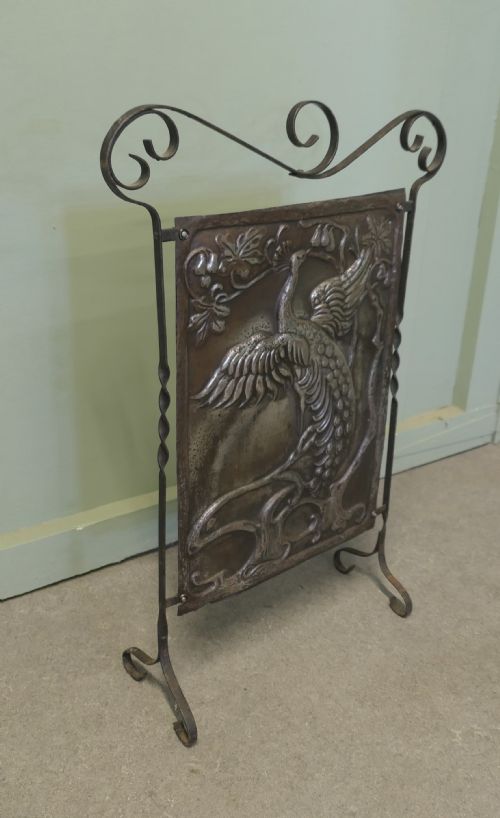
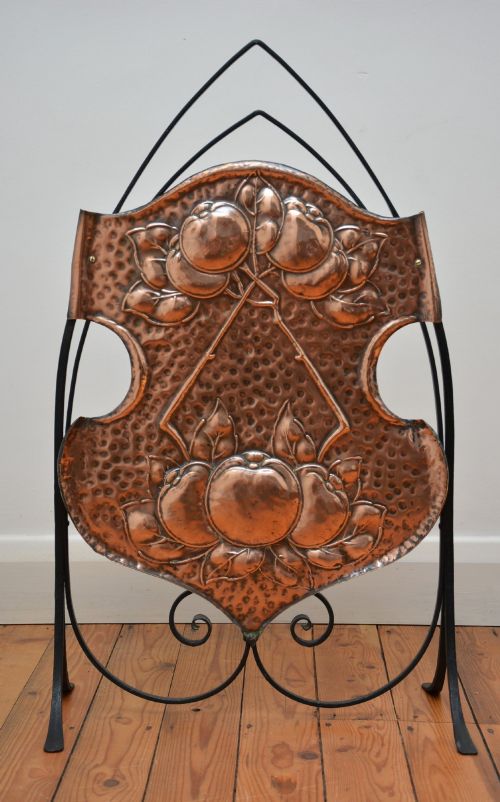
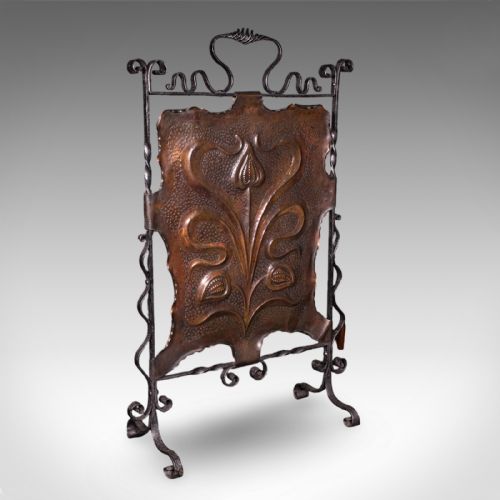


Art Nouveau Fireplace Screen
An art nouveau fireplace screen brings organic fluidity and metalwork craftsmanship right to the hearth.
Art Nouveau Fireplace Screen
An art nouveau fireplace screen stands as a decorative and functional accessory designed to shield a room from excess heat when the hearth is unlit, whilst also concealing the empty grate during warmer months. Buyers searching for an art nouveau fireplace screen encounter pieces primarily originating from the Victorian era, the eighteen nineties, and nineteen hundred.
Most examples found in these listings combine structural metal frames with decorative panels, often featuring glass or textile inserts. The aesthetic vocabulary relies on sinuous lines, plant motifs, and reflective metallic surfaces that catch the flicker of ambient light.
Materials and construction methods
Metals form the structural backbone of these pieces, with brass, copper, wrought iron, and plain iron utilised extensively for frames, stands, and repoussé panels. Artisans hammered, polished, and joined these metals to create robust yet visually fluid structures.
Glass and textiles add colour and texture, incorporating cut glass panels or wool tapestry inserts such as the parrot design. These varied components reflect the collaborative craftsmanship typical of the period workshops.
Materials documented across the inventory include brass, wrought iron, copper, glass, iron, cut glass, and wool.
Judging the quality of craftsmanship
Quality rests in the depth and execution of the metalwork, distinguishing crisp hand-beaten repoussé copper from simpler stamped sheet metal. The weight of the iron and the solidity of the brass framing dictate the overall durability and presence of the piece.
The integration of decorative elements like cut glass or tapestry determines the visual ambition of an individual screen. Finer items demonstrate meticulous attention to detail in both the structural joinery and the artistic embellishment of the panel.
The Art Nouveau Fireplace Screen Glossary
- Repoussé
- A metalworking technique where the metal is hammered from the reverse side to form a raised design on the front. This method creates the characteristic organic reliefs seen on copper screens.
- Fireplace reflector
- A polished metal screen designed to bounce warmth and light back into the room when a fire burns low. French examples frequently utilise this reflective property.
- Arts and Crafts
- A design movement advocating traditional craftsmanship using simple forms and medieval, romantic, or folk styles. It shares a close aesthetic lineage with Art Nouveau.
- Tapestry
- A form of textile art woven on a loom, sometimes incorporated as an artistic panel within a metal fire screen frame. Wool is the predominant fibre used in these inserts.
- Wrought iron
- Iron that has been heated and worked with tools by a blacksmith, yielding a durable material with visible texture. It provides heavy structural support for lighter decorative panels.
Art Nouveau Fireplace Screen: Frequently Asked Questions
What is an art nouveau fireplace screen?
An art nouveau fireplace screen is a decorative domestic accessory designed to place in front of a fireplace grate. It serves both to block residual drafts and to beautify the hearth when no fire burns.
These pieces utilise metals like brass, copper, and iron, frequently incorporating glass or textile panels. Their designs reflect the flowing, organic lines characteristic of the turn of the twentieth century.
How were these screens used?
Historically, homeowners positioned these screens before the hearth during warmer months to hide the unlit grate and soot. They also protected rooms from stray sparks while a fire died down.
Today, collectors use them to anchor a period fireplace setting, turning a utilitarian object into a primary decorative feature of the room.
How do I date an art nouveau screen?
Dating relies on stylistic markers, construction techniques, and materials recorded from periods such as the Victorian era, eighteen nineties, and nineteen hundred. Examining the specific alloy and the method of metal joining helps establish the era.
Items often carry stylistic crossover between strict Arts and Crafts principles and fluid Art Nouveau motifs, placing them firmly at the turn of the century.
Are these screens fragile?
While built from sturdy metals like iron and brass, the inserted panels of glass or wool tapestry require careful handling. The primary structure is robust, but decorative components demand gentle maintenance.
Placing the screen away from high-traffic pathways prevents accidental impact to delicate cut glass or stitched textile inserts.
How do I live with one?
Living with an art nouveau fireplace screen involves positioning it as a visual centrepiece in a sitting room or drawing room. It requires minimal space and can stand directly against the hearth stone.
Regular, gentle dusting keeps the polished brass and copper surfaces bright without stripping their historic patina.