

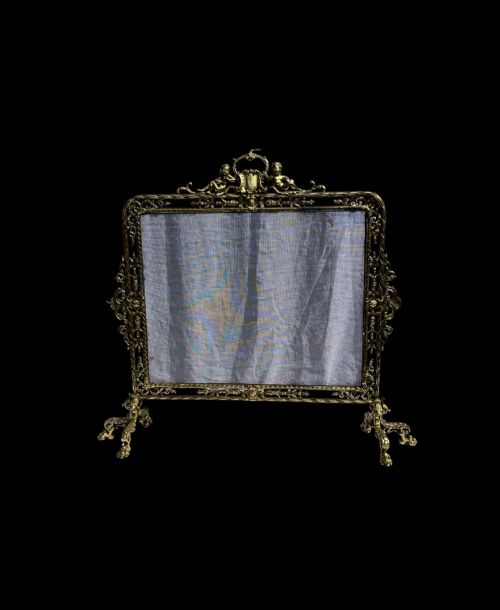
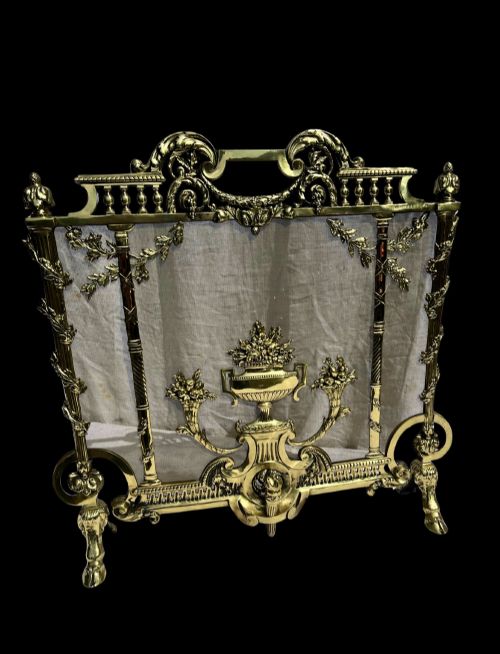
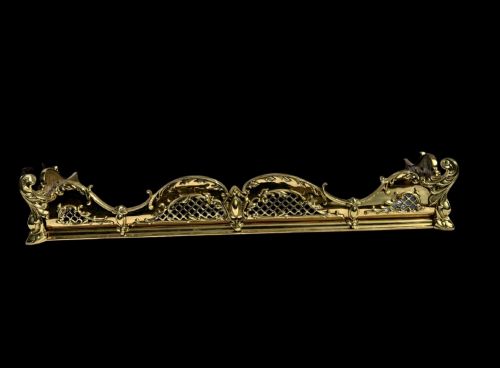
Decorative Fire Guard
A decorative fire guard keeps rooms safe while framing the hearth with brass, iron, or glass.
Decorative Fire Guard
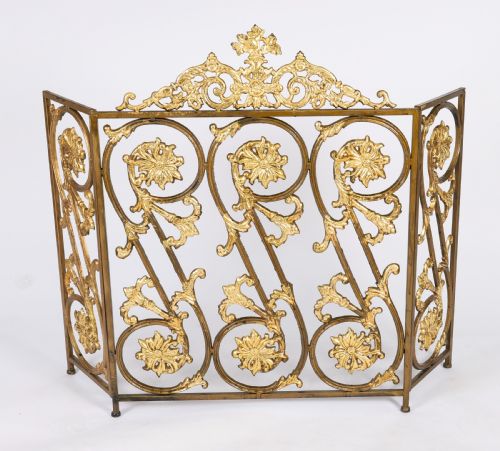
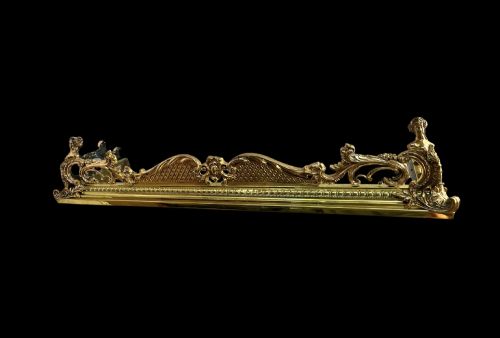
A decorative fire guard takes the form of a fire screen, fender, or kerb designed to sit before an open hearth. These pieces protect rooms from sparks while adding ornamentation to the fireplace.
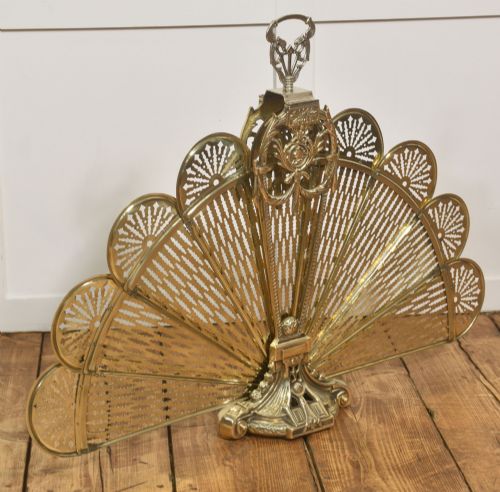
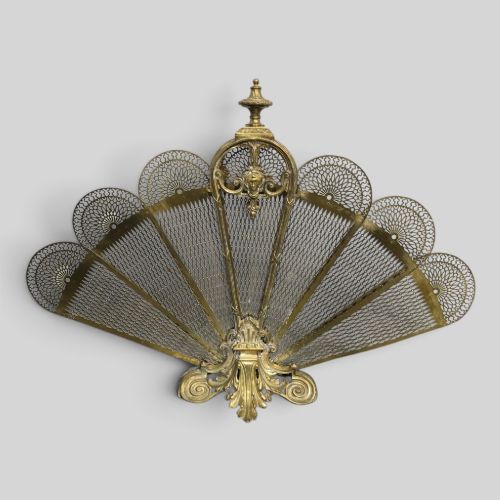
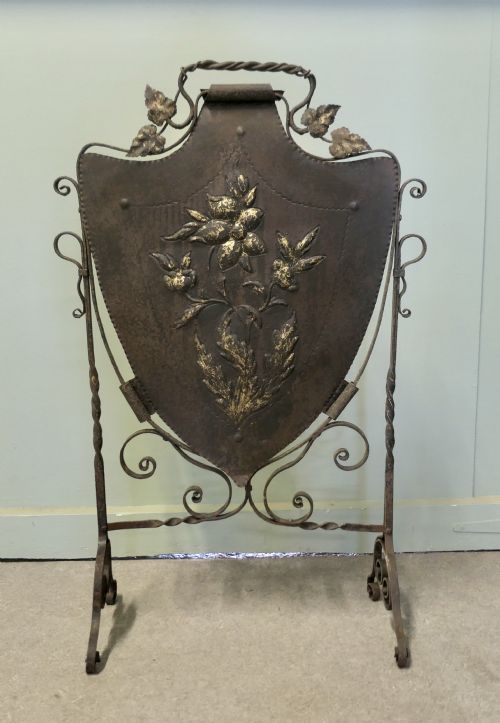
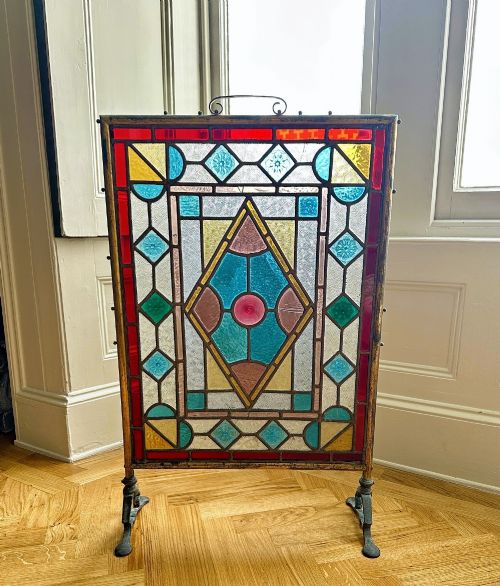
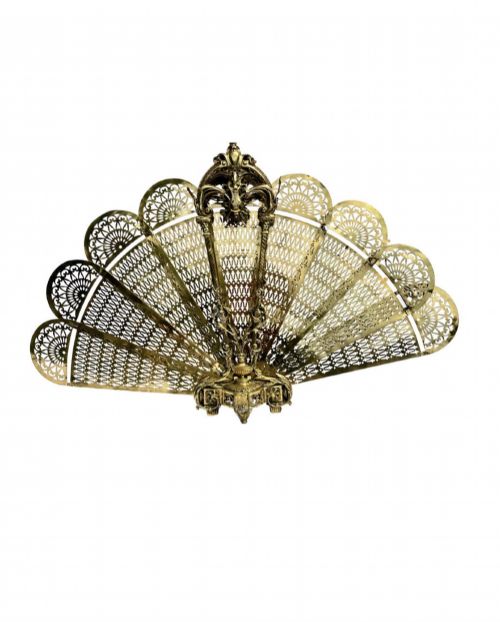
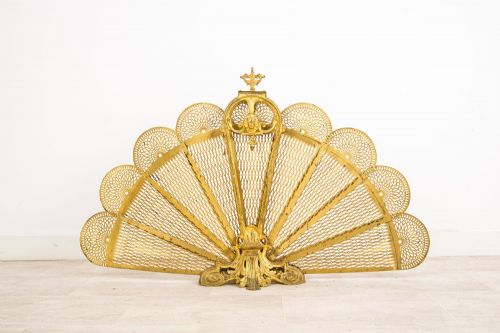
The versions met most often on this page date from the nineteenth century into the early twentieth century, spanning Victorian, Art Nouveau, and Arts and Crafts styles. They arrive as folding peacock fans, solid glass panels, wire mesh guards, and pierced metal frames.
Makers utilised brass, wrought iron, copper, and steel, often mounting stained glass, mirrors, or embroidered panels within the metal framework. French revivals sit alongside English Gothic and Rococo interpretations.
How they were made
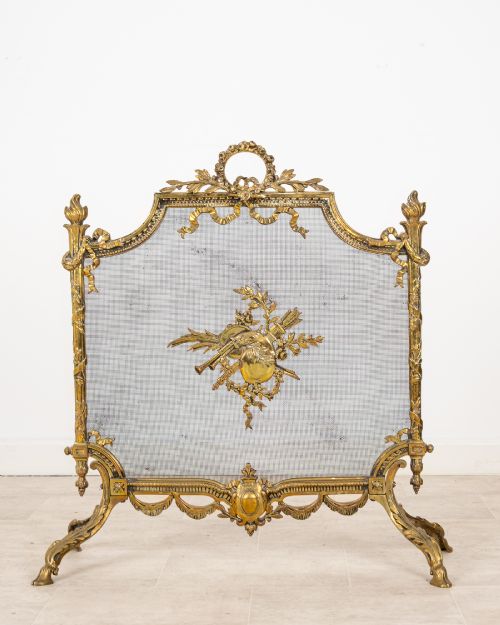
Artisans formed the metal frames of a decorative fire guard through casting, piercing, and wrought ironwork, frequently employing brass, gilt bronze, and steel. Pierced brass fenders and heavy iron stands required skilled smithing and assembly.
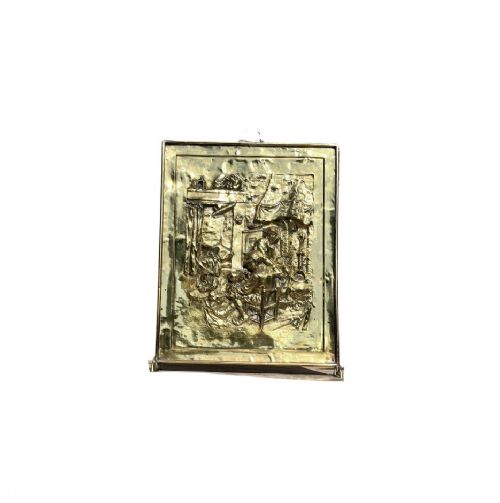
Panels combined rigid wire mesh or cut glass with delicate additions like stained glass, mirrors, and silk embroidery. Copper and brass sheets were beaten, etched, or polished to catch the light of the fire.
Listings feature items from the Victorian and Edwardian eras, utilising brass, wrought iron, copper, and glass across various revival styles.
What varies in quality
The distinction between standard production and finer examples lies in the depth of the chasing, the weight of the cast metal, and the intricacy of the pierced work. Heavier brass and well-wrought iron frames maintain stability and crisp detail.
Quality shows in the integration of decorative panels, such as leaded stained glass, bevelled mirrors, or hand-carved woodwork, which elevate a utilitarian spark guard into an accomplished interior furnishing.
The Decorative Fire Guard Glossary
- Fire screen
- A movable panel placed before a fireplace to shield the room from radiant heat or hide the empty grate in summer.
- Fender
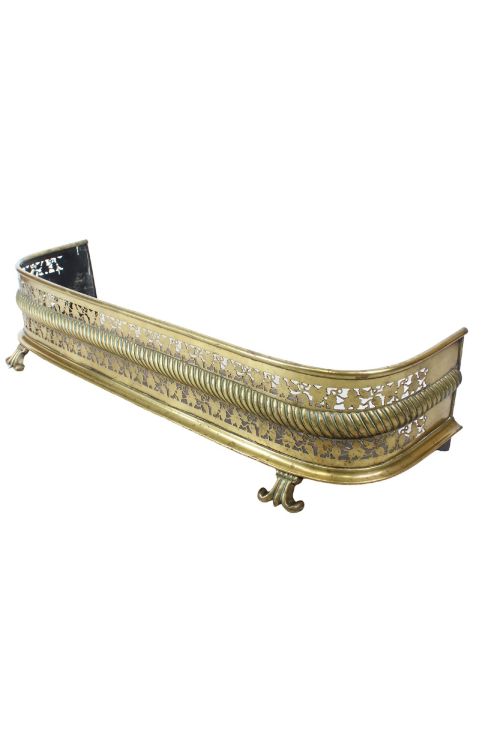
- A low metal kerb placed on the hearth around the base of a fireplace to contain ash and coals.
- Ormolu
- Gilt bronze or brass applied to decorative metalwork, popular in French revival pieces.
- Spark guard
- A protective wire mesh or screen intended specifically to catch flying embers from an open fire.
Decorative Fire Guard: Frequently Asked Questions
What is a fire screen?
A fire screen is a standalone decorative guard placed in front of an open hearth. It serves to block excessive heat when the fire burns low and conceals the empty grate during warmer months.
These pieces range from folding brass peacock fans to framed glass, mirror, or tapestry panels supported by iron stands.
How do I date a brass fire screen?
Dating relies on stylistic clues and construction methods visible in the metal and frame. Victorian and nineteenth-century pieces often display heavy cast brass, Rococo revival scrolls, or intricate piercing.
Later items from the early twentieth century frequently incorporate Art Nouveau plant motifs, sunburst mirrors, or simpler geometric ironwork associated with the Arts and Crafts movement.
What is a fireplace fender?
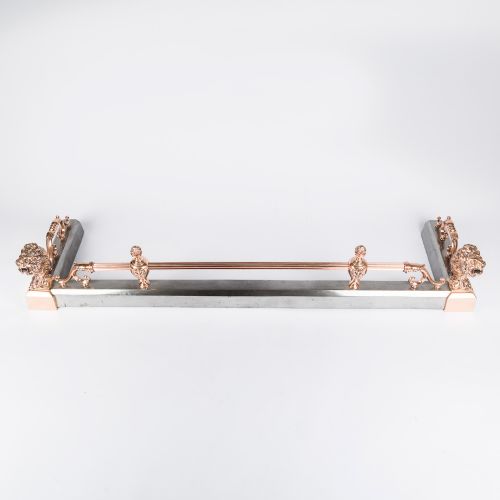
A fireplace fender is a low metal frame or kerb that sits directly on the hearth around the perimeter of the fire opening. Its primary role is to contain stray coals and ash.
Many examples feature pierced brass decoration, cast iron, or combinations of steel and copper designed to match companion fire screens.
Can I use an antique fire guard with an open fire?
Many antique fire guards feature wire mesh or solid metal panels designed precisely to catch sparks and act as functional spark guards. Stained glass or silk embroidered screens benefit from careful placement to avoid damage from intense direct heat.
Checking the stability of the stand and the condition of the mesh ensures safe use before a lit hearth.