


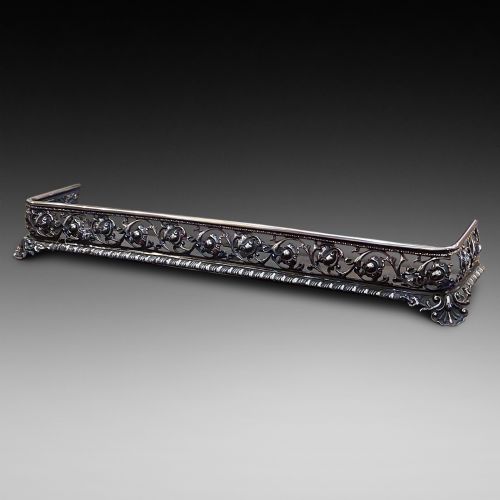


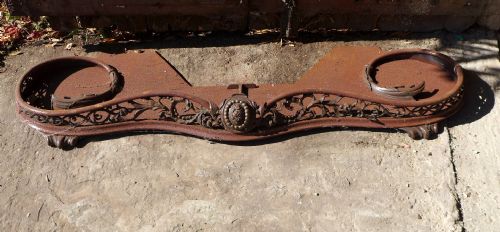


Victorian Wrought Iron Fender
These Victorian wrought iron fenders are hearth furnishings built to frame a fireplace and protect a room.
Victorian Wrought Iron Fender
When you search for a victorian wrought iron fender, you encounter solid hearth guards designed to sit on the floor around a fireplace opening. The examples appearing here include nursery variants fitted with clothes rails or wire mesh alongside club forms featuring upholstered seating.
Most pieces date from the nineteenth century, spanning the Victorian era and reaching into the Edwardian period. Their forms range from simple iron barriers to complex combinations incorporating leather and mahogany tops.
The objects serve both a domestic safety function and a seating purpose, particularly in the club versions where padded tops allowed people to sit close to the fire. They originate from British hearths where metalwork was utilised for everyday endurance.
Materials and construction
Makers built these pieces primarily from iron, wrought iron, and steel, often combining cast elements for heavier structural support. Brass accents occasionally appear on corners and trims to contrast with the dark metal surfaces.
Upholstered club versions incorporate leather or wood such as mahogany and oak for the top seat rails. Nursery variants integrate wire mesh screens and vertical rails designed to keep children safely away from the flames.
Victorian Wrought Iron Fender Retail Price Guide 2026
Typical asking prices for victorian wrought iron fender among the pieces listed under this phrase on Sellingantiques today, from the lower quarter to the upper quarter. They describe what is for sale here now, not the wider market.
Some nineteenth-century nursery fenders doubled as indoor clothes dryers, meaning family socks spent the afternoon keeping company with the hearth.
Recognising quality
The distinction between standard and finer examples rests upon the intricacy of the metalwork and the integration of materials. Pieces combining hand-forged wrought iron with quality leather upholstery or sturdy mahogany tops demonstrate superior craftsmanship compared to plain iron barriers.
Proportion and structural integrity also divide the range, as well-balanced club fenders with sound joints and original mesh or rails show greater longevity. The presence of secondary metals like brass and oak further elevates the character of an individual piece.
The Victorian Wrought Iron Fender Glossary
- Club fender
- A hearth guard fitted with padded top rails designed for seating. These pieces originated in gentlemen's clubs and private smoking rooms.
- Nursery fender
- A tall hearth barrier featuring a protective wire mesh or vertical bars. These were built to keep children and trailing garments safely away from open flames.
- Wrought iron
- Iron that has been heated and hammered into shape by hand. This material yields fibrous textures visible across many nineteenth-century hearth guards.
- Cast iron
- Iron poured into a mould to set in a rigid shape. This technique allowed makers to produce ornate decorative motifs for fireplace accessories.
Victorian Wrought Iron Fender: Frequently Asked Questions
What is a club fender?
A club fender is a hearth guard with cushioned top rails that functions as low fireside seating. The design allows people to sit directly over the heat source.
These pieces typically combine metal frames of iron or steel with leather or mahogany upholstery on top.
How do I use a nursery fender?
Nursery fenders are tall fireplace guards equipped with wire mesh or vertical rails to prevent young children from getting too close to the fire. Many also feature an integrated clothes rail for warming garments.
They sit directly on the floor around the hearth, forming a secure perimeter while still allowing radiant heat to warm the room.
What metals are used in these fenders?
These hearth guards are constructed primarily from iron, wrought iron, and steel. Some examples incorporate cast iron for decorative elements and brass for corner mounts or trims.
The combination of these metals provides both structural strength and visual contrast across nineteenth-century designs.
How do I date a Victorian fender?
Dating relies on material combinations, construction techniques, and stylistic markers recorded across the period. Pieces range from mid-nineteenth-century ironwork to Edwardian mesh guards.
Examining the specific mix of wrought iron, leather upholstery, and secondary woods helps place the object within its historical timeframe.